At a glance
- Best for
- Beaches, culture, food and cycling
- Nearest airport
- San José (SJO)
- Time needed
- Three to four nights
- Best season
- September and October, plus February to April
- Getting around
- Bicycles, local bus and taxis
- Languages
- Spanish, English and Limonese Creole
Why go to Puerto Viejo
The Caribbean coast feels like a different country. Many families here descend from Jamaican workers who came to build the railway and work the banana plantations in the late 1800s, and English based Limonese Creole, calypso music and Caribbean cooking are part of daily life. The Indigenous Bribri and Cabécar peoples live in the Talamanca hills behind the coast. Add warm water, coral reef, sloths and a slow pace, and it is easy to stay longer than planned.
Beaches
- **Playa Negra**, north of town, has dark volcanic sand and a quieter feel.
- **Playa Cocles**, just south of town, is the main surf beach, with lifeguards in parts. Currents can be strong.
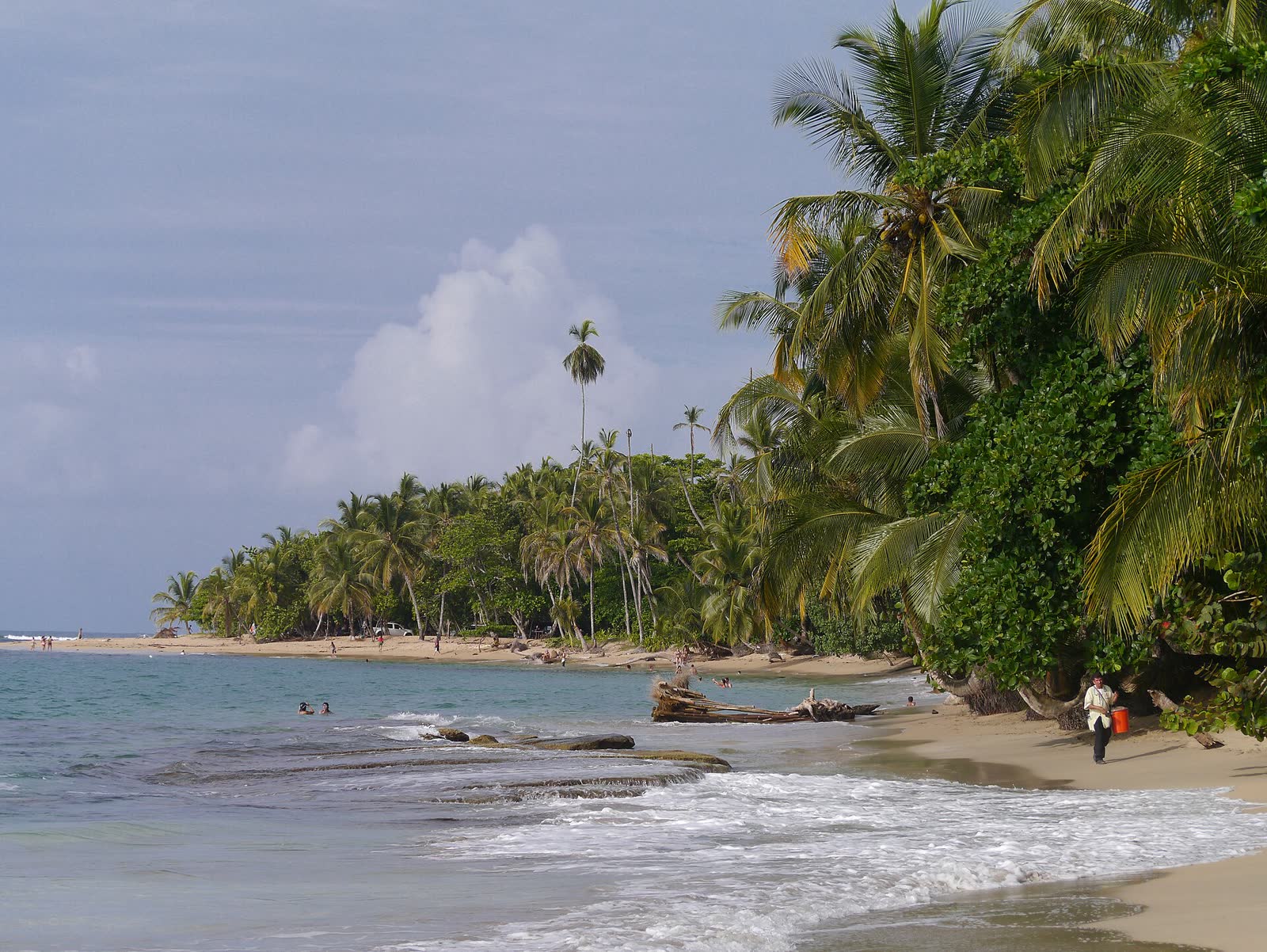
- **Playa Chiquita** and **Punta Uva** are calm, palm fringed bays with clear water, among the most beautiful beaches in the country.
- **Manzanillo**, at the end of the road, sits inside the **Gandoca Manzanillo Wildlife Refuge**, with trails along the coast and snorkelling over the reef.
The easiest way to explore is by bicycle along the flat coastal road, and almost every guesthouse rents them.
Cahuita National Park
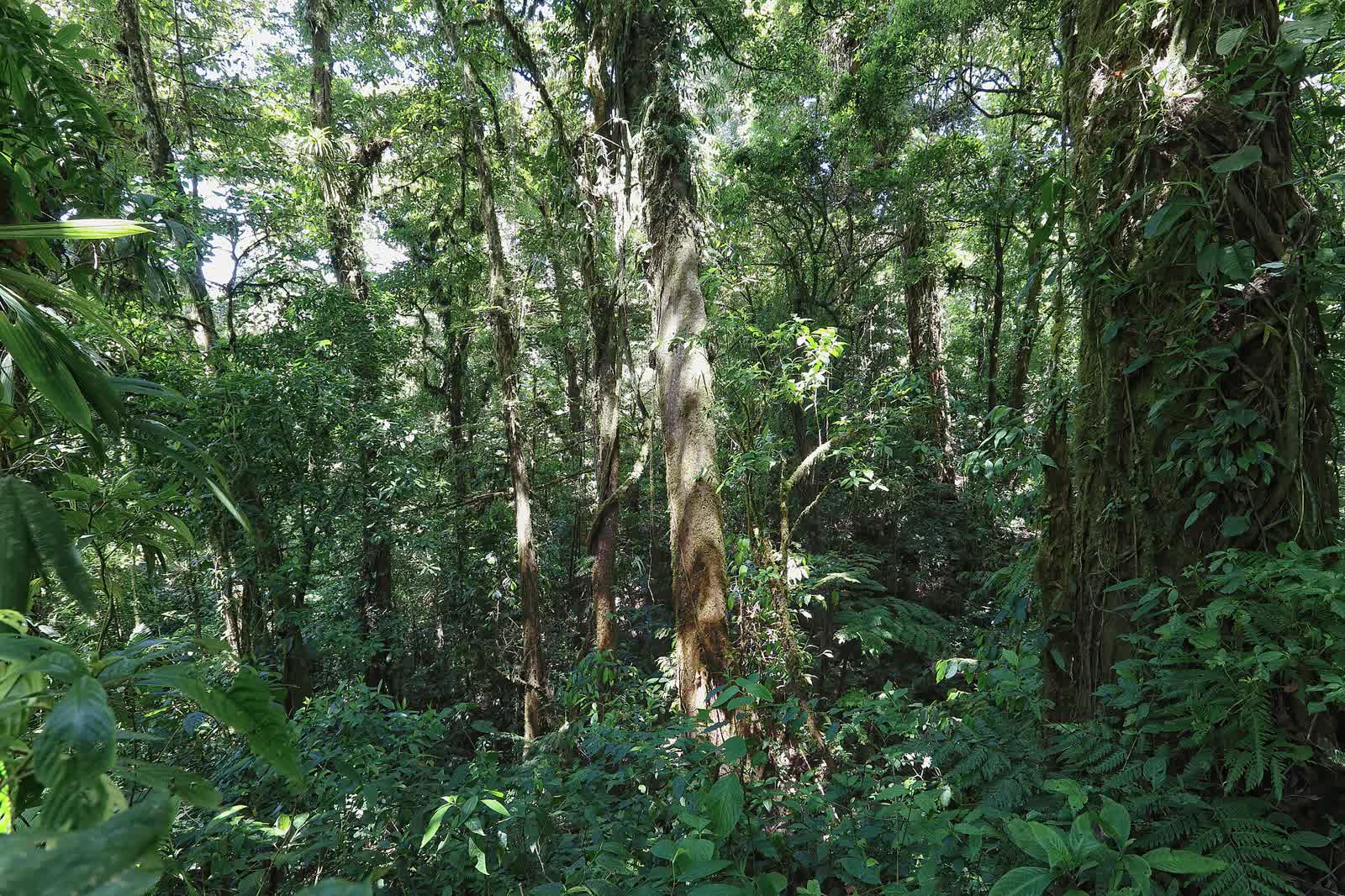
**Cahuita**, a short ride north, is a smaller, quieter village beside **Cahuita National Park**. The coastal trail runs through the forest past white sand beaches, with sloths, howler monkeys and raccoons along the way, and the protected coral reef offshore is best seen on a guided snorkel trip. Entry at the Kelly Creek gate works on a donation basis, while the Puerto Vargas entrance charges a fee; check current arrangements before you go.
Things to do
- **Jaguar Centro de Rescate** in Playa Chiquita cares for injured and orphaned animals, including sloths and monkeys, with guided tours.
- **Chocolate tours** in the Talamanca hills show how cacao is grown and made into chocolate by Bribri and local families.
- **Bribri community visits** with Indigenous guides introduce traditional homes, medicine and cooking.
- **Surfing** at Salsa Brava, a powerful reef break in town for experts only, or gentler waves at Cocles.
- **Sloth Sanctuary** near Cahuita is a long running rescue centre.
Food
Do not leave without eating **rice and beans** cooked in coconut milk, usually served with Caribbean chicken, and **rondón**, a rich coconut seafood stew. Pati, a spicy meat pastry, makes a perfect snack, and bakeries sell pan bon, a dark sweet bread. Many of the best cooks run small family restaurants with no sign worth mentioning.
Where to stay
Stay in **Puerto Viejo town** for restaurants, nightlife and buses, or along the road to **Cocles, Playa Chiquita and Punta Uva** for jungle cabins and quiet nights. **Cahuita** suits travellers who want a slower village.
Weather
The Caribbean coast does not follow the Pacific's seasons. September and October, the Pacific's wettest months, are often sunny here, as are February to April. November to January and July can be rainy. It is humid all year.
Safety
Puerto Viejo is generally relaxed, but petty theft and drugs are present. Lock your bicycle, never leave belongings on the beach, avoid isolated beaches after dark and check current advice. See all Costa Rica destinations.
Questions about Puerto Viejo
How do I get to Puerto Viejo from San José?
Direct buses run from San José to Puerto Viejo, taking around four to five hours, and shuttle vans offer hotel pickups. The road crosses Braulio Carrillo National Park, with lush forest and sometimes delays from landslides.
Is Puerto Viejo safe?
Most visitors have no problems, but petty theft is common. Do not leave bags on the beach, lock bikes and use taxis at night. Read your government's current travel advice for Limón Province.
Which is better, Puerto Viejo or Cahuita?
Puerto Viejo has more restaurants, nightlife and beaches nearby. Cahuita is quieter and right next to the national park. Many visitors stay in one and day trip to the other.
When is the best time to visit the Caribbean coast?
September and October are often the sunniest months, along with February to April. Rain can fall at any time, but showers often pass quickly.
Facts checked . Fees, schedules and entry rules change, so always confirm the latest with the official source.