At a glance
- Best for
- Coffee farms, hiking, nature, small towns and slow travel
- Main airports
- Matecaña in Pereira (PEI) and El Edén in Armenia (AXM)
- Main bases
- Salento, Filandia, Pereira, Armenia and Manizales
- Climate
- Warm days and cool nights, with showers in the rainy seasons
- Time needed
- Three to five days
- UNESCO
- Coffee Cultural Landscape of Colombia, listed in 2011
Why go
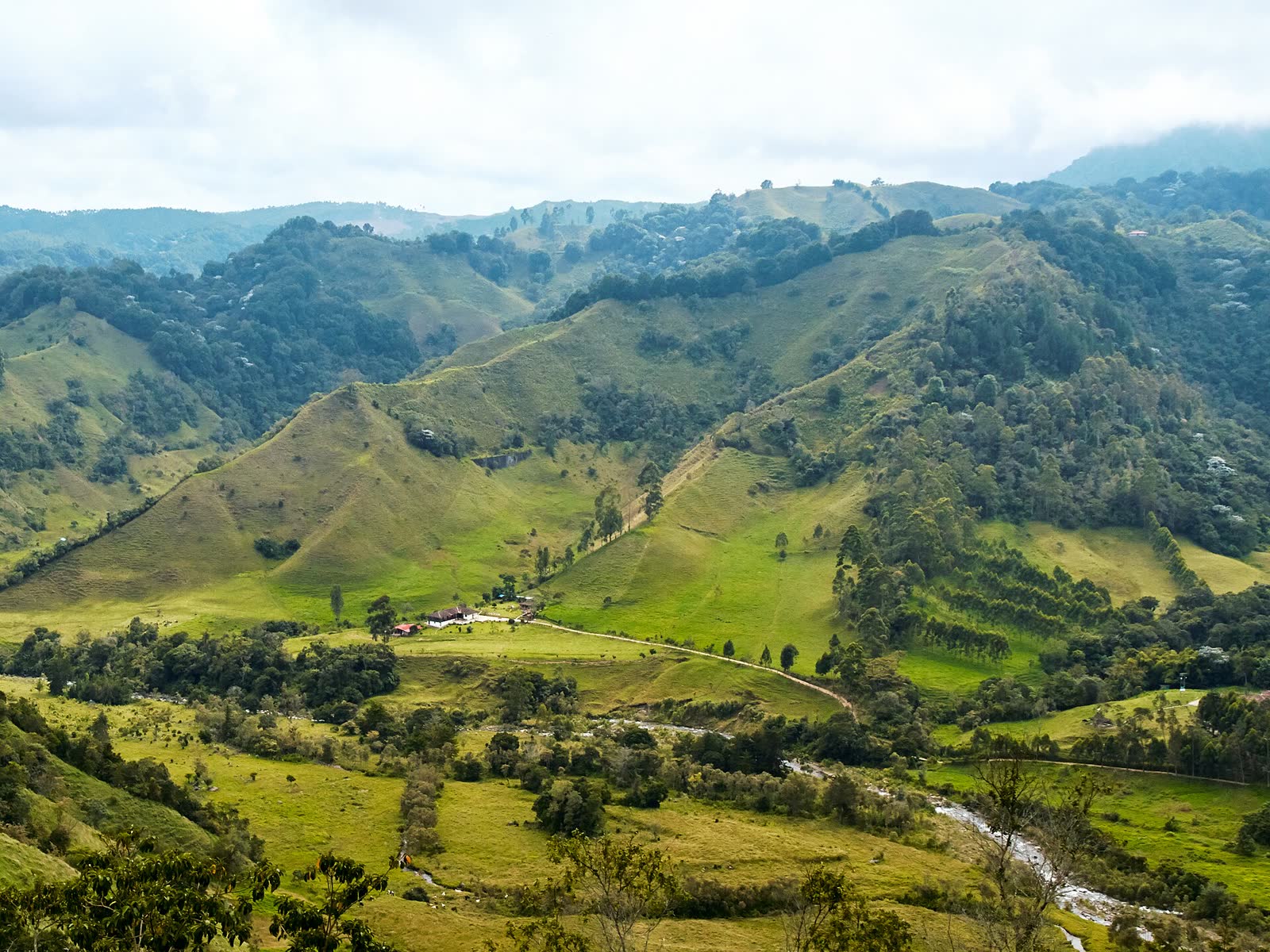
The Coffee Cultural Landscape of Colombia is listed by UNESCO for the way families have farmed these hills for generations, adapting to steep land and building towns in a distinctive style. It is peaceful, beautiful and welcoming, with a climate that is warm by day and fresh at night. It suits hikers, coffee lovers and anyone who wants green views from a hammock.
Salento
**Salento** is the most visited town, with a main street of painted balconies, craft shops and cafés, and a viewpoint at the top of a flight of steps. It gets busy on weekends and Colombian holidays, so stay on a nearby farm if you want calm. Nearby coffee farms offer tours that walk you from the plant to the cup, explaining picking, washing, drying and roasting, and finish with a tasting.
The Cocora Valley
A short jeep ride from Salento's square, the **Cocora Valley** is home to the **Quindío wax palm**, Colombia's national tree, which can grow to around 60 metres tall. A loop trail climbs through cloud forest, past rope bridges and a hummingbird reserve at Acaime, then descends through meadows of soaring palms. Allow five to six hours for the full loop, start early before clouds roll in, wear waterproof shoes and carry cash for the private land fees along the way. You can also walk just to the palm viewpoints if you are short on time.
Filandia
**Filandia** is a quieter, equally pretty alternative to Salento, with colourful houses, a basket weaving tradition and a wooden lookout tower, the **Mirador Colina Iluminada**, with views over the hills. It has excellent restaurants for such a small town.
Coffee farms and fincas
Staying on a working farm, or finca, is the highlight for many visitors. Some are rustic family homes, others boutique lodges with pools and views. Tours range from simple walks with the farmer to detailed specialty coffee experiences, and harvest season, roughly April to May and October to December, is the busiest time on the farms.
Hot springs and the cities
Near Pereira, the **Santa Rosa de Cabal** hot springs sit beneath waterfalls in a forested valley, perfect after a long hike. **Manizales**, a university city on a ridge, is the base for trips towards **Los Nevados National Natural Park** and its high páramo landscapes, depending on volcanic activity. **Armenia** has the **Quindío Botanical Garden** with its butterfly house, and family theme parks such as **Parque del Café**.
Food
The food is hearty Andean fare: **trout** from mountain streams, often served with patacones, **bandeja paisa**, **arepas** and **sancocho** soup. Try **aguapanela**, a hot or cold drink of unrefined cane sugar, and a proper cup of local coffee, which locals traditionally drank weak and sweet as **tinto** before the speciality scene arrived.
Getting there and around
Fly into **Pereira** or **Armenia** from Bogotá, or take a bus from Medellín, Bogotá or Cali, which is slow because of winding mountain roads. Within the region, frequent buses link the towns, and colourful **Willys jeeps** are the classic local transport to farms and trailheads. Roads can close after heavy rain, so leave a buffer day if you have a flight to catch.
Questions about the Coffee Region
Should I stay in Salento or Filandia?
Salento is closest to the Cocora Valley and has more choice but more crowds. Filandia is calmer with great food. Many visitors stay on a farm between the two and visit both.
How hard is the Cocora Valley hike?
The full loop is moderate, with muddy sections, river crossings on small bridges and a steep climb. Most fit walkers manage it in five to six hours. Shorter walks to the palm viewpoints are easy.
When is the best time for the Coffee Region?
Drier months, roughly December to February and July to August, are best for hiking. It can rain at any time, and the coffee harvest brings the farms to life in April to May and October to December.
Facts checked . Fees, schedules and entry rules change, so always confirm the latest with the official source.