At a glance
- Best for
- Architecture, museums, food, beer and comics
- Main airport
- Brussels Airport (BRU), about twenty minutes by train
- Time needed
- Two to three days
- Best season
- April to June, September, and December for the Winter Wonders market
- Getting around
- Walking, metro, trams and buses run by STIB
- Languages
- French and Dutch, with English widely spoken
Why go
Brussels is a city that rewards curiosity. The Grand Place is one of Europe's most beautiful squares, but the real pleasure is in the neighbourhoods around it: the antique shops of the Sablon, the flea market at the Place du Jeu de Balle, the cafés of Saint-Gilles and Ixelles, and the comic strip murals painted on walls all over the centre. Add serious museums, chocolate shops on every corner and hundreds of Belgian beers, and two or three days pass quickly.
The centre: the Grand Place and around
Start at the **Grand Place**, ringed by the Gothic town hall and the baroque guild houses rebuilt after a French bombardment in 1695. Come back at night, when it is lit up, and in August of even-numbered years for the flower carpet. A few streets away stand **Manneken Pis**, smaller than everyone expects, and the elegant covered **Galeries Royales Saint-Hubert**. Rue des Bouchers, just off the galleries, is lined with restaurants whose staff call you in from the street: it is best avoided for dinner.
The Mont des Arts and the museums
Walk uphill to the **Mont des Arts** for a view back over the old town, then visit the **Royal Museums of Fine Arts**, with the Magritte Museum and a superb collection of Flemish old masters including Bruegel. The **Musical Instruments Museum** sits in an Art Nouveau department store with a rooftop café. Further out, the **Royal Museum of the Armed Forces** and **Art and History Museum** fill the Cinquantenaire park, and the **House of European History** and the Parlamentarium near the European Parliament are both free.
Art Nouveau and the neighbourhoods
Brussels was a cradle of Art Nouveau, and the architect Victor Horta's own house in Saint-Gilles, now the **Horta Museum**, is a highlight; book a slot ahead. Walk the streets around it and around the Ixelles ponds to spot curving iron balconies and painted facades. **Saint-Gilles** and **Ixelles** are also where many locals eat and drink, with relaxed squares such as the Parvis de Saint-Gilles and Place Flagey. **Sainte-Catherine** near the old fish market is good for seafood and wine bars.
Comics, Atomium and the EU quarter
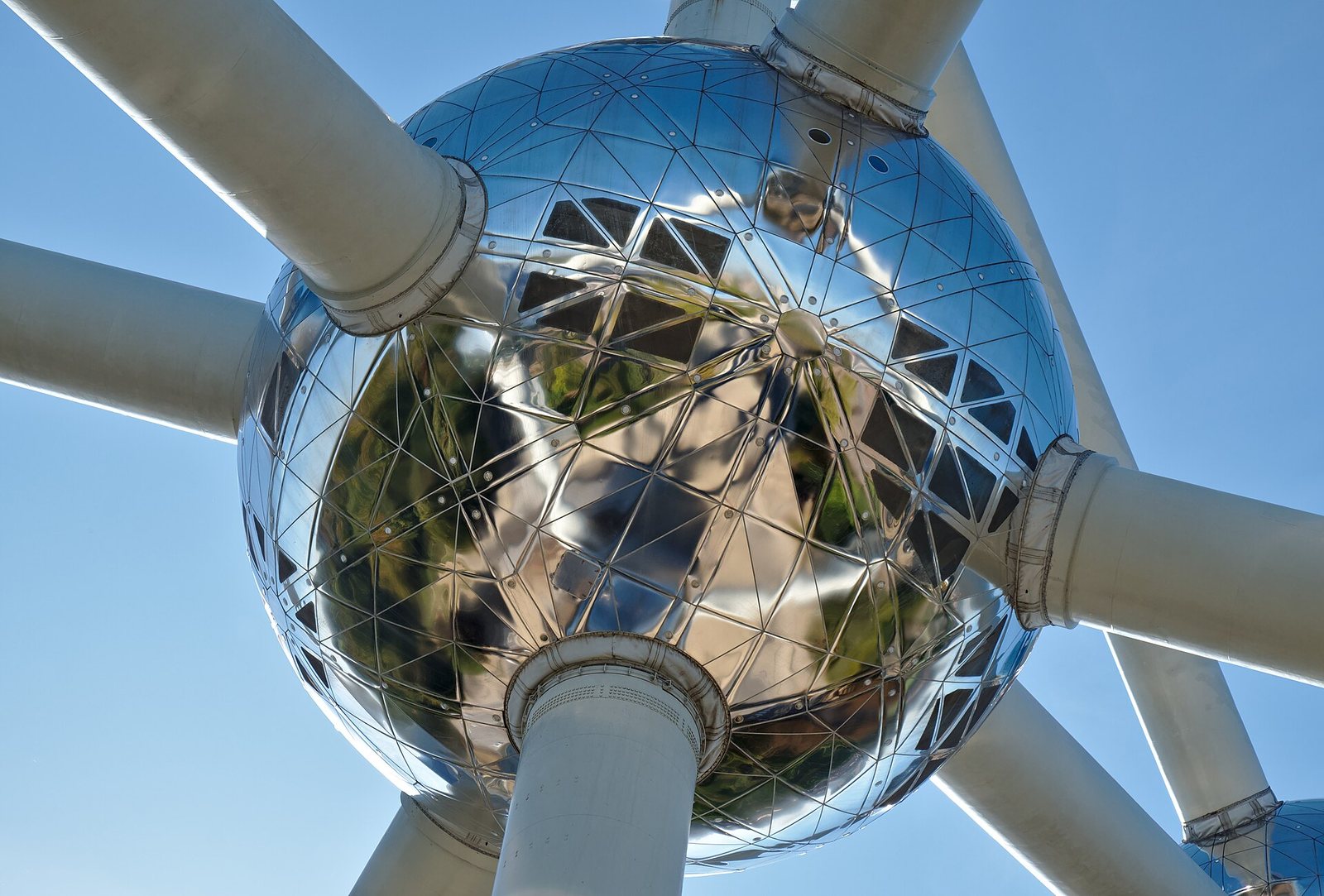
Belgium takes comics seriously. The **Comics Art Museum** occupies a Horta-designed warehouse, and the comic book route leads you past dozens of murals featuring Tintin, Spirou and others. In the north of the city, the **Atomium**, built for the 1958 World Fair, is worth a half day; combine it with the Mini-Europe model park beside it if you have children. The European quarter around Schuman is quieter at weekends.
Food and drink
Eat frites from a friterie such as Maison Antoine on Place Jourdan, try moules frites and stoemp, and save room for waffles and pralines. Beer cafés like **Moeder Lambic**, **Delirium** and the historic **A La Mort Subite** are institutions, and **Brasserie Cantillon** in Anderlecht is the last traditional lambic brewery in the city, with a self-guided visit.
Getting around and staying safe
The centre is walkable, and STIB runs the metro, trams and buses; you can tap a contactless bank card on the readers. Trains from Brussels Airport reach Brussels Central in about twenty minutes. Pickpocketing and bag snatching are the main risks, especially at Brussels-Midi, Brussels-North and the metro, and around the Grand Place. Keep phones out of reach on café terraces, and take extra care around the stations late at night.
Where to stay
The area around the Grand Place and Sainte-Catherine is best for a short first visit. The Sablon and the upper town are quieter and more polished, while Saint-Gilles and Ixelles suit travellers who want neighbourhood cafés and a more local feel. Avoid choosing a hotel purely because it is close to Brussels-Midi or Brussels-North, as the streets around them feel uncomfortable at night.
Questions about Brussels
How many days do I need in Brussels?
Two full days covers the Grand Place, the main museums and a neighbourhood or two. Three days lets you add the Atomium, Art Nouveau and a relaxed evening in Saint-Gilles.
Is Brussels worth visiting?
Yes. It is less polished than Bruges, but it has the best museums, food and nightlife in the country and is the most convenient base for day trips.
Which Brussels station should I use?
Brussels Central is closest to the Grand Place. Brussels-Midi is the international station for Eurostar and high-speed trains, and Brussels-North serves the business district. All main trains stop at all three.
Is Brussels safe at night?
The centre is generally fine, but take care with bags and phones and avoid lingering around Brussels-Midi and Brussels-North late at night. Check your government's travel advice for the current picture.
Facts checked . Fees, schedules and entry rules change, so always confirm the latest with the official source.