At a glance
- Best for
- Medieval streets, canals, art and romance
- Nearest airport
- Brussels Airport (BRU), about ninety minutes by train
- Time needed
- One full day, ideally with an overnight stay
- Best season
- April to June and September to October; December for markets
- Getting around
- On foot or by bicycle; the centre is compact
- Good base for
- Damme, the Belgian coast and Ypres
Why go
In the fifteenth century Bruges was one of the richest cities in northern Europe, trading wool, cloth and luxury goods through its canals to the sea. When the waterway silted up, the city fell asleep for centuries, which is why so much of it survives. Today you can walk from a market square under a soaring belfry to quiet canals, almshouses and a béguinage in ten minutes.
The Markt and the Burg
The **Markt** is the heart of the city, framed by colourful guild houses and the **Belfry**, whose climb of more than three hundred steps rewards you with views over the rooftops; tickets are timed in busy periods. Next door, the **Burg** square holds the Gothic town hall and the **Basilica of the Holy Blood**, which keeps a relic said to contain drops of Christ's blood and hosts a famous procession on Ascension Day.
Canals and quiet corners
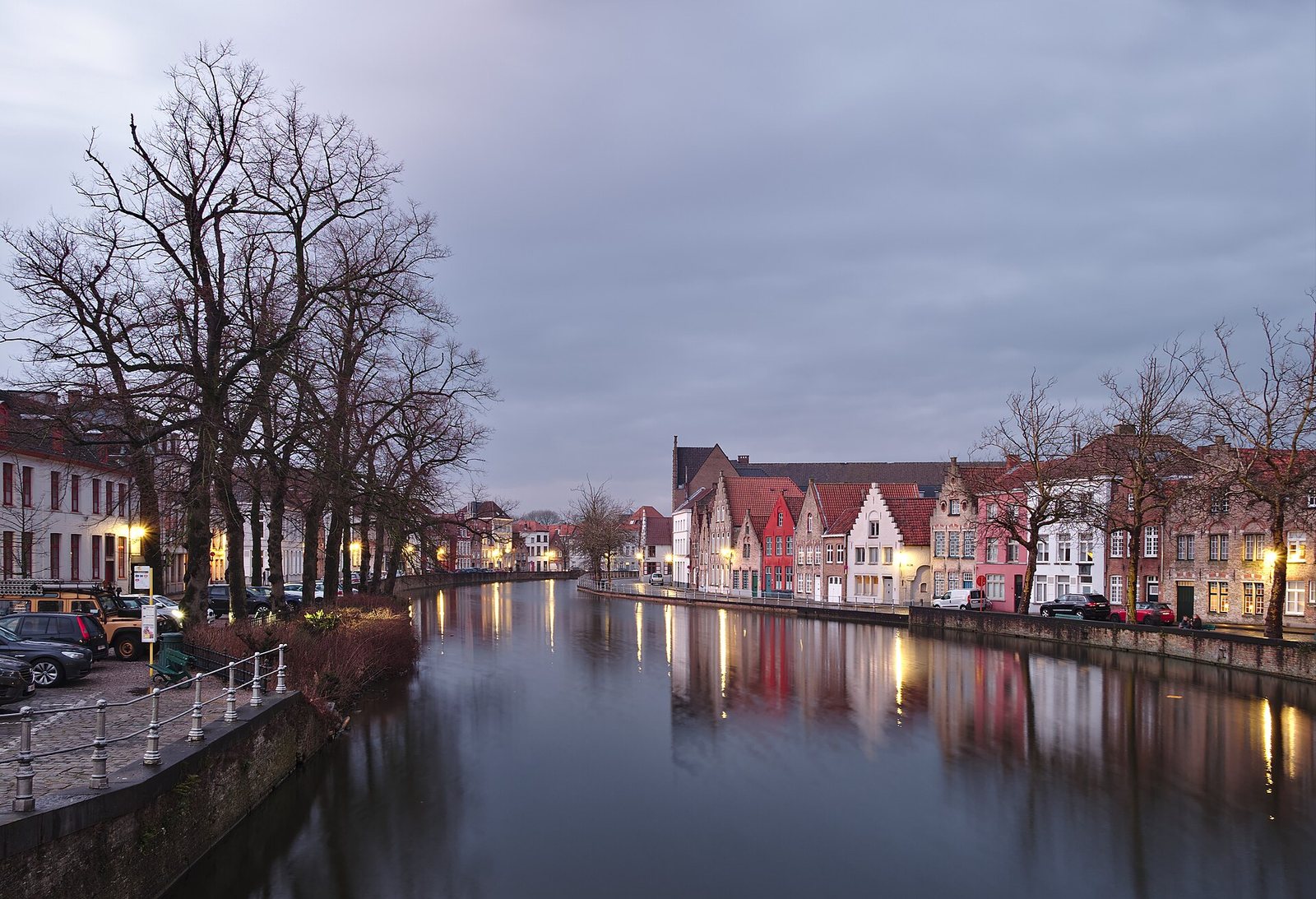
A **canal boat tour** from one of the landing stages near the centre is touristy but genuinely the best way to understand the city's layout. Afterwards, walk to the **Rozenhoedkaai** for the classic photo, then on to the **Beguinage** (Begijnhof), a peaceful courtyard of white houses where Benedictine nuns still live, and the **Minnewater** lake beside it. For fewer people, head east to the **Sint-Anna** quarter and the windmills along the old ramparts at the Kruisvest.
Art and museums
Bruges was a centre of the Flemish Primitives. The **Groeninge Museum** has works by Jan van Eyck and Hans Memling, and the **Saint John's Hospital** museum shows Memling's altarpieces in a medieval hospital ward. The **Church of Our Lady** holds Michelangelo's marble Madonna and Child, one of the few works by him to leave Italy in his lifetime. Smaller museums cover lace, chips and chocolate if you are travelling with children.
Beer, chocolate and food
Visit **De Halve Maan**, a family brewery in the centre with a beer pipeline running under the streets, and drink in old cafés such as **'t Brugs Beertje** or **Café Vlissinghe**, said to be the oldest tavern in the city. For chocolate, independent makers such as **The Chocolate Line** and **Dumon** are better than the chain shops on the main streets. Restaurants around the Markt charge a premium; walk a few streets away for better value, and book ahead for dinner at weekends.
Day trips from Bruges
**Damme** is a pretty village a few kilometres away along a tree-lined canal, reachable by bicycle or by a small paddle steamer in summer. The **Belgian coast** is fifteen minutes by train, with the coast tram running along it. **Ypres** (Ieper) and the First World War battlefields around it are about an hour away and are best visited with a guided tour.
Getting there and staying
Trains run from Brussels, Ghent and Antwerp frequently; Ghent is about twenty five minutes away. From the station it is a fifteen to twenty minute walk to the Markt, or a short bus ride. Stay inside the ring canal so you can enjoy the evenings and early mornings, when the streets empty and the bells ring over still water. Bruges charges a city tourist tax per person per night, usually added to your hotel bill.
Questions about Bruges
Is Bruges worth an overnight stay?
Yes, if you can. By evening most day visitors have left, and early mornings on the canals are magical. If time is short, arrive before ten in the morning and stay for dinner.
Bruges or Ghent: which is better?
Bruges is prettier and more compact; Ghent is livelier, larger and less touristy. Many travellers base themselves in Ghent and visit Bruges for a long day, or split the nights.
Can you swim or kayak in the canals of Bruges?
Swimming is not allowed, and the canals are reserved for the licensed tour boats. Enjoy them from a boat tour or from the banks.
When is Bruges least crowded?
Weekdays outside the summer school holidays, and especially November, January and February. Early mornings and evenings are quiet all year.
Facts checked . Fees, schedules and entry rules change, so always confirm the latest with the official source.