At a glance
- Best for
- History, architecture, food and walking
- Distance from Tirana
- About three and a half to four hours by road
- Time needed
- One to two nights
- Best season
- April to June and September to October
- Getting around
- On foot; steep cobbled streets
- Good base for
- The Blue Eye, Antigonea and Lazarat
Why go
Gjirokastër feels like a town carved from the mountain. Its Ottoman era houses were built as small fortresses, with stone ground floors, wooden upper rooms and views across the valley to the Lunxhëri mountains. The old bazaar, the castle and the walk between them make a perfect day, and the food is some of the best in the south.
Top things to do
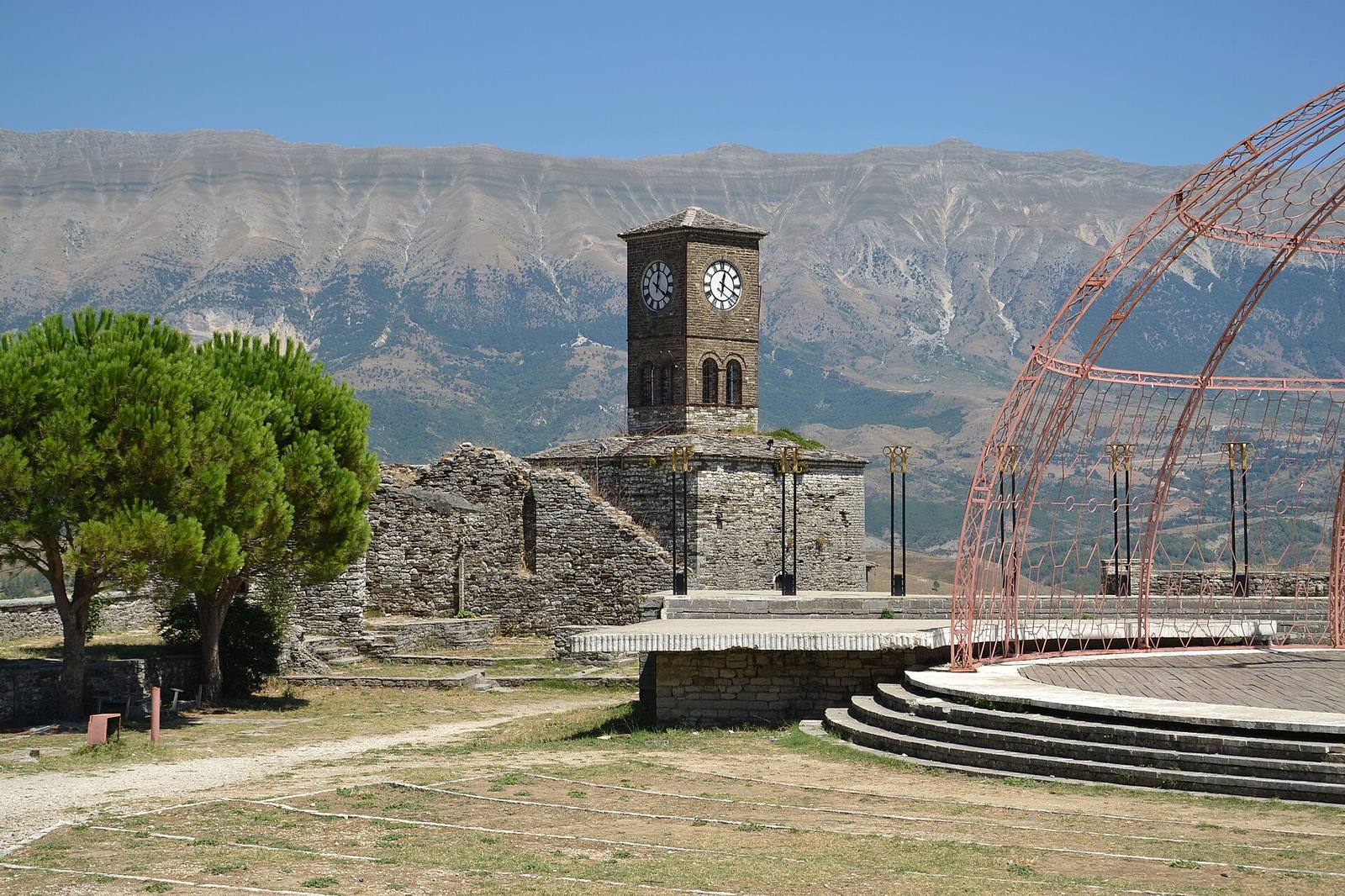
Climb to **Gjirokastër Castle**, a vast fortress with a long vaulted gallery, an armaments museum with old cannons and tanks, a clock tower and wide views. Inside it hosts the **National Folklore Festival**, held every few years, with performers from across Albania and the diaspora.
Below, the **Old Bazaar** is a star of five streets lined with stone shops selling carpets, embroidery, copper and carved wood. Visit the **Zekate House**, one of the grandest tower houses, with painted reception rooms and a view from its twin towers, and the **Skenduli House**, often shown by members of the family. The **Ethnographic Museum** stands on the site of the house where communist leader Enver Hoxha was born.
For something unusual, the **Cold War Tunnel** beneath the city is a large bunker system built for the regime, now open for guided visits. The **Kadare House** museum honours the novelist whose book Chronicle in Stone is set here.
Day trips
The **Blue Eye (Syri i Kaltër)**, a vivid spring of deep blue water, is about an hour away on the road to Sarandë and makes an easy stop. The ruins of **Antigonea**, an ancient city founded by King Pyrrhus, sit on a hill across the valley. Villages in the **Zagori** and **Lunxhëri** areas offer quiet hikes and stone bridges for those with time.
Food
Gjirokastër is famous for **qifqi**, rice balls with herbs and egg fried in a special pan, and **oshaf**, a sweet pudding of sheep's milk and figs. Look also for **shapkat**, a cornmeal and greens pie, and local cheeses. Family restaurants around the bazaar serve them in small terraces with valley views.
Where to stay
The most memorable stays are restored stone houses in the old town near the bazaar, often run by families. Streets are very steep and cobbled, so ask about access if you have heavy luggage. The modern lower town has larger hotels and easier parking.
Getting there and around
Buses from Tirana take around three and a half to four hours, and there are regular buses and furgons to Sarandë, roughly an hour and a half away. The bus stop is in the new town on the main road, a steep walk or short taxi ride below the bazaar. Inside the old town, walk, and wear shoes with good grip because the stones are slippery when wet.
A suggested day
Begin at the castle in the cool of the morning, then walk down to the Zekate House and on to the bazaar for coffee. After lunch, visit the Skenduli House and the Cold War Tunnel, and end the day watching the sun set over the valley from a terrace, as lights come on in the villages across the Drino.
Practical tips
Carry cash for museums and small shops. Some museums close one day a week or keep shorter hours in winter, so check before you go. The old town is cooler than the coast in summer but still warm in the afternoon.
Questions about Gjirokastër
How long should I spend in Gjirokastër?
One full day covers the castle, bazaar and main houses. Two nights lets you add the Blue Eye, Antigonea or a village hike.
Is Gjirokastër good for people with limited mobility?
It is challenging. The old town is built on a steep hill with uneven, slippery cobbles, so taxis to the bazaar and castle help.
How far is Gjirokastër from Sarandë?
Around an hour and a half by road, passing close to the Blue Eye, so the two pair well.
What should I eat in Gjirokastër?
Try qifqi, the local herby rice balls, and oshaf, a fig and sheep's milk pudding, plus local cheeses and grilled lamb.
Facts checked . Fees, schedules and entry rules change, so always confirm the latest with the official source.