At a glance
- Best for
- Food, architecture, beaches and city life
- Gateway
- Carrasco International Airport (MVD)
- Time needed
- Two to three days
- Best season
- October to April
- Getting around
- Walking, city buses with an STM card, taxis and ride apps
- Dinner time
- Usually from nine in the evening
The neighbourhoods to know
Montevideo is best understood as a string of barrios along the water.
- **Ciudad Vieja** is the old town on a peninsula at the western end. Walk from Plaza Independencia through the Puerta de la Ciudadela, along pedestrian Sarandí street, to Plaza Matriz and the Mercado del Puerto. It is lively by day and quieter at night.
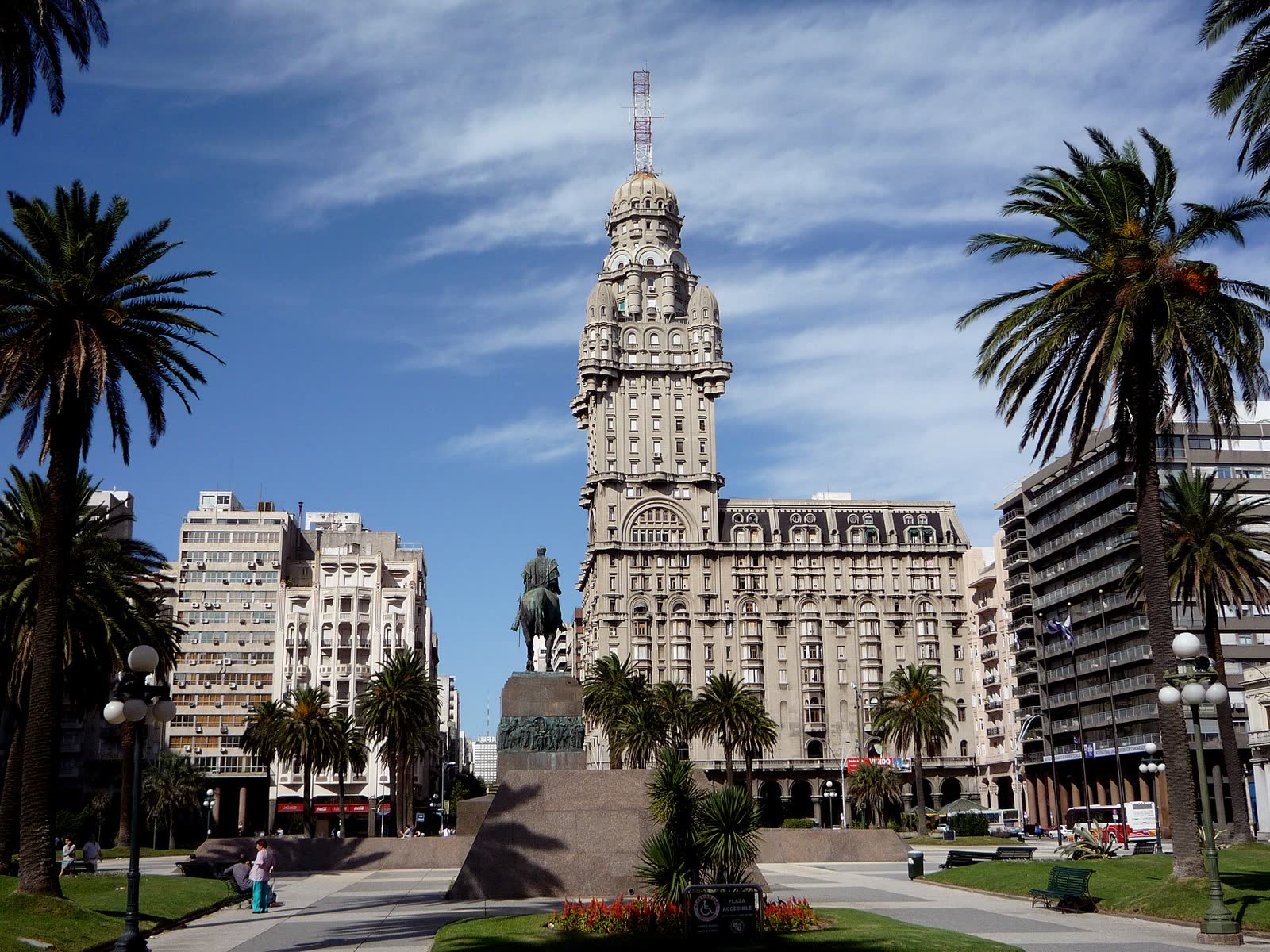
- **Centro** runs along Avenida 18 de Julio, the main boulevard, with the Palacio Salvo, cafés, shops and the Palacio Legislativo at the far end.
- **Barrio Sur and Palermo** are where candombe was born. On many Sunday afternoons and evenings you can hear the drum groups, called comparsas, practising in the streets.
- **Parque Rodó** has a lakeside park, a small funfair, the National Museum of Visual Arts and a busy Sunday market.
- **Pocitos and Punta Carretas** are residential and leafy, with the city's favourite beach, good cafés and restaurants and easy access to the rambla. Most first-timers stay here or in the Ciudad Vieja.
- **Carrasco** is the green, upmarket area near the airport, with wide beaches and quiet streets.
What to do
Start with the **rambla**, the waterfront promenade that runs for many kilometres along the coast. Walk or cycle it at sunset with everyone else. In the Ciudad Vieja, take a guided tour of the **Teatro Solís**, the country's grand opera house, and climb the **Palacio Salvo**, once the tallest building in South America. The **Museo Andes 1972** tells the story of the plane crash survivors with great care, and the **Museo del Carnaval** explains the city's long Carnival, the longest in the world by many accounts.
On Sunday morning, the **Feria de Tristán Narvaja** fills several blocks of Cordón with antiques, books, produce and junk. In the afternoon, head to Parque Rodó or the beach at Pocitos. If you visit in January or February, see a **tablado**, a neighbourhood stage where murga groups perform satirical songs late into the night.
Food and drink
The **Mercado del Puerto** is an old iron market hall full of parrillas, where grills piled with beef, chorizo and provoleta cheese smoke over wood embers. Go at lunchtime and order a medio y medio, a local mix of sparkling and white wine. Try a **chivito**, the national sandwich stacked with steak, ham, cheese and egg, and look for Tannat, Uruguay's signature red grape, on every wine list. Pocitos, Punta Carretas and Cordón have the best spread of modern restaurants and cafés.
Getting around
The old town and the rambla are walkable. City buses cover everything and take an STM card or cash; ride apps and metered taxis are easy to find. Tres Cruces bus terminal, in the centre, is where long distance buses leave for Colonia, Punta del Este and the rest of the country. From Carrasco airport, taxis, ride apps and airport buses reach the centre in around half an hour to forty five minutes.
Staying safe
Montevideo is generally relaxed, but petty crime is real. Bag snatching and phone theft happen in the Ciudad Vieja and Centro, especially at night and on empty streets. Keep your phone out of sight near the kerb, take a taxi or ride app after dark rather than walking through quiet blocks, and avoid outlying neighbourhoods that have no reason to be on a visitor's route. Check your government's travel advice for the latest guidance.
Day trips
Colonia del Sacramento is under three hours west by bus, and Punta del Este around two hours east. Closer in, the wineries of Canelones, such as Bouza on the edge of the city, make an easy half day of tastings and lunch among the vines.
Questions about Montevideo
Which neighbourhood should I stay in?
Pocitos or Punta Carretas for beaches, cafés and a calm evening walk, or the Ciudad Vieja if you want history on your doorstep and do not mind quiet streets at night.
How do I get from the airport to the city?
Use a taxi from the official desk, a ride app or an airport bus. Allow around half an hour to the eastern neighbourhoods and longer to the old town.
When can I hear candombe drums?
Comparsas practise in Barrio Sur and Palermo on many Sunday evenings and before Carnival, and the Llamadas parade in late January or February is the big event.
Is the beach in Montevideo good for swimming?
Yes, in summer locals swim at Pocitos, Malvín and Carrasco. The water is the brownish Río de la Plata estuary, so check daily water quality notices from the city before swimming.
How many days do I need in Montevideo?
Two full days covers the old town, the market and the rambla. Add a third for a winery, a museum day or a slower pace.
Facts checked . Fees, schedules and entry rules change, so always confirm the latest with the official source.