At a glance
- Best for
- Ancient history, UNESCO sites and elephants
- Main sights
- Sigiriya, Dambulla, Polonnaruwa, Anuradhapura
- Time needed
- Three to four days
- Best season
- Roughly February to September, the drier months
- Good base
- Sigiriya, Habarana or Dambulla
- Tip
- Climb Sigiriya early in the morning
Why go
This is the heart of ancient Sri Lanka. Kings built giant brick stupas, reservoirs called tanks and palaces here while much of Europe was in the Dark Ages. The landscape is flat and green, broken by granite outcrops, paddy fields and lakes, and it is easy to combine history in the morning with wildlife in the afternoon.
Sigiriya
**Sigiriya**, the Lion Rock, rises about two hundred metres above the jungle. In the fifth century King Kashyapa built a palace on its summit, reached through water gardens and a gateway shaped like a giant lion, of which only the paws remain. On the way up you pass the **Mirror Wall** and the famous painted maidens in a sheltered gallery. The climb has around twelve hundred steps and can be hot and windy at the top. Go at opening time, carry water, and check the latest ticket arrangements with the Central Cultural Fund.
Pidurangala
The neighbouring rock of **Pidurangala** has a cave temple with a reclining Buddha and a scramble to a flat summit with the best view of Sigiriya itself. It is popular at sunrise and sunset and is cheaper and quieter than the main rock.
Dambulla cave temples
The **Dambulla Royal Cave Temple** is a set of five caves under an overhanging rock, packed with Buddha statues and painted ceilings dating back over two thousand years. It is a short climb from the road. Shoes come off at the entrance, so bring socks for the hot rock.
Polonnaruwa
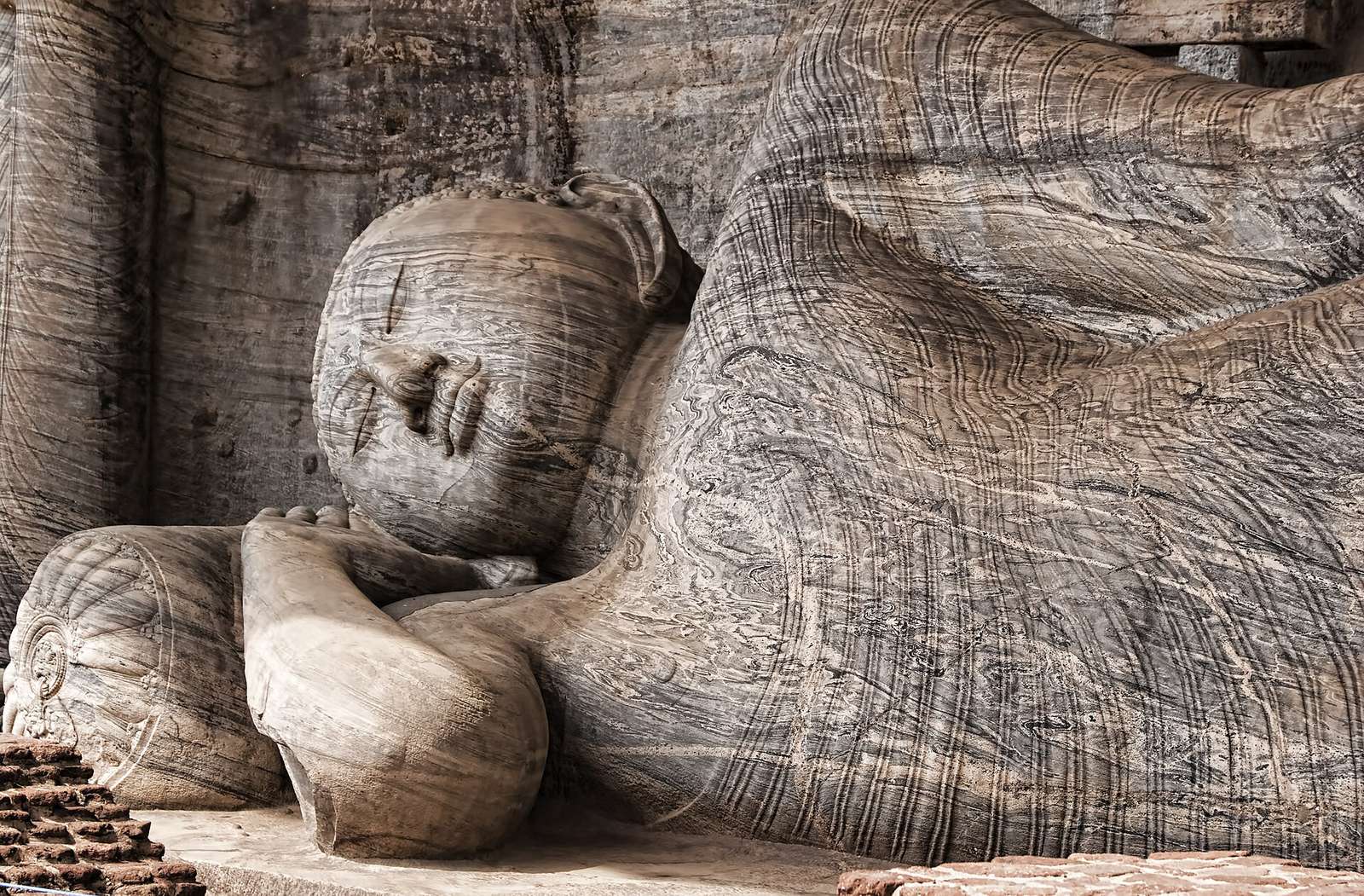
The medieval capital of **Polonnaruwa** is the most compact of the ancient cities and best explored by bicycle. Highlights are the royal palace, the circular Vatadage, the Quadrangle of sacred buildings and the **Gal Vihara**, four Buddha figures carved from one granite face. Allow most of a day.
Anuradhapura
**Anuradhapura** was the first great capital and is a living pilgrimage site. The **Sri Maha Bodhi** tree is said to have grown from a cutting of the tree under which the Buddha found enlightenment, and huge white stupas such as Ruwanwelisaya rise above the plains. It is further north, so many visitors stay a night or visit with nearby **Mihintale**, where Buddhism is said to have arrived on the island.
Elephant safaris
**Minneriya**, **Kaudulla** and **Hurulu Eco Park** are near Habarana. In the dry season, roughly June to October, elephants come to the shrinking reservoirs in large numbers, a sight known as the gathering. Jeep drivers decide each day which park has the most animals. Choose an operator who keeps a respectful distance.
Village life
Many guesthouses offer village tours with a bullock cart ride, a lake crossing and a home cooked rice and curry lunch. They are touristy but pleasant, especially for children.
Where to stay
**Sigiriya village** has guesthouses with views of the rock. **Habarana** is central for safaris and Polonnaruwa. **Dambulla** has more services and good bus links. Eco lodges in the area are some of the best places to stay on the island.
Getting there
There is no train to Sigiriya. Buses run from Dambulla, and most travellers use a private car with driver or tuk tuks between sights. Dambulla is about two hours from Kandy by road.
Questions about the Cultural Triangle
Is climbing Sigiriya hard?
It is a steady climb of around twelve hundred steps with some exposed metal stairways. Most reasonably fit people manage it in one to two hours return. Go early to avoid the heat.
Sigiriya or Pidurangala?
Do both if you can. Sigiriya has the history and frescoes, while Pidurangala gives the classic view of Sigiriya itself.
Where is the best base for the Cultural Triangle?
Sigiriya or Habarana works for most trips. Stay in Anuradhapura for a night if you want to see it properly.
When can I see the elephant gathering?
Roughly June to October, when the reservoirs at Minneriya and Kaudulla shrink and herds come to graze on the shore.
Facts checked . Fees, schedules and entry rules change, so always confirm the latest with the official source.