At a glance
- Best for
- History, views, museums and a first visit
- Nearest airports
- Bologna and Rimini, then the bus from Rimini
- Time needed
- One full day, ideally with one night
- Best season
- April to June and September to October
- Getting around
- On foot; the old town is steep and partly car free
- Good to know
- Day crowds thin out after late afternoon
Why go
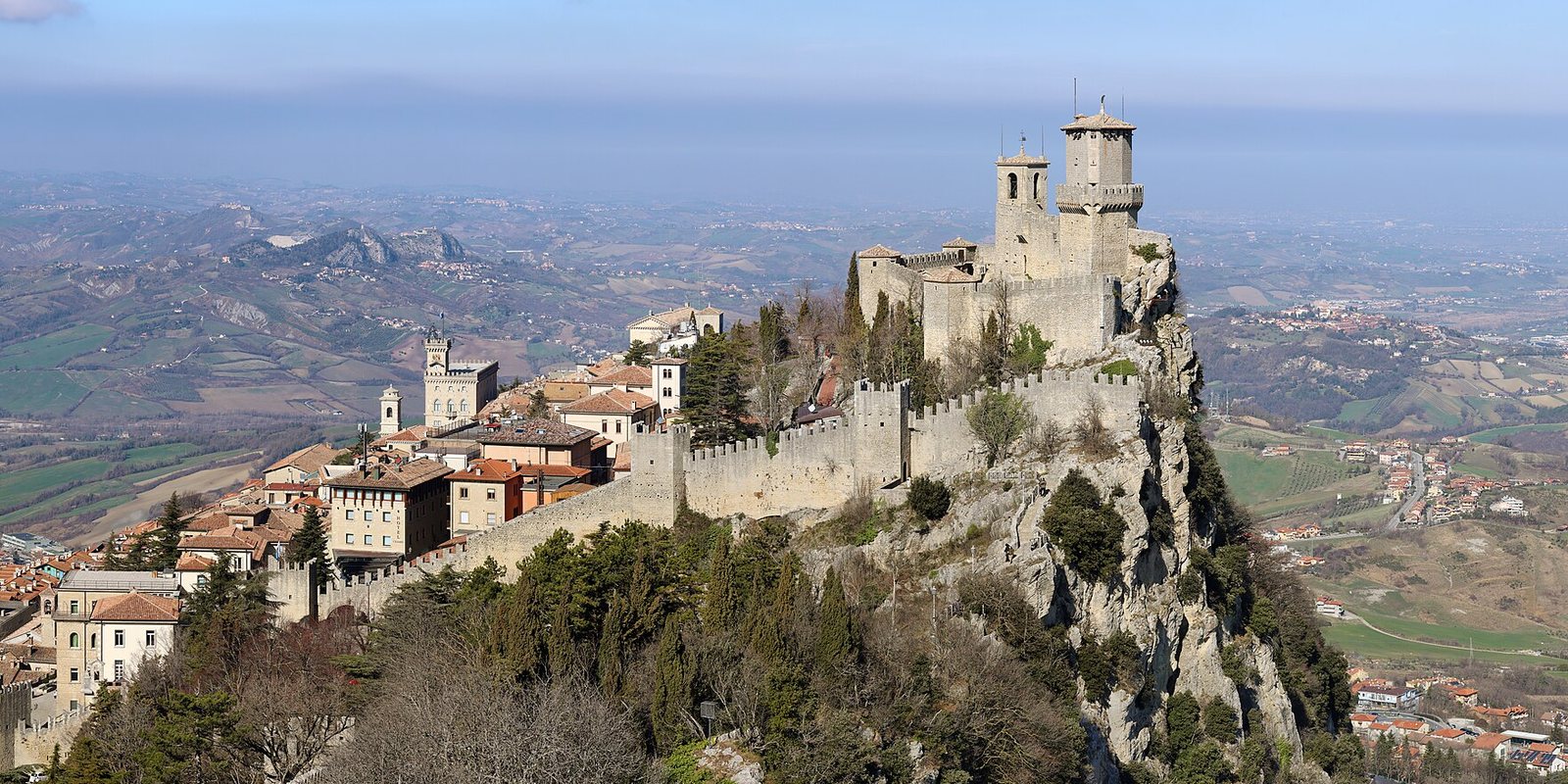
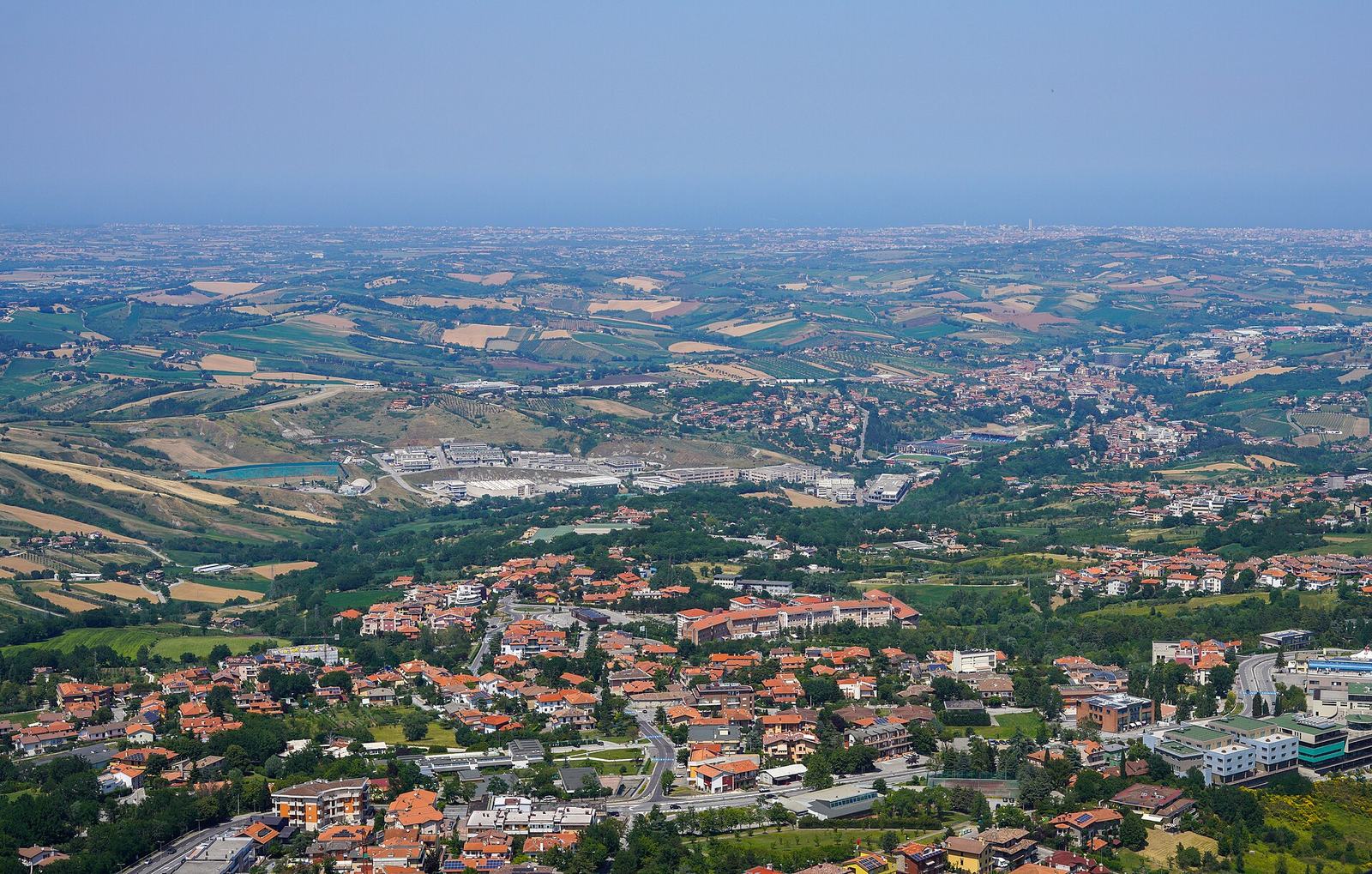
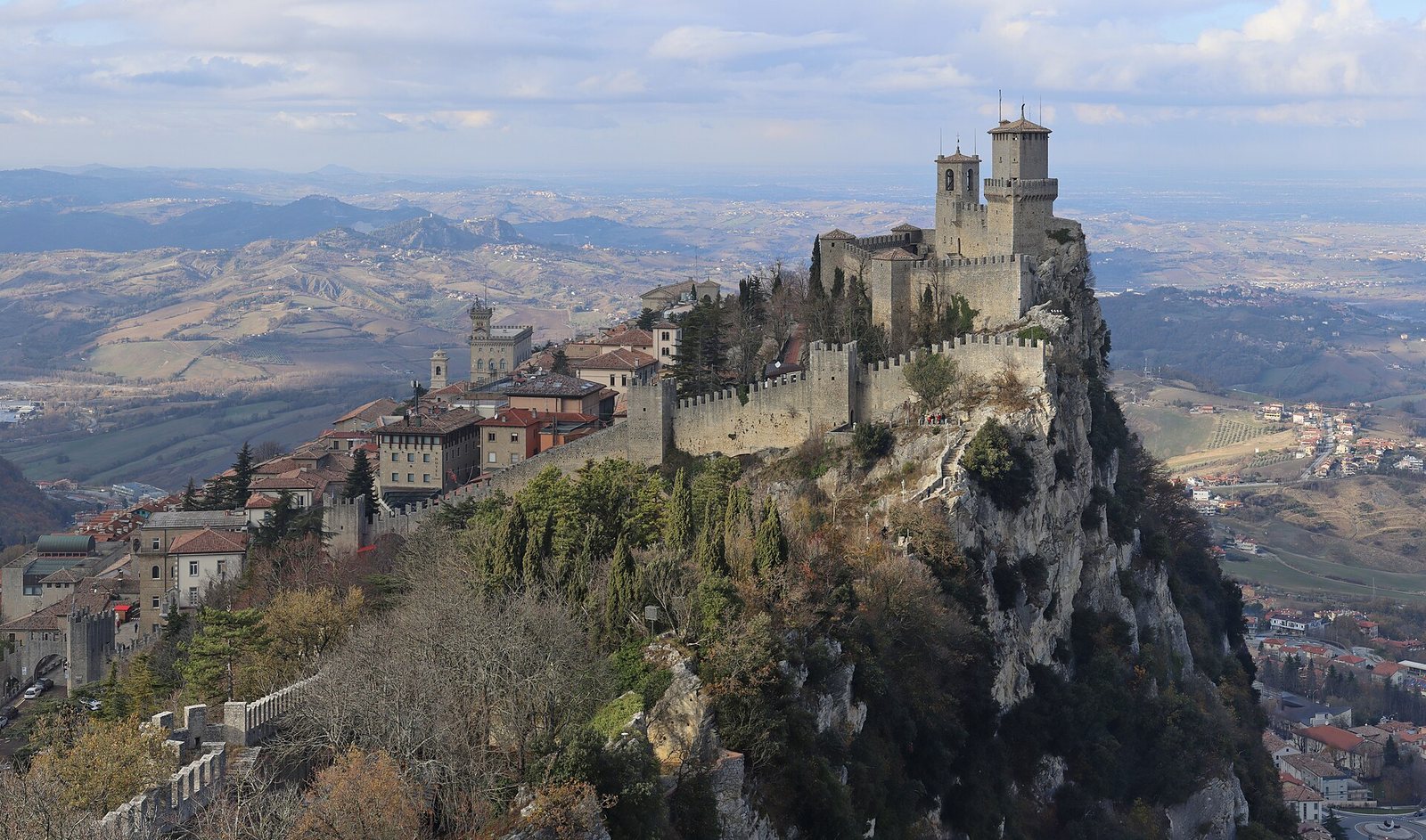
Few capitals feel this theatrical. The old town clings to the ridge of Monte Titano, with sheer limestone on one side and gentle slopes down to Borgo Maggiore on the other. From the city walls you look out over the hills of Romagna and Montefeltro, and on a clear day you can see the Adriatic coast at Rimini. Inside the walls, everything is close: the town hall, the Basilica, a handful of small museums, shops, cafés and the path up to the towers can all be walked in a day.
What surprises many first-timers is how real it feels once the coach groups leave. San Marino is a working state with its own parliament, stamps, coins and traditions. Stay one night and the lanes turn quiet, the lights come on along the walls and the view at sunset is something you will remember.
What to see
**Piazza della Libertà** is the heart of the old town, with the Statue of Liberty in white marble and the neo-Gothic **Palazzo Pubblico**, the seat of government. You can visit the council chamber when it is not in session. In the warmer months the **changing of the Guard of the Rock** takes place in the square through the day; check the times with the tourist office.
A short walk away, the neoclassical **Basilica di San Marino** holds relics of Saint Marinus, the stonemason who, by tradition, founded the community in 301. Next to it, the small **Church of San Pietro** has two rock beds said to be where Marinus and his companion Leo slept.
The **State Museum** in Palazzo Pergami Belluzzi covers archaeology, art and the history of the republic. Smaller museums include the **Museum of Ancient Arms** inside the Cesta tower, the **Museum of Emigration**, which tells the story of the many Sammarinese who left for France, Belgium, the United States and Argentina, and the **Philatelic and Numismatic Museum** down in Borgo Maggiore. Several privately run curiosity and torture museums line the lanes; they are optional.
Then walk up to the towers. **Guaita**, the first tower, and **Cesta**, the second and highest, are open to visitors, linked by the **Passo delle Streghe**, the Witches' Pass, a short path along the cliff edge. Our guide to Monte Titano and the Three Towers covers them in detail.
Food and drink
Food here is Romagna food: **piadina** flatbread with ham and squacquerone cheese, handmade **tagliatelle** and **cappelletti**, **strozzapreti** pasta, rabbit and grilled meats, and truffles in autumn. For dessert look for **Torta Tre Monti**, a layered wafer cake named after the three towers, and **Torta Titano**. Local wines from the Consorzio Vini Tipici include **Sangiovese** and **Biancale**. Restaurants with terraces on the cliff edge charge for the view, while simpler places a few lanes back offer generous plates of pasta at friendlier prices. See our places to visit list for names.
Where to stay
Staying inside the walls is the best way to see the old town at its calmest. There are small family run hotels and guesthouses, several with panoramic rooms, plus a few larger hotels near the main gate, Porta San Francesco. Parking is outside the historic centre, and luggage means stairs, so pack light. If you prefer the beach, you can stay in Rimini and visit for the day, but you will miss the evening atmosphere.
Getting there and around
The scheduled bus from Rimini railway station drops you at Piazzale Calcigni, just below the old town, after a scenic climb of under an hour. Drivers use the numbered car parks around the ridge; P1 and nearby lots fill quickly in summer. From Borgo Maggiore, the **cable car** rises to the old town in a couple of minutes. Inside the walls you walk, and comfortable shoes with grip matter, as the stone is steep and slippery when wet.
Tips for a smooth visit
Arrive early or stay late to avoid the busiest hours. Pick up a map and ask about combined museum tickets at the tourist office. Keep in mind that many shops sell tax-reduced goods, but compare prices with home before you buy. And save time for simply walking the walls: the views are free and the best thing in town.
Questions about the City of San Marino
How many days do I need in the City of San Marino?
One day covers the main square, the Basilica, a museum and the first two towers. Stay one night if you can, to enjoy the quiet evening and sunrise views.
Can I visit the Palazzo Pubblico?
Yes, the council chamber and other rooms are usually open to visitors outside sessions of parliament. Check current hours and tickets with the official tourism office.
Is the old town accessible for wheelchairs and strollers?
Partly. The main streets have lifts and ramps in places, but many lanes are steep and cobbled. The cable car and the public lifts near the car parks help.
Is the City of San Marino worth visiting?
Yes. Its setting on the cliff, its towers and its long history of independence make it unlike anywhere else in Italy, especially outside the busiest hours.
Facts checked . Fees, schedules and entry rules change, so always confirm the latest with the official source.