At a glance
- Best for
- History, food, coffee, crafts and nightlife
- Airport
- Kigali International Airport
- Time needed
- Two to three days
- Best season
- June to September and December to February
- Languages
- Kinyarwanda, English, French and Swahili
- Getting around
- Moto taxis, ride-hailing apps, taxis and buses
Why visit Kigali
Kigali is where you start to understand Rwanda. The city rebuilt itself after the 1994 genocide against the Tutsi and is now one of the most livable capitals on the continent. Streets are swept, plastic bags are banned, and the hills give every neighbourhood a view. It is also a relaxed city for first-time visitors to Africa: people are polite, the pace is gentle and crime against visitors is low.
The Kigali Genocide Memorial
Begin at the Kigali Genocide Memorial in Gisozi, where more than a quarter of a million victims are buried. The exhibition explains how the genocide happened, what it did to families and how the country has tried to heal. Allow at least two hours, go early in the trip and leave space in the afternoon for quiet. Entry is free, though donations are welcome. Other sites deepen the story: the Campaign Against Genocide Museum inside the Parliament building, Camp Kigali where Belgian peacekeepers died, and the Nyanza memorial in Kicukiro.
Neighbourhoods to know
- **Kiyovu:** the leafy central hill with the Hôtel des Mille Collines, embassies and many restaurants.
- **Nyamirambo:** the city's most colourful, Muslim-influenced quarter, with the Green Mosque, tailors, barbers and street food. Take a walking tour with the Nyamirambo Women's Center.
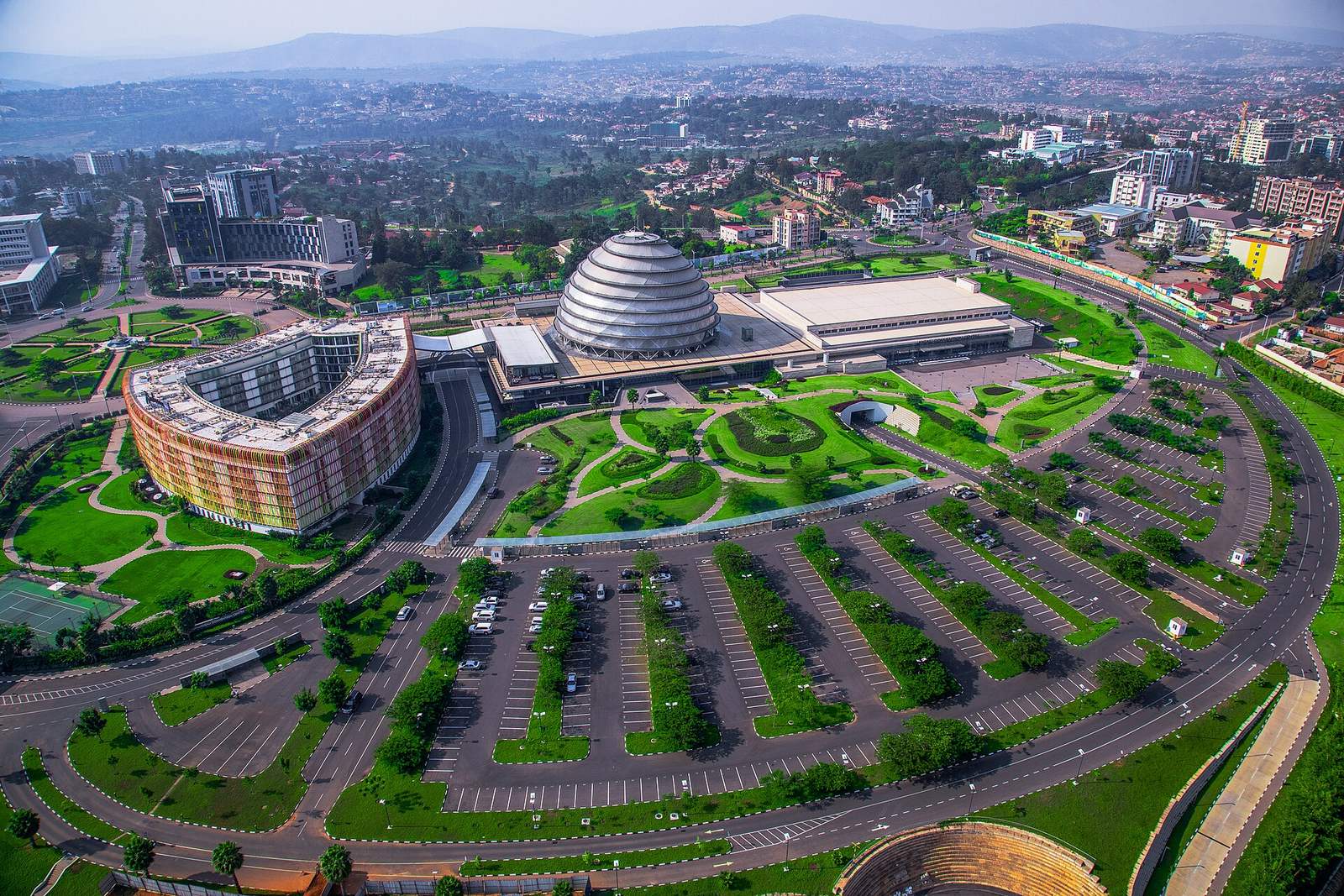
- **Kimihurura and Kacyiru:** home to the convention centre, government offices, galleries and nightlife.
- **Remera and Kimironko:** busy residential areas near the stadium, with the big Kimironko market.
- **Nyarutarama and Kibagabaga:** upmarket hills with the golf course and terrace restaurants.
Food and coffee
Rwanda grows some of the finest coffee in Africa, and Kigali is the best place to taste it. Question Coffee and the homegrown Bourbon chain are favourites. For food, try a lunch buffet of isombe (cassava leaves), beans, plantain and sweet potato, then evening brochettes of goat with grilled plantain and a cold Primus or Mützig. Higher-end restaurants in Kiyovu and Kimihurura serve Indian, Ethiopian, French and modern Rwandan cooking.
Arts and markets
Inema Arts Center and Niyo Gallery show contemporary Rwandan painting and run dance performances. At Caplaki crafts village you can buy agaseke baskets, imigongo cow-dung art and carvings. Kimironko market is the place to choose bright kitenge fabric and have a tailor make a shirt or dress, often within a day or two.
Getting around
Moto taxis are everywhere and drivers must give you a helmet; agree on the fare or use the meter where offered. Ride-hailing apps operate in the city, and metered taxis wait at hotels. City buses are cheap and use a tap card. Walking is pleasant in daytime, though the hills are steep.
Safety and etiquette
Kigali is safe by regional standards, but keep the usual habits: watch your phone in crowds and at Nyabugogo bus park, and use registered transport at night. Photography of government buildings, the military and police is not allowed. On the last Saturday morning of each month, Umuganda community work closes many businesses until about midday, so plan around it.
How long to stay
Two days covers the memorial, a market, Nyamirambo and a good dinner. A third day lets you add the museums, a coffee tasting or a hike up Mount Kigali. Then head north to the volcanoes, east to Akagera or west to Lake Kivu.
Questions about Kigali
Is Kigali safe for tourists?
Yes, it is one of the safest capitals in Africa. Petty theft does happen, so keep valuables out of sight, but violent crime against visitors is rare.
What is Umuganda?
A national community work morning on the last Saturday of each month. Most shops and traffic pause until around midday, and visitors are welcome to join with permission.
Can I visit the Kigali Genocide Memorial with children?
Yes, but the exhibitions are graphic in places. Older children usually cope with preparation; a children's room is especially emotional, so judge it for your family.
How do I get from the airport to the city?
Kigali International Airport is about a twenty minute drive from the centre. Licensed taxis and ride-hailing cars wait outside arrivals, and many hotels can arrange a transfer.
Facts checked . Fees, schedules and entry rules change, so always confirm the latest with the official source.