At a glance
- Best for
- Monuments, architecture, museums and city life seen from a tour
- Airport
- Pyongyang Sunan International Airport (FNJ)
- Time needed
- Three to four days on most tours
- Best season
- April to June and September to October
- Language
- Korean; your guides speak English, Chinese or Russian
- Getting around
- Tour bus, with metro rides arranged by guides
What Pyongyang is like
The city was almost completely destroyed by bombing during the Korean War and rebuilt from the 1950s onwards as a model socialist capital. The result is a city of grand scale: broad, quiet roads, huge squares built for parades, and buildings designed to impress. Newer districts such as Mirae Scientists Street, Ryomyong Street and the Hwasong area add colourful high rises. Traffic is light compared with other Asian capitals, though it has grown noticeably in recent years.
Pyongyang residents are, by national standards, privileged, and the city you see is carefully presented. Many visitors find the most memorable moments are small ones: children on rollerskates in Kim Il Sung Square, couples in the parks along the river on a Sunday, or the crowd on a metro platform.
The big sights
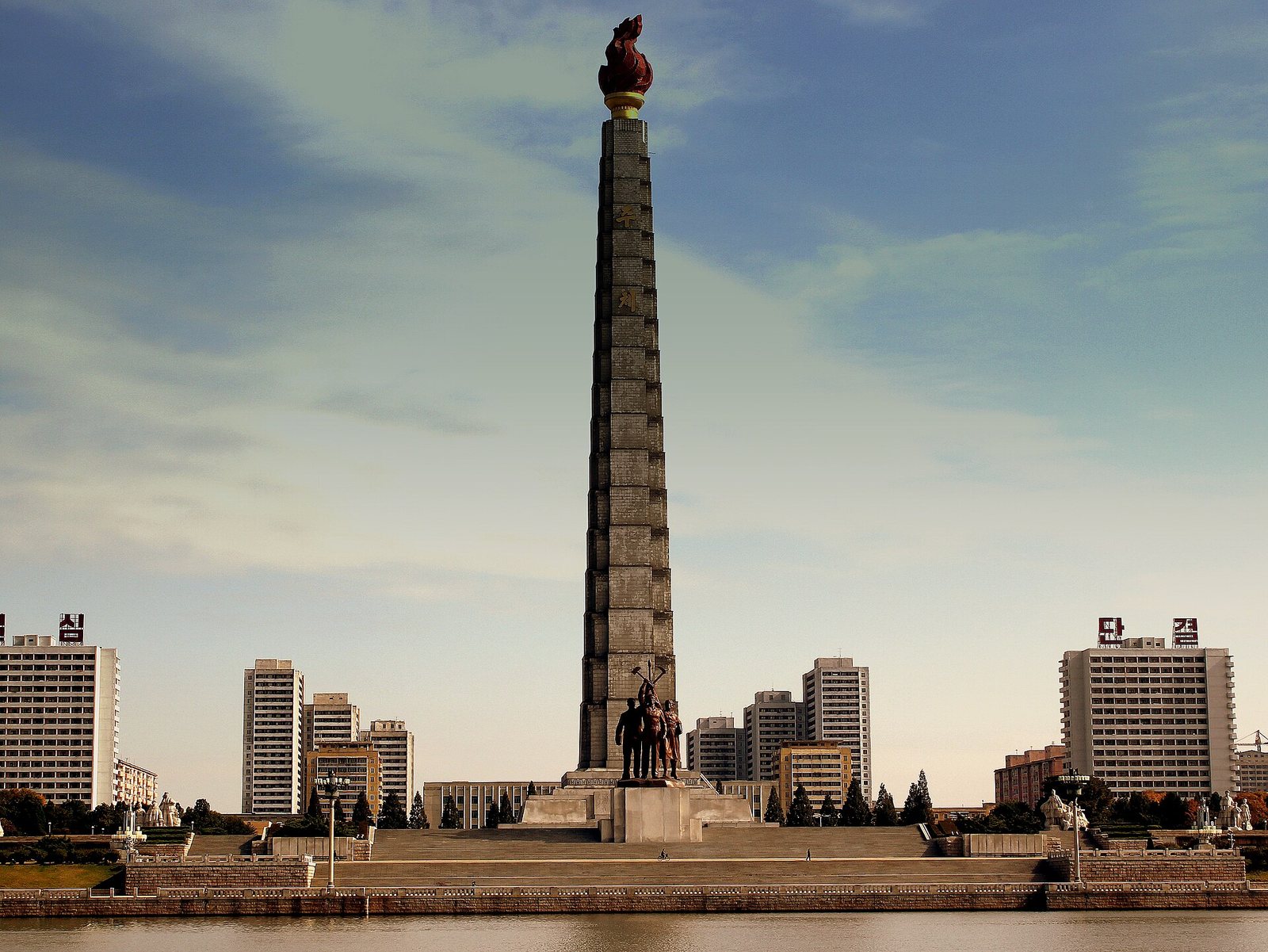
**Kim Il Sung Square** is the city's ceremonial heart, facing the Grand People's Study House across the river from the **Juche Tower**, which you can usually ride to the top for a wide view. The **Mansudae Grand Monument**, with its bronze statues of Kim Il Sung and Kim Jong Il, is a stop on almost every tour, where visitors are expected to bow and may be asked to lay flowers. The **Arch of Triumph**, larger than the one in Paris, marks Kim Il Sung's return in 1945.
The **Victorious Fatherland Liberation War Museum** tells the official story of the Korean War and includes the captured US spy ship USS Pueblo. **Kumsusan Palace of the Sun**, the mausoleum of Kim Il Sung and Kim Jong Il, is visited only on certain days with strict dress and behaviour rules.
The metro and daily life
The **Pyongyang Metro** is one of the deepest in the world, with chandeliered stations named after revolutionary ideas such as Puhung (Rebirth) and Yonggwang (Glory). Tours now usually ride several stops rather than the two or three of earlier years. Other popular stops include **Moranbong Park**, the **Mangyongdae Children's Palace** with its after school performances, the **Pyongyang Department Store No. 1**, and the **Kwangbok Area Supermarket**, where visitors can shop with local customers.
Where you will stay
Most tours use the **Yanggakdo International Hotel** on an island in the Taedong, or the twin towered **Koryo Hotel** in the centre. Your guides choose and book the hotel as part of the tour. You will not be allowed to leave the hotel alone, but hotels have restaurants, bars, shops and sometimes bowling or billiards.
Food in Pyongyang
The signature dish is Pyongyang **naengmyon**, cold buckwheat noodles in a chilled broth, best known from **Okryu Restaurant** on the riverbank. Tours also often include duck barbecue, hotpot, kimchi in many forms and draught beer at a microbrewery or bar, since Taedonggang beer is a point of national pride.
Rules to keep in mind
Never photograph soldiers, construction sites or military checkpoints, and always ask your guides before taking photos of people. Do not crop, fold or damage images of the leaders, including in newspapers. Follow your guides' instructions at monuments. These rules feel strict, but following them is what keeps you and your guides safe. Read our North Korea destinations overview for the rest of the country, and see places to visit for more sights in the capital.
Questions about Pyongyang
Can I walk around Pyongyang on my own?
No. Visitors stay with their guides outside the hotel at all times. Some tours allow short walks along set routes with guides, but independent exploring is not permitted.
Which hotel will I stay in?
Usually the Yanggakdo International Hotel or the Koryo Hotel, chosen by your tour operator and the state travel company. You can ask your operator in advance but cannot book directly.
Do I have to bow at the statues?
Visitors are expected to show respect at the Mansudae Grand Monument, usually by bowing as a group. Your guides will explain what is expected. Refusing can cause real problems for them and for you.
How many days do I need in Pyongyang?
Most tours spend three to four days in the capital, often split around a day trip to Kaesong and the DMZ. That is enough to see the main monuments, museums, the metro and a performance.
Facts checked . Fees, schedules and entry rules change, so always confirm the latest with the official source.