At a glance
- Best for
- Old towns, history, views, boat trips and seafood
- Airport
- Tivat Airport (TIV), about fifteen to twenty minutes away
- Time needed
- Two to three days
- Best season
- May to June and September to October
- Getting around
- Walking, local buses, taxis and boats
- Good base for
- Perast, Tivat, Lovćen and Cetinje
Why visit Kotor
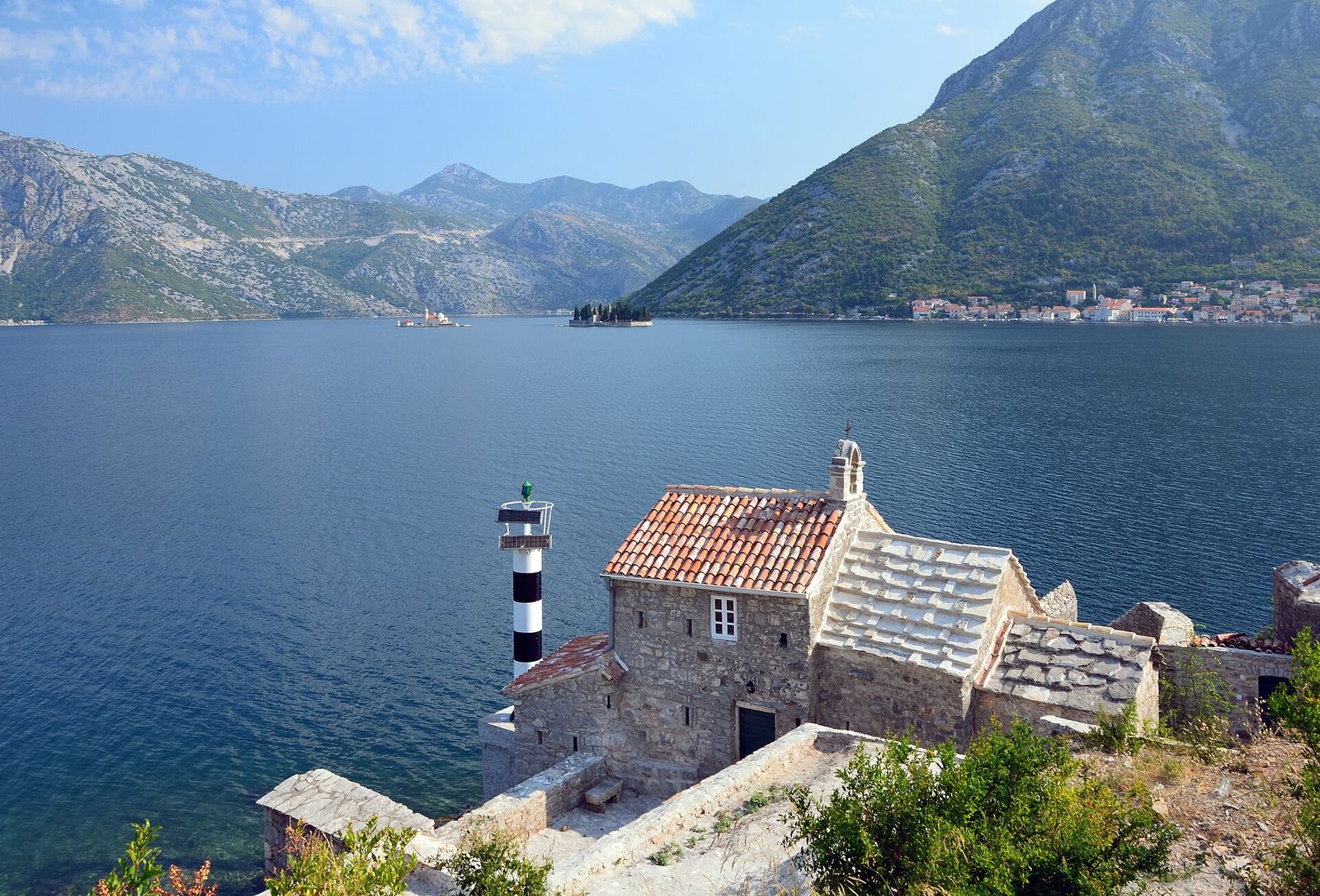
Kotor combines a beautifully preserved old town with one of the most dramatic natural settings in Europe. The bay, called Boka Kotorska locally, winds inland for kilometres between steep slopes, and the villages along its shore were home to the sea captains who made the area rich under Venetian rule. You can spend a morning lost in the lanes, an afternoon on a boat to Perast and an evening over grilled fish by the water.
Exploring the old town
Enter through the Sea Gate onto the Square of Arms, with its clock tower and café terraces. From there, lanes lead to the twelfth century Cathedral of Saint Tryphon, the Maritime Museum in a baroque palace, small Orthodox and Catholic churches side by side, and countless squares named after what used to be sold there. Kotor is famous for its cats, which you will see everywhere, and there is even a small Cats Museum. The old town is car free and compact, so the joy is in wandering without a plan.
The fortress climb
The walls zigzag up the mountain to the Castle of San Giovanni, roughly 1,350 steps above the town. Go early in the morning or near sunset: the climb is steep, mostly unshaded and very hot at midday in summer. Take water and proper shoes. A free alternative path, the Ladder of Kotor, starts from the Škaljari side and joins the walls partway up. The view of the bay from the top is the image on half of Montenegro's postcards.
Perast and Our Lady of the Rocks
Twenty minutes along the bay, Perast is a single street of palaces and churches facing two small islands. Boats run from the waterfront to Our Lady of the Rocks, an island church built on a reef that locals made by sinking old ships and dropping stones, a tradition still marked every July. The town museum tells the story of Perast's naval glory. Taxi boats and tour boats also run from Kotor.
Around the bay
The bay rewards slow exploring. Dobrota and Prčanj are quiet villages of captains' houses with swimming spots right off the promenade. Kayaking from Kotor is a calm way to see the shore. Tivat, across the Vrmac ridge, has the Porto Montenegro marina and the airport. Above Kotor, the serpentine road climbs twenty five hairpin bends to Njeguši, the village known for smoked ham and cheese, and on to Lovćen National Park and the mausoleum of Njegoš.
Cruise ships and crowds
Kotor is a major cruise port. On days when several ships are in, the old town can be very crowded from mid-morning to late afternoon. Check the port's cruise schedule, visit the old town early or in the evening, and use the busy hours for a boat trip or a drive up to Lovćen.
Where to stay
Staying inside the old town is atmospheric, though some rooms are reached by stairs and summer nights can be lively near the bars. Dobrota and Muo offer quieter waterfront apartments within walking distance. Perast is magical in the evening when day visitors leave. Book early for July and August.
Food and drink
The bay's cooking is Mediterranean: black risotto, mussels from the bay, grilled fish, octopus, and Njeguši ham with local cheese. Try Montenegrin wines such as red Vranac and white Krstač. The green market outside the walls is good for fruit, cheese and olives.
Plan your visit
Find restaurants, viewpoints and stays on our places to visit list, and see how Kotor links with Budva and Lake Skadar in the trip planner.
Questions about Kotor
How many days do I need in Kotor?
Two days covers the old town, the fortress climb and Perast. Three days lets you add Lovćen, Njeguši and a boat trip around the bay at an easy pace.
Is the climb to Kotor fortress hard?
It is steep and has many uneven steps, but most reasonably fit people manage it in under an hour. Go early or late to avoid the midday heat, and wear good shoes.
Which airport is closest to Kotor?
Tivat Airport is the closest, a short drive away. Podgorica Airport is around two hours by road, and Dubrovnik in Croatia is another option, with a border crossing.
Can I swim in Kotor?
Yes. There are small pebble beaches and swimming platforms along the bay in Dobrota, Muo and Prčanj, with calm water, though the open sea beaches near Budva are clearer.
Facts checked . Fees, schedules and entry rules change, so always confirm the latest with the official source.