At a glance
- Best for
- Food, city sights, shopping and culture
- Airport
- Kuala Lumpur International Airport (KUL)
- Time needed
- Two to four days
- Best season
- All year, with heavy afternoon showers common
- Language
- Malay, with English, Chinese dialects and Tamil widely spoken
- Getting around
- LRT, MRT, monorail, ride apps and walking
Why go
KL is the most comfortable introduction to Southeast Asia that many travellers find. Signs are in Malay and English, the rail lines are clean and air conditioned, and the food is a reason to come in itself: nasi lemak, roti canai, char kway teow, banana leaf rice and satay are all done brilliantly here. The city is also greener than its skyline suggests, with forest reserve on Bukit Nanas and wide gardens around the old colonial centre.
The main sights
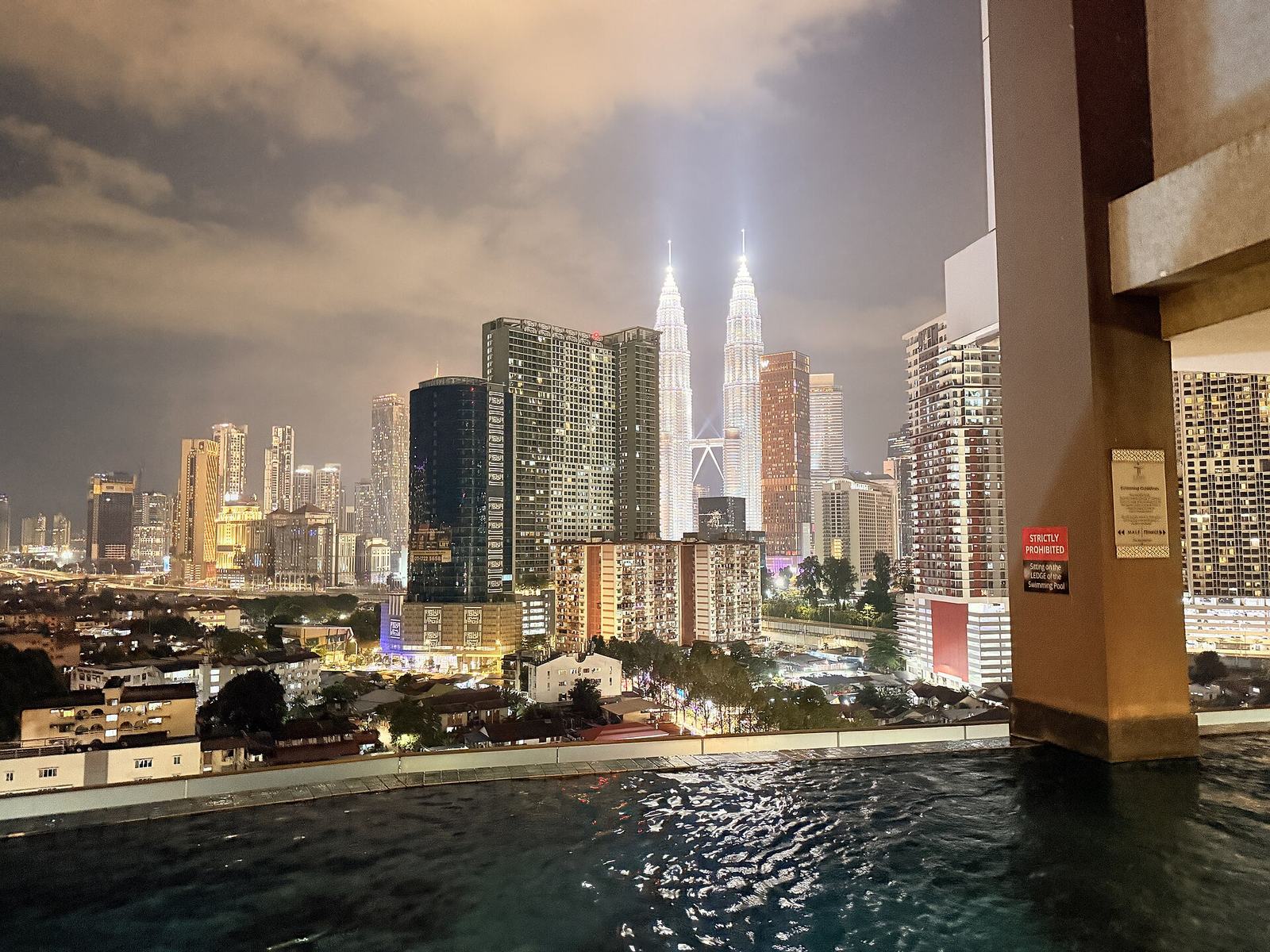
The Petronas Twin Towers are the city's emblem. You can buy timed tickets for the skybridge and observation deck online, and the park below has a free children's pool and an evening fountain show. Batu Caves, on the northern edge of the city and reachable by KTM Komuter train, is a limestone hill with a towering golden statue of Lord Murugan and a long painted staircase up to a cave temple. Dress modestly and watch your bags around the monkeys.
In the old centre, Merdeka Square is where independence was declared in 1957, framed by the Moorish style Sultan Abdul Samad Building. Masjid Jamek sits where the Klang and Gombak rivers meet, the spot where the city began as a tin mining settlement. A short walk south brings you to Chinatown, around Petaling Street and Central Market, and to the Sri Mahamariamman Temple and Sin Sze Si Ya Temple. The Lake Gardens hold the Islamic Arts Museum, the National Mosque, the Bird Park and the National Museum.
Neighbourhoods
Bukit Bintang is the shopping and nightlife district, with Pavilion mall, the Jalan Alor food street and the bars of Changkat Bukit Bintang. KLCC, around the towers, has the big international hotels, the Suria mall and Aquaria. Chinatown is the most atmospheric place for heritage, cafes in old shophouses and hidden bars. Brickfields, beside KL Sentral station, is Little India, full of sari shops, flower garlands and banana leaf restaurants. Kampung Baru is a traditional Malay village of wooden houses that has survived right beside the towers, and is a lovely place for an evening meal. Bangsar and Damansara are leafy, local neighbourhoods with good cafes and restaurants.
Food
Start the day with roti canai and teh tarik at a mamak restaurant, try nasi lemak for lunch and head to Jalan Alor or Kampung Baru for an evening of satay, grilled fish and noodles. Old kopitiams such as Yut Kee serve kaya toast and Hainanese dishes. For a special night, KL has excellent modern Malaysian restaurants that cook with native herbs and produce. Halal food is everywhere; Chinese restaurants are where you will find pork.
Getting around
The KLIA Ekspres train links the airport with KL Sentral quickly. In the city, the LRT, MRT and monorail cover most sights, and a contactless bank card or a Touch 'n Go card works on most lines. Ride apps such as Grab are reliable and much easier than street taxis. Walking is pleasant in Chinatown and KLCC, but pavements can end abruptly and traffic is heavy, so take care crossing.
Where to stay
KLCC and Bukit Bintang suit first-time visitors, with everything in walking distance and plenty of hotels at every level. Chinatown has characterful boutique stays and hostels. Stay near a rail station and you will rarely need a car.
Day trips
Melaka is around two hours south by bus. The cool tea country of the Cameron Highlands is a longer trip and better with a night or two. Putrajaya, the government city, has striking mosques and bridges. Kuala Selangor offers fireflies along the river after dark.
Practical tips
Afternoon storms are common, so plan outdoor sights for the morning. Keep bags on the side away from the road, as snatch thefts from motorbikes do happen. Carry a light layer for very cold malls and trains. Our places to visit list has more ideas, and the free trip planner will help you fit KL into a wider route.
Questions about Kuala Lumpur
How many days do I need in Kuala Lumpur?
Two to three days covers the main sights, food streets and Batu Caves. Add a day for a trip to Melaka or Putrajaya.
Is Kuala Lumpur safe for tourists?
Generally yes. The main risk is bag snatching from passing motorbikes and pickpocketing in crowds, so keep bags away from the road and stay alert at night.
How do I get from KLIA to the city?
The KLIA Ekspres train runs to KL Sentral in around half an hour. Ride apps and airport coaches are also available.
What should I wear to visit mosques and temples?
Cover shoulders and knees. Mosques such as the National Mosque lend robes and headscarves to visitors, and you remove shoes before entering.
Facts checked . Fees, schedules and entry rules change, so always confirm the latest with the official source.