At a glance
- Best for
- Old Town streets, Art Nouveau, food, music and nightlife
- Airport
- Riga International Airport (RIX), about half an hour by bus
- Time needed
- Two to four days
- Best season
- May to September, plus December for the Christmas market
- Getting around
- Walking, trams, buses and ride hailing apps
- Good base for
- Jūrmala, Sigulda, Rundāle Palace and Ķemeri
Why go
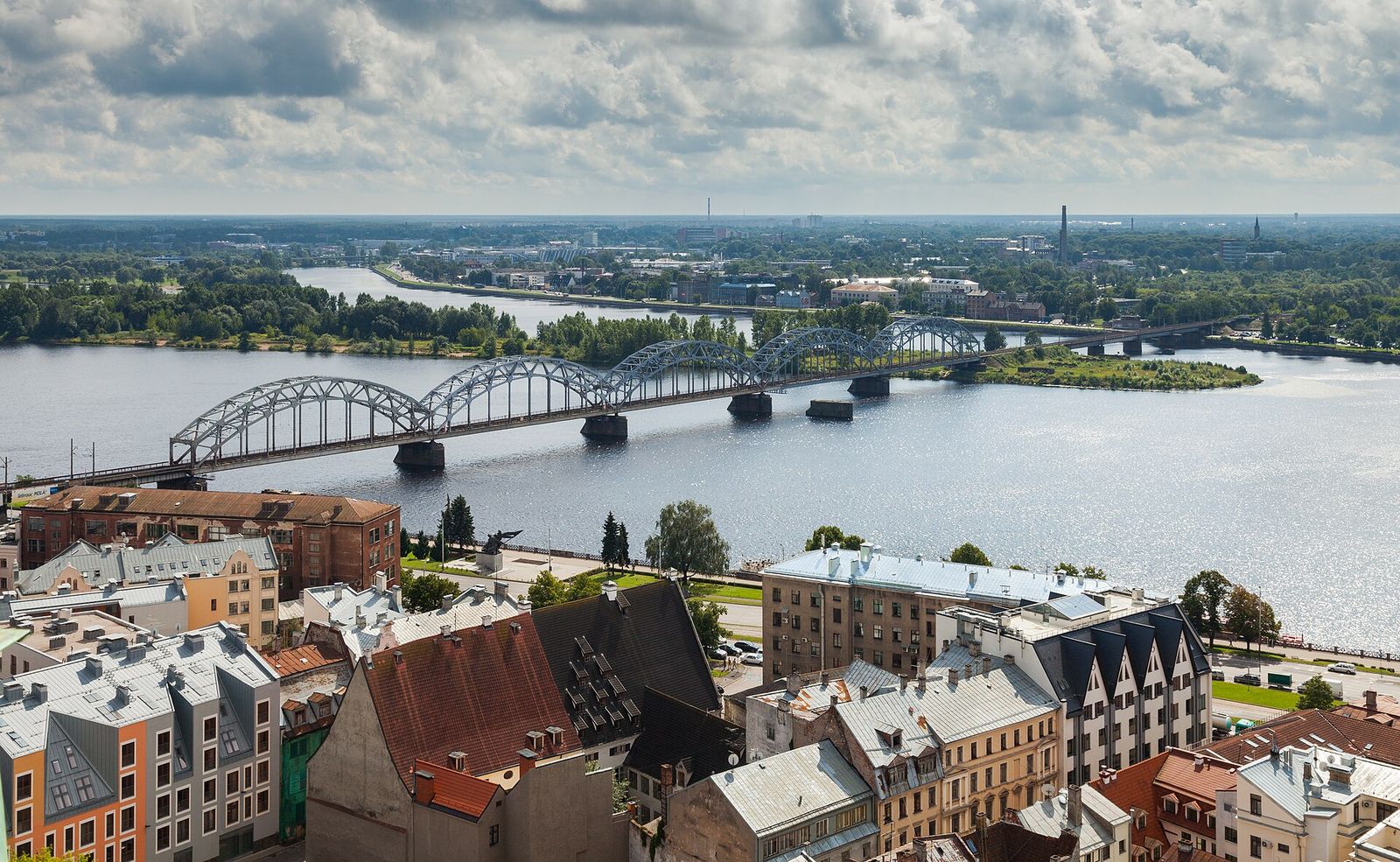
Riga was a wealthy Hanseatic trading city for centuries, and it shows. Old Riga, or Vecrīga, is a maze of cobbled lanes, guild halls, church spires and warehouses. In the decades around 1900 the city boomed again, and architects filled the new districts with hundreds of Art Nouveau buildings covered in faces, flowers and mythical creatures. Today Riga mixes that grand past with a young, creative mood: craft breweries, speciality coffee, a lively music scene and some of the best value fine dining in northern Europe.
Top things to do
Start at **Town Hall Square**, dominated by the gabled **House of the Blackheads**, then ride the lift up the tower of **St Peter's Church** for the best view of the city. Walk to **Dome Square** and **Riga Cathedral**, home to one of the great historic organs of Europe, and wander past the **Three Brothers**, the **Cat House** and the **Swedish Gate**.
Cross the canal park of **Bastejkalns** to the **Freedom Monument**, then continue to the Art Nouveau quarter. **Alberta iela** is the showpiece, with façades by Mikhail Eisenstein, and the **Riga Art Nouveau Museum** lets you climb its famous spiral staircase into a period apartment. **Elizabetes iela** and **Strēlnieku iela** have more.
For history, the **Museum of the Occupation of Latvia** and the **Corner House**, the former KGB headquarters, explain the Soviet and Nazi years and the deportations that touched almost every Latvian family. The **Latvian National Museum of Art** shows the country's painters in a beautifully restored building.
Outside the centre, the **Latvian Ethnographic Open Air Museum** by Lake Jugla gathers old farmhouses and windmills in a pine forest, and **Mežaparks** has wooden villas, a lake beach and the giant stage of the Song and Dance Festival.
The Central Market
The **Riga Central Market** fills five vast hangars built for German Zeppelins. Come hungry: smoked fish, rye bread, sauerkraut, honey, pickles and, in summer, piles of berries and chanterelles. Next door, the **Spīķeri** warehouses have galleries and cafés, and the Moscow District behind them holds the **Latvian Academy of Sciences** tower and the **Riga Ghetto and Holocaust Museum**.
Food and drink
Try grey peas with bacon, rye bread soup with cream, smoked fish, cold pink beetroot soup in summer and pīrāgi, small bacon filled buns. For good value, the **Lido** canteens and **Pelmeņi XL** are local favourites. For something special, Riga has a strong modern Latvian dining scene built around foraging and seasonal produce. Drink local craft beer and try Riga Black Balsam, a dark herbal liqueur, ideally in a cocktail.
Where to stay
**Old Riga** is atmospheric and walkable but can be noisy near the bars on summer weekends. The **Art Nouveau district** and the **quiet centre** around Elizabetes iela are elegant and close to everything. **Miera iela** suits travellers who like cafés and a local neighbourhood feel, and **Ķīpsala** across the river is calm with views back to the spires.
Getting there and around
Riga International Airport is linked to the centre by city bus 22 and by ride hailing apps such as Bolt. A new rail link to the airport is under construction as part of Rail Baltica. Trams, trolley buses and buses cover the city, and the centre is easy on foot. Trains run from Riga Central Station to Jūrmala, Sigulda and Cēsis.
Safety tips
Riga is safe for visitors. Keep an eye on bags in the Old Town and the market, check prices before ordering in late night bars, and ignore anyone who approaches you in the street with an invitation to a club.
Questions about Riga
How many days do I need in Riga?
Two full days covers the Old Town, the Art Nouveau district and the Central Market. Add a day for Jūrmala, the Open Air Museum or Rundāle Palace.
Is Riga expensive?
Riga is good value compared with western and Nordic Europe. Old Town restaurants cost more, while canteens and market food are budget friendly.
How do I get from Riga Airport to the city centre?
City bus 22 runs from the terminal to the centre in around half an hour, and ride hailing apps are widely used. Buy bus tickets from machines or pay by card where available.
Is Riga worth visiting in winter?
Yes, especially in December for the Christmas markets and concerts. Days are short and cold, so plan museums and cafés between walks.
Facts checked . Fees, schedules and entry rules change, so always confirm the latest with the official source.