At a glance
- Best for
- Baths, architecture, food, nightlife and river views
- Airport
- Budapest Ferenc Liszt International Airport (BUD), about forty minutes from the centre
- Time needed
- Three to four days
- Best season
- April to June and September to October; December for Christmas markets
- Getting around
- Metro, trams, buses and walking
- Good base for
- The Danube Bend, Gödöllő and day trips by train
Why go
Few cities pack in as much as Budapest. In one day you can climb to a castle, soak in a hot spring pool under a dome built during Ottoman rule, eat in a nineteenth century market hall, sip coffee in a gilded café and end the night in a bar built inside a crumbling courtyard. The city is grand without feeling stiff, and it is still good value compared with Vienna or Prague.
Buda: castle hill and the hills
The **Castle District** sits on a long limestone ridge above the river. Walk up or take the funicular from the Chain Bridge to reach **Buda Castle**, which holds the Hungarian National Gallery and the Budapest History Museum. A short walk north are **Matthias Church**, with its colourful tiled roof, and the white towers of **Fishermen's Bastion**, the classic place to look across the river to the Parliament. Further south, **Gellért Hill** has the Citadella and the Liberty Statue, and the best sunset view in the city. Beyond the hills, Buda turns leafy, with the **Children's Railway** and caves to explore.
Pest: boulevards, markets and the Jewish Quarter
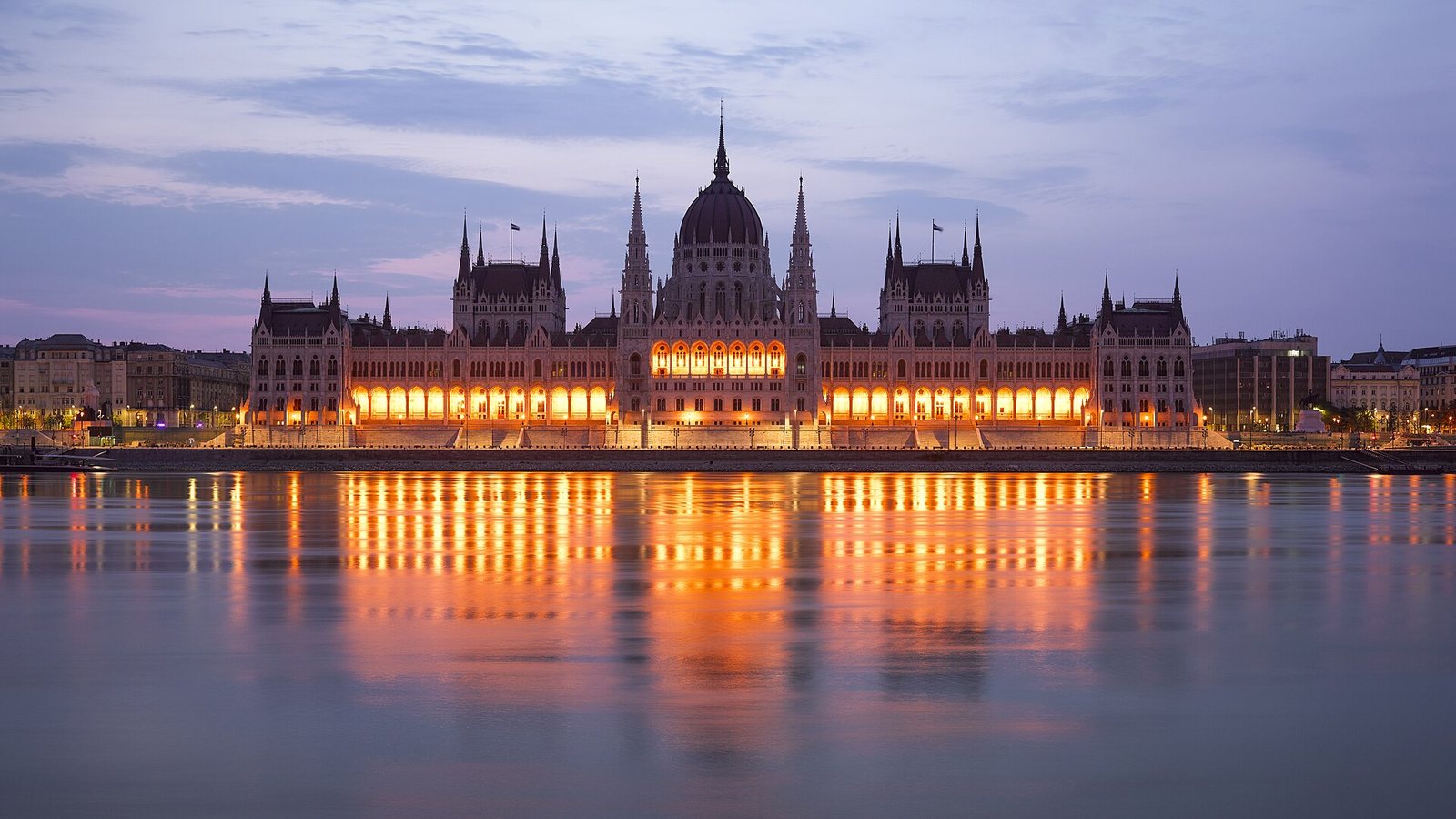
Pest is where most people stay and eat. The **Hungarian Parliament** is the city's great landmark, and guided tours show the Holy Crown. **St Stephen's Basilica** has a dome you can climb. **Andrássy Avenue** runs past the **Hungarian State Opera** and the **House of Terror** museum to **Heroes' Square** and **City Park**. The **Great Market Hall** at the end of Váci Street is the place for paprika, salami and lángos. The old Jewish Quarter in the seventh district holds the **Dohány Street Synagogue**, the largest in Europe, and most of the famous ruin bars, starting with **Szimpla Kert**. Along the river, the **Shoes on the Danube Bank** memorial is small and deeply moving.
The baths
Bathing is part of daily life here. **Széchenyi Baths** in City Park is the famous one, with yellow neo baroque buildings and steaming outdoor pools that are magical in winter. **Gellért Baths** is an art nouveau showpiece. **Rudas Baths** has an original Ottoman dome and a rooftop pool, and runs night bathing on some evenings. **Lukács** is more local. Bring flip flops, a towel and a swimsuit, and check opening hours on the official site, because some sections have changing hours and occasional renovations.
Eating and drinking
Try goulash soup, chicken paprikash, stuffed cabbage and lángos at markets and traditional restaurants, then cakes like Dobos torte and Esterházy torte at coffee houses such as **New York Café**, **Gerbeaud** or the quieter **Café Central**. For something more modern, the city has a strong fine dining scene and a growing number of wine bars pouring Hungarian wines from Tokaj, Eger, Villány and Balaton. In winter, Vörösmarty Square and St Stephen's Basilica host Christmas markets with mulled wine and chimney cake.
Where to stay
The fifth district (Belváros and Lipótváros) puts you near the river, the Parliament and the Basilica, and is good for first timers. The sixth and seventh districts around Andrássy Avenue and the Jewish Quarter are lively and full of restaurants and bars; choose a room facing a courtyard if you want sleep. The Castle District in Buda is quiet, romantic and a little further from nightlife. Families often like the area around the Basilica or a riverside hotel with easy tram access.
Getting around
The centre is walkable, and the metro, trams and buses are run by BKK. Tram 2 along the Pest riverbank is one of the most scenic rides in Europe. The 100E airport bus connects the airport to the city centre. Tickets must be validated, and inspectors are common, so buy a travel card or use the official BudapestGO app. Use licensed taxis with yellow plates or a ride app rather than accepting offers on the street.
Practical tips
Pickpockets work in busy trams, metro stations and around Váci Street, so keep valuables zipped away. Check prices on menus before ordering in tourist areas and look for any service charge already added to the bill. Many museums close on Mondays. Book Parliament tours ahead in summer, as slots sell out.
Questions about Budapest
How many days do I need in Budapest?
Three days covers the main sights, a bath and a night out. Four or five days lets you add a day trip to the Danube Bend and a slower pace.
Which thermal bath should I choose in Budapest?
Széchenyi for the classic outdoor experience, Gellért for its art nouveau interiors and Rudas for the Ottoman dome and rooftop views. Lukács and Király feel more local.
Is Budapest walkable?
Yes. The centre on both sides of the river is compact, and trams and the metro fill the gaps. Castle Hill is steep, so use the funicular or bus 16 if you prefer.
Is Budapest good for families?
Very. Families enjoy the baths, Margaret Island, the zoo in City Park, the Children's Railway in the Buda hills and Tropicarium aquarium, and public transport is easy with children.
Facts checked . Fees, schedules and entry rules change, so always confirm the latest with the official source.