At a glance
- Best for
- History, food, nightlife and culture
- Nearest airport
- Las Américas International, about thirty to forty minutes by road
- Time needed
- Two to three full days
- Best time
- December to April, with evenings in the Colonial Zone all year
- Getting around
- Walking, ride hailing apps, registered taxis and the metro
- Good base for
- Boca Chica, Juan Dolio and day trips to Bayahibe
The Colonial Zone
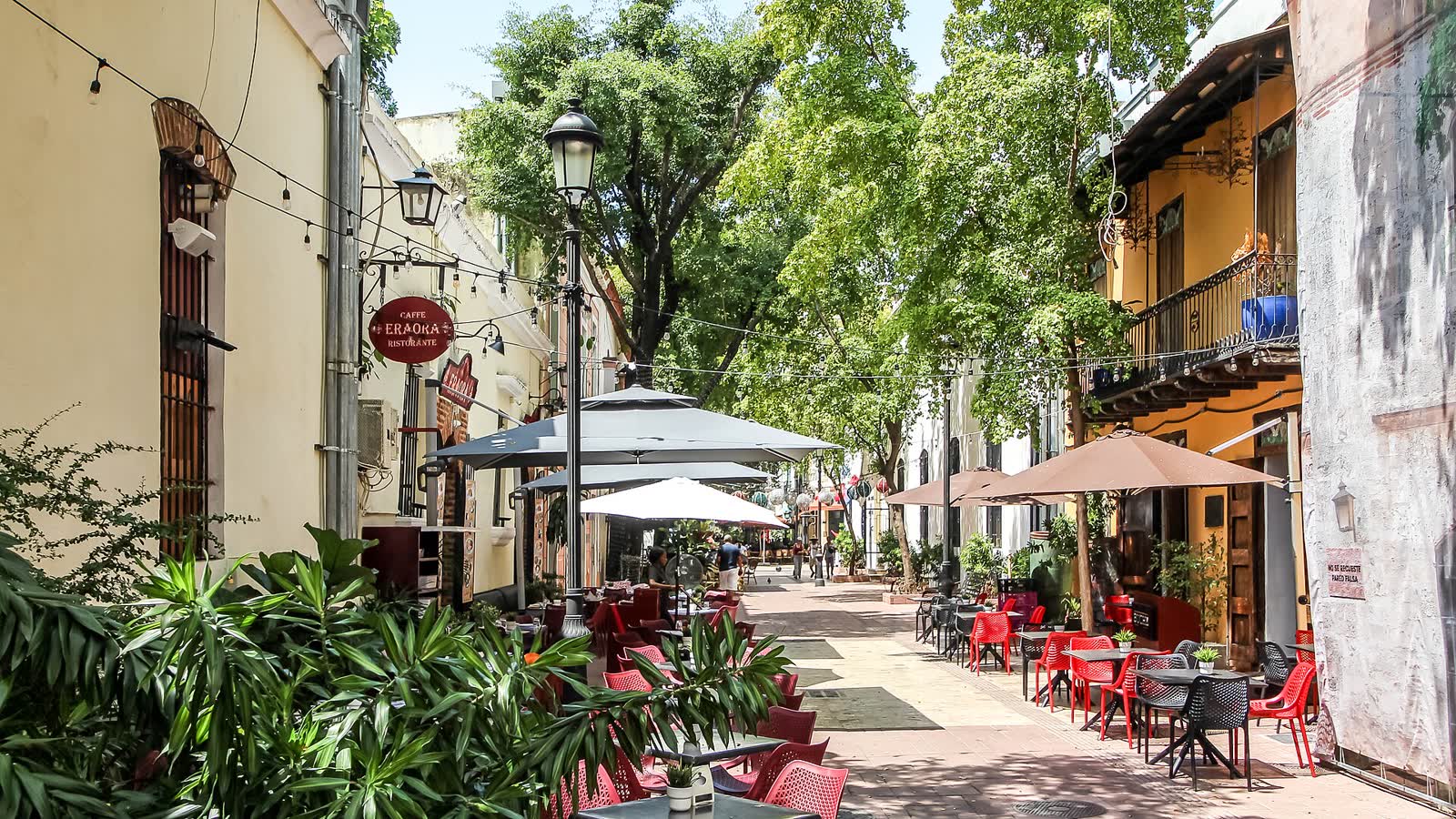
The **Zona Colonial** is a UNESCO World Heritage site and the place to start. Walk **Calle El Conde**, the pedestrian street that runs from Parque Independencia to **Parque Colón**, where the **Catedral Primada de América**, the first cathedral of the Americas, faces the statue of Columbus. Nearby **Calle Las Damas** is said to be the first paved street of the New World, leading to the **Fortaleza Ozama**, the oldest military building of its kind in the Americas. At the far end of the old town, the **Alcázar de Colón** was the palace of Diego Colón and overlooks the Plaza de España, lined with restaurants and bars.
The **Museo de las Casas Reales** tells the story of the colony, and the ruins of the **Monasterio de San Francisco** host live son and merengue on Sunday evenings with the Grupo Bonyé, one of the best free nights out in the city. Restored mansions now hold boutique hotels, galleries, cigar shops and courtyard restaurants.
Beyond the old town
The **Malecón** seafront runs west from the Colonial Zone and fills with families at weekends. **Los Tres Ojos** national park, on the east side of the river, is a set of limestone caves and turquoise lagoons you reach down steep steps. The **Faro a Colón**, a huge cross shaped monument, is nearby. The **Plaza de la Cultura** groups the Museum of the Dominican Man and the Museum of Modern Art, and the **Jardín Botánico Nacional** is a green escape. Food lovers should head to **Piantini** and **Naco** for modern restaurants, and to **Mercado Modelo** for crafts, larimar and amber.
Food and nightlife
Santo Domingo is the best place in the country to eat. Try **la bandera dominicana** (rice, beans and stewed meat) at a comedor, **mofongo**, **sancocho** on a Sunday, and fried fish on the beach at Boca Chica. In the evenings, the Colonial Zone has rooftop bars and colmadones, while Piantini and the Malecón area have lounges and clubs where merengue and bachata play until late.
Where to stay
First-timers usually stay in the **Colonial Zone** for character and walkability, or in **Piantini** and **Naco** for modern hotels, malls and restaurants. Gazcue, between the two, is quieter and residential.
Getting around and safety
Use ride hailing apps or registered taxis rather than hailing cars on the street, especially at night. The **metro** is clean and simple for daytime trips. Petty theft, including bag snatching from motorbikes, happens, so keep phones away from the kerb and do not walk alone late at night outside the busy parts of the Colonial Zone. Follow your government's current advice.
Day trips
The beaches of **Boca Chica** and **Juan Dolio** are under an hour east. Bayahibe and Saona Island can be done as a long day, though they are better with a night or two.
A suggested two day plan
**Day one:** start early at Parque Colón and the cathedral, walk Calle Las Damas to the Fortaleza Ozama, and visit the Museo de las Casas Reales before lunch. After a siesta, stroll Calle El Conde to the Puerta del Conde and the Altar de la Patria, then have dinner on Plaza de España.
**Day two:** visit Los Tres Ojos in the morning, then the Plaza de la Cultura museums or the Jardín Botánico, and finish with sunset on the Malecón and a night out in the Colonial Zone or Piantini.
Shape your route with the free trip planner.
Questions about Santo Domingo
How many days do I need in Santo Domingo?
Two full days covers the Colonial Zone, the Malecón and Los Tres Ojos. A third day lets you add museums, a beach afternoon at Boca Chica or a relaxed food crawl.
Is the Colonial Zone safe at night?
The main streets and squares are busy and patrolled by tourist police in the evenings. Stick to lit, lively areas, use a ride app to get home and avoid quiet back streets late at night.
Is Santo Domingo worth visiting if I am staying in Punta Cana?
Yes. It is around three hours by road, and a night or two gives you history, food and culture you will not find on the resort coast. Day tours exist but involve a lot of driving.
What is the best area to stay in Santo Domingo?
The Colonial Zone for history and walking, Piantini or Naco for modern hotels, shopping and restaurants.
Facts checked . Fees, schedules and entry rules change, so always confirm the latest with the official source.