At a glance
- Best for
- Hiking, wildlife, landscapes and photography
- Gateway
- Punta Arenas (PUQ) or Puerto Natales (PNT)
- Base town
- Puerto Natales
- Time needed
- Three to six days
- Best season
- November to March
- Book ahead
- Park entry, campsites and refugios
The treks
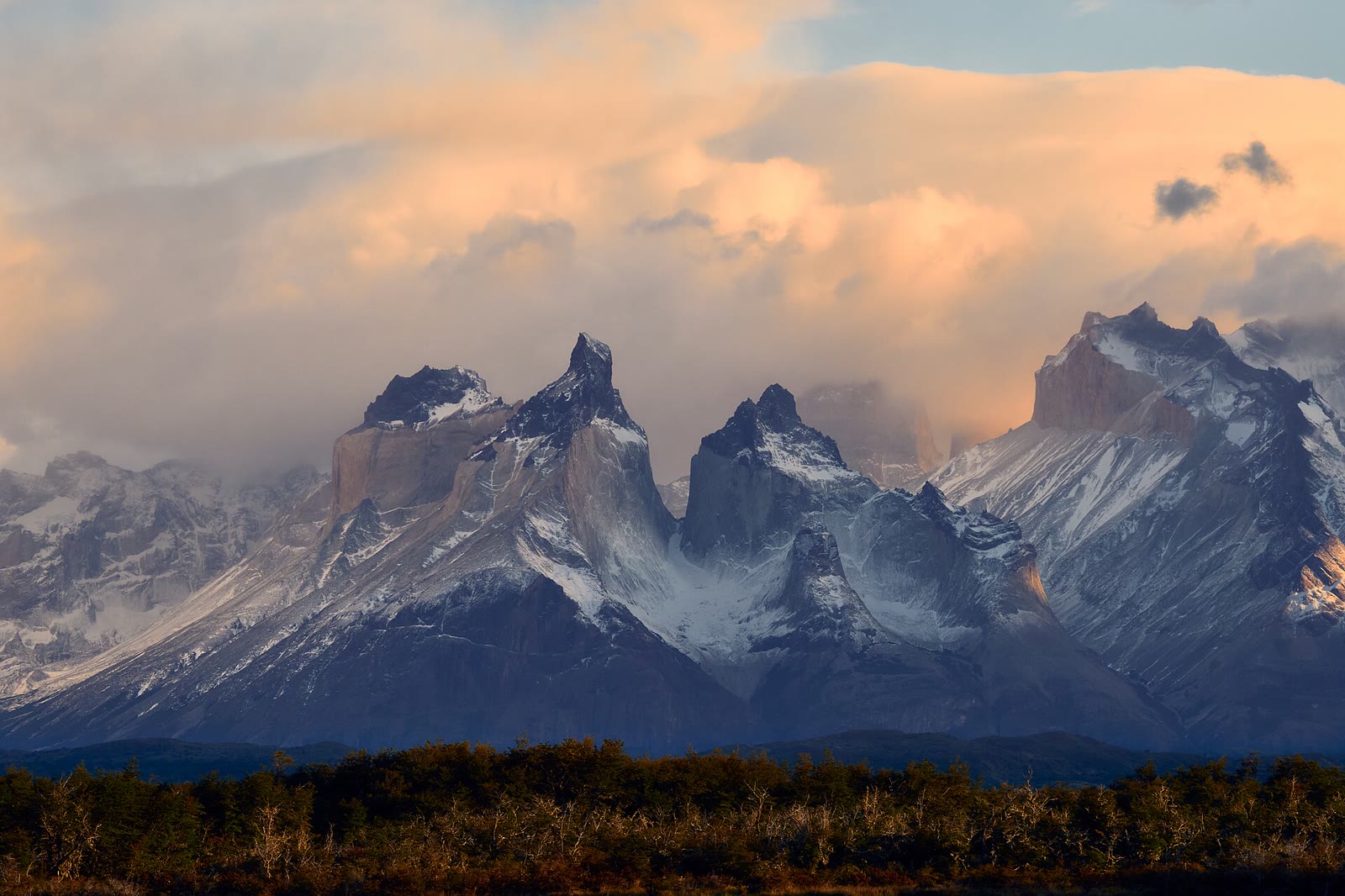
- **The W Trek** is the classic, usually four or five days. It visits the three highlights: the base of the towers (Base Torres), the French Valley between the Cuernos and Paine Grande, and Grey Glacier. You sleep in refugios (mountain lodges) or campsites along the way.
- **The O Circuit** adds the wild, less visited back side of the massif, usually seven to nine days, and crosses the John Garner Pass with views over the Southern Patagonian Ice Field. It is only open in the main season and has stricter rules.
- **Day hikes** suit those with less time: the hike to Base Torres is a long, steep and rewarding full day, while shorter walks lead to Mirador Cuernos, the Salto Grande waterfall and Mirador Condor.
Booking
Campsites and refugios are privately run by different concessionaires, and you must book them before you enter: rangers check reservations on the W and O. Book months ahead for December to February. Park entry tickets are sold online through the official national parks system, CONAF's Pase Parques, so buy them in advance and carry proof.
Weather
Patagonian weather changes fast. You can have sun, rain, sleet and gale force winds in a single afternoon, and gusts on exposed passes can knock people off their feet. Bring waterproof layers, warm clothes, sturdy broken in boots and a hat that will not blow away, whatever the month. Summer has the longest days; spring and autumn are quieter with beautiful colours but colder nights.
Wildlife
Guanacos are everywhere. Look also for rheas (ñandú), foxes, condors soaring above the cliffs and, with luck and a specialist guide, pumas, which live in good numbers in the park.
Puerto Natales
Natales is a friendly town on the Última Esperanza fjord, with gear rental shops, cafés, brewpubs and a growing food scene. Stay a night before and after the park to pack, rest and shop. From here, boats run up the fjord to the Balmaceda and Serrano glaciers, and the Cueva del Milodón, where remains of a giant ground sloth were found, is a short drive away.
Respecting the park
Fires have badly damaged parts of the park in the past and are strictly limited to designated cooking areas; never light a fire or a stove elsewhere. Stay on trails, pack out all rubbish and never feed wildlife.
Plan the far south with Punta Arenas and penguin colonies, or pair it with the Lake District. Browse lodges and restaurants in our places to visit list and build your route with the free trip planner.
Questions about Torres del Paine
Do I need a guide for the W Trek?
No. The trails are well marked and many people hike independently, but you must book every campsite or refugio night in advance. A guide or package helps if you prefer not to manage bookings.
How do I get to Torres del Paine?
Fly to Punta Arenas and take a bus of about three hours to Puerto Natales, or fly direct to Natales in season. Buses then run daily from Natales to the park.
When is the best time to go?
November to March for the longest days and all services. Shoulder months are quieter but colder, and the O Circuit and some services close in winter.
Where should I stay?
Inside the park you can choose between refugios, campsites, a handful of hotels and all inclusive lodges. Outside, Puerto Natales has everything from hostels to design hotels on the fjord, and estancias between the town and the park offer a quieter middle ground.
What should I pack?
Waterproof jacket and trousers, warm fleece or down layers, gloves, a warm hat, sunglasses, strong sunscreen and broken in hiking boots. Walking poles help on the steep moraine below the towers. Gear can be rented in Puerto Natales.
Can I visit in one day?
Yes, a full day tour from Puerto Natales shows the lakes, viewpoints and Salto Grande, but staying inside or near the park lets you hike to the towers.
Facts checked . Fees, schedules and entry rules change, so always confirm the latest with the official source.