At a glance
- Best for
- Landscapes, stargazing, photography and adventure
- Gateway
- Calama (CJC), then about 90 minutes by road
- Time needed
- Three to five nights
- Best season
- All year; March to May and September to November are mildest
- Altitude
- About 2,400 metres in town, much higher on some trips
- Getting around
- Tours, transfers, bikes and walking
The highlights
- **Valle de la Luna** (Moon Valley): wind carved ridges, salt caves and huge dunes just outside town. Go for sunset, when the cliffs glow red. It is part of the Los Flamencos National Reserve and run with the local Atacameño communities, so check opening hours and buy tickets ahead when required.
- **El Tatio Geysers**: one of the largest geyser fields in the world, at about 4,300 metres. Tours leave around 4:30 to 5 in the morning to see the steam columns at sunrise, when it is well below freezing.
- **Laguna Cejar** and **Ojos del Salar**: salt lagoons where you float as in the Dead Sea, followed by sunset at the Tebinquinche lagoons.
- **Laguna Chaxa**: flamingos feeding in the Salar de Atacama, the country's largest salt flat.
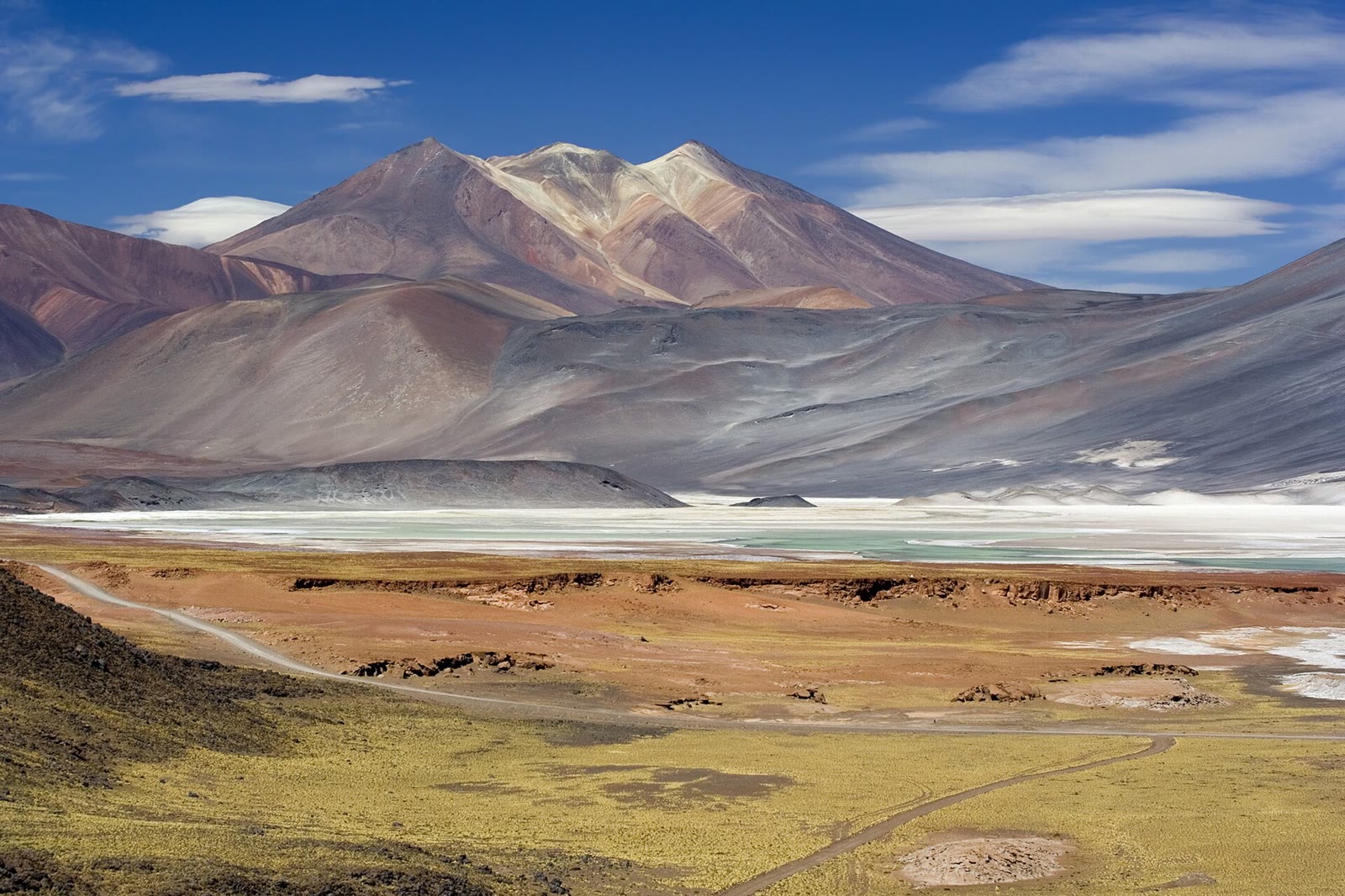
- **Miscanti and Miñiques**: deep blue altiplanic lagoons at over 4,000 metres, ringed by volcanoes, usually combined with the Piedras Rojas red rocks.
- **Valle del Arcoíris** (Rainbow Valley) and the **Hierbas Buenas** petroglyphs, a less visited half day.
- **Termas de Puritama**: hot springs in a canyon, a perfect recovery after an early geyser trip.
- **Lagunas Escondidas de Baltinache**: a chain of hidden salt lagoons, quieter than Cejar.
Stargazing
The Atacama hosts some of the world's major observatories, including ALMA, which offers free weekend visits that must be booked well ahead on its website. In town, small operators run astronomy tours with telescopes. Plan these away from the full moon for the darkest skies.
Altitude and health
San Pedro sits at about 2,400 metres, and many trips go far higher. Spend your first day on low trips such as the Valle de la Luna, drink plenty of water, go easy on alcohol, and save the geysers and high lagoons for later. Sun protection is essential: the sun is fierce and the air dry. Nights are cold all year, so pack warm layers.
Tours and getting around
Most sights are reached on group or private tours booked in town or online; compare a few agencies, check reviews and ask about vehicle condition and oxygen on high trips. You can cycle to the Valle de la Luna and nearby sights. Some national reserve sites and community run areas charge entrance fees and may close for weather or local decisions, so check before you go.
Where to stay and eat
Town ranges from simple hostels to some of Chile's most celebrated desert lodges. Stay within walking distance of Caracoles, the main street, unless you are on an all inclusive lodge package. Restaurants serve Andean dishes with quinoa, llama and local herbs, and many have open fires in the evening.
Find lodges, tours and restaurants in our places to visit list. Connect the desert with Santiago and the south using the free trip planner.
Questions about San Pedro de Atacama
How do I get to San Pedro de Atacama?
Fly from Santiago to Calama, about two hours, then take a shared or private transfer of around ninety minutes. Buses also run from Calama.
Will I get altitude sickness?
Some people feel headaches or breathlessness. Take it easy the first day, drink water, and do the high trips later. Ask your doctor before travel if you have heart or lung conditions.
How many days do I need?
Three full days covers the classics; four or five lets you add hot springs, Rainbow Valley, stargazing and rest days.
Is San Pedro good for families?
Yes, with planning. Children love floating in Laguna Cejar, cycling to the dunes and stargazing, but very early starts and high altitude trips such as El Tatio are hard on young children, so choose lower, shorter outings for them.
Is it very hot?
Days are warm and sunny but rarely extreme in town, and nights are cold, often near or below freezing in winter. Summer, January to February, can bring occasional rain known as the Bolivian winter.
Facts checked . Fees, schedules and entry rules change, so always confirm the latest with the official source.