At a glance
- Best for
- Architecture, art and Kassena culture
- Gateway
- Ouagadougou, about three hours by road
- Time needed
- A full day, or one night in Pô
- Best season
- After the rains, when walls are repainted
- Getting around
- Arranged car with a local driver
- Travel advice
- Strict; check your government's advice first
The royal court
The **Cour Royale de Tiébélé** is a walled compound where the chief's extended family has lived for generations. It holds dozens of earthen houses of different shapes, each with a purpose: round houses for young men, figure of eight houses for families and the elders' houses, and rectangular buildings in newer styles. Low doorways keep out heat and intruders and force visitors to bow on entry.
How the walls are painted
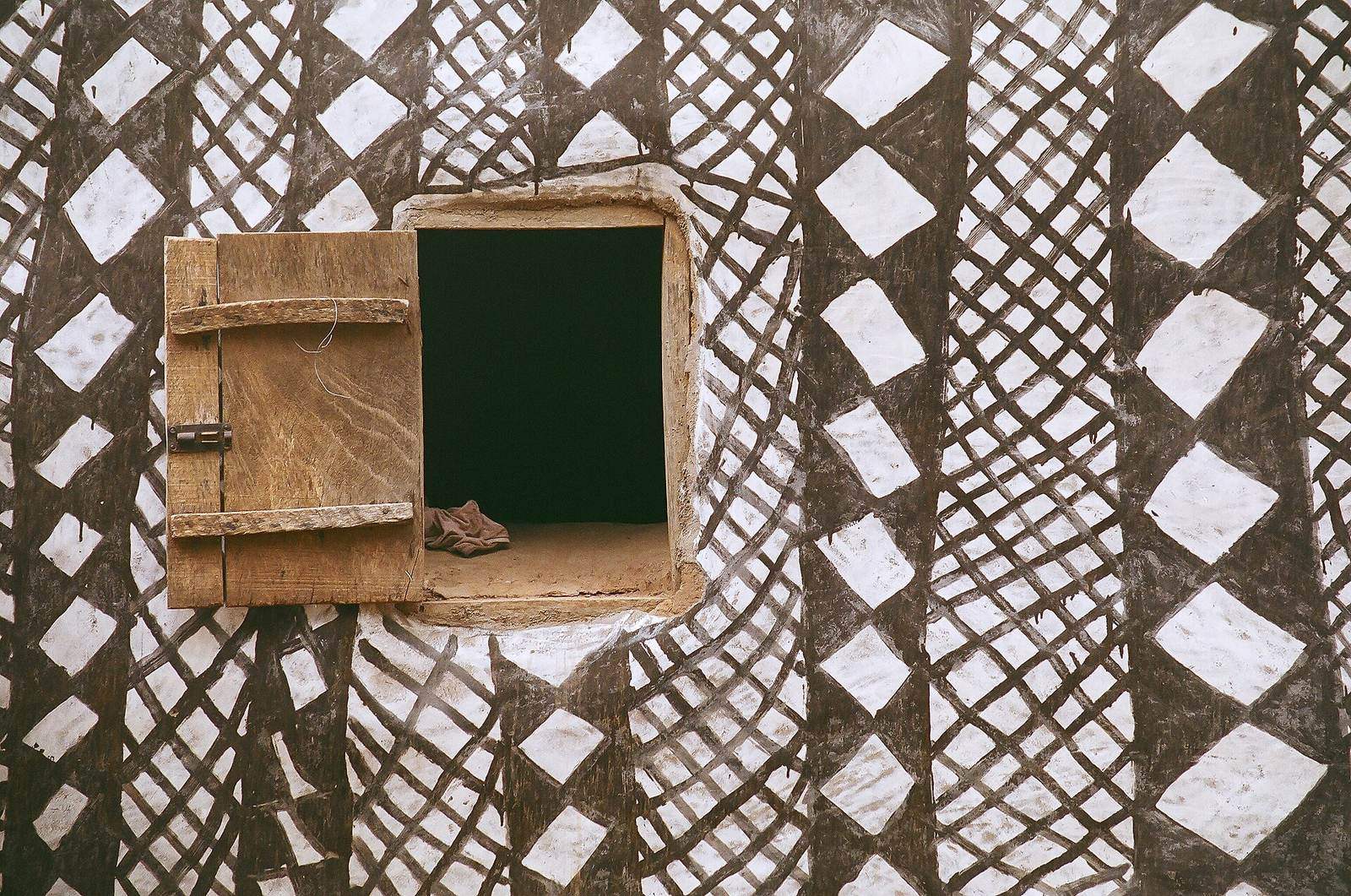
The decoration is the work of women, who repaint the walls each year after the rains, a community effort passed from mother to daughter. They use natural materials: red laterite earth, black from burnt stone and plant extracts, white chalk, and a varnish made from boiled néré pods that protects the paint from the weather. Patterns include triangles, chevrons and lozenges, along with symbols such as the calabash, the snake, the tortoise and the crocodile, each carrying meaning about family, fertility and protection.
Visiting etiquette
Visits have always been with a guide from the court, who explains the houses and the family's rules. Some areas are closed to visitors, shoes may need to come off, and photographs are allowed only where the guide says. A contribution to the community is customary, and buying crafts made in the village supports the families who maintain the paintings.
The wider area
Nearby **Pô** is the main town of the Nahouri province, with simple hotels and maquis. **Nazinga Game Ranch**, a protected area once popular for elephant watching, lies to the west, and **Kassena villages** around Tiébélé, such as Tangassogo, share the painted style. The border with Ghana is close, and Ghana's Paga, with its crocodile ponds, sits just across it.
Food
The Kassena cook **tô** from millet or sorghum with leaf sauces, along with groundnut dishes and grilled meat. In the villages, **dolo** millet beer is part of ceremonies and daily hospitality.
Best time
The paintings look freshest after the annual repainting, which follows the rainy season and the harvest. The cooler dry months from November to February are the most comfortable for walking around the compound.
The current situation
The Centre-Sud and the neighbouring regions have seen attacks by armed groups, and governments including the US, UK, Canada and Australia advise against all travel to large parts of the south and east, including much of the area around Tiébélé. Roads to the town pass through areas covered by that advice. Read your government's current advice in full and check your insurance. If you cannot visit now, the painted houses are well documented by museums and photographers, and they will still be there when conditions improve. For ideas that work today, see our Ouagadougou guide and the free trip planner.
Seeing Kassena art elsewhere
If you cannot travel south, you can still appreciate Kassena design. Museums in Ouagadougou display related crafts, and books and documentaries show the painting process in detail. Across the border, northern Ghana's Sirigu area has a women's art cooperative working in a similar painted tradition, though you should check travel advice there too. Buying Kassena-inspired crafts from reputable sellers helps support the artists who keep the tradition alive.
Questions about Tiébélé
Can I visit Tiébélé now?
Governments advise against travel to much of the area, and the roads there pass through regions covered by that advice. Read your own government's advice before considering a trip.
Who paints the houses in Tiébélé?
Kassena women paint the walls by hand, repainting them each year after the rains using earth, chalk, burnt stone and a varnish made from néré pods.
Can I take photos in the royal court?
Only where your guide allows. Some areas are private or sacred, so always ask first.
What do the patterns mean?
Shapes and animal symbols carry meanings about family, fertility, protection and daily life, and guides explain each one.
Facts checked . Fees, schedules and entry rules change, so always confirm the latest with the official source.