At a glance
- Best for
- Culture, music, history and food
- Gateway
- Salvador (SSA)
- Time needed
- Three to five days
- Best season
- September to March, drier and sunny
- Getting around
- Ride apps, walking in the old town, metro to the airport
- Signature dish
- Acarajé and moqueca baiana
The city to know
Salvador sits on a peninsula between the Bay of All Saints and the Atlantic. The upper city holds the historic centre and the lower city the port, linked by the art deco Elevador Lacerda.
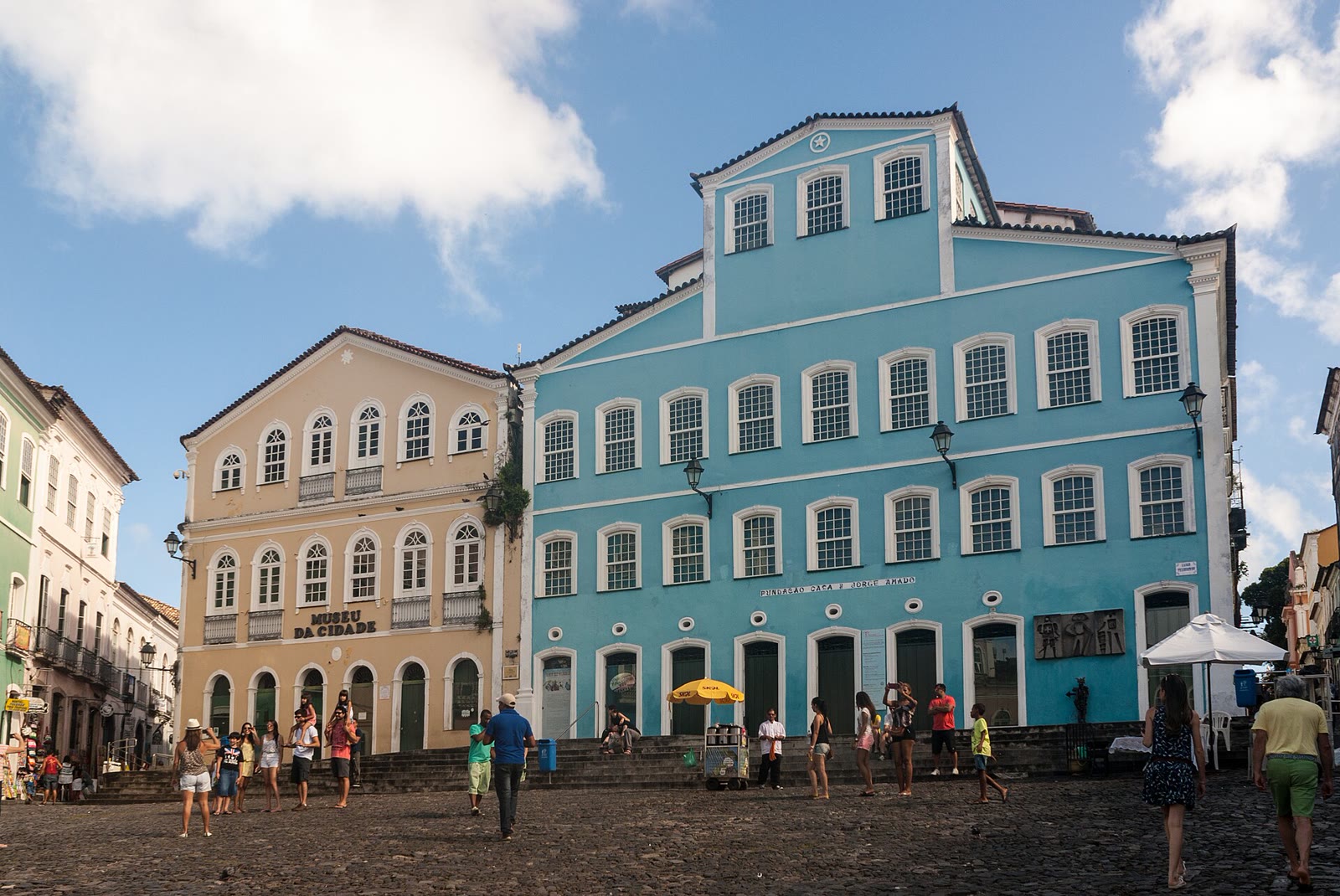
- **Pelourinho** is the UNESCO listed old town of pastel coloured houses, cobbled squares and gold filled churches. It comes alive with drumming on Tuesday nights and weekends.
- **Santo Antônio Além do Carmo** is the quieter, beautifully restored quarter next door, with guesthouses and bay views.
- **Barra** has the lighthouse fort, beaches and a lively seafront, and is a popular base.
- **Rio Vermelho** is the bohemian district of bars, acarajé stalls and nightlife.
What to do
Spend at least a day in the Pelourinho. See the São Francisco church, with its walls covered in gold leaf, the Museu Afro Brasileiro and the Casa do Benin. Watch or join a capoeira class at the Forte Santo Antônio and catch a rehearsal of Olodum, the drum group famous worldwide. Visit the Igreja do Bonfim and tie a coloured ribbon to the railings for a wish. Watch the sunset from the Farol da Barra.
Food
Bahian food is a cuisine of its own. Try acarajé, a black eyed pea fritter split and filled with shrimp and spicy vatapá, sold by Baianas in white dresses. Order moqueca, a seafood stew of coconut milk and dendê, and finish with cocada, a coconut sweet.
Festivals
Salvador's Carnival is one of the biggest street parties on earth, with trio elétrico trucks carrying bands through crowds for days. The Festa de Iemanjá on the second of February sees offerings carried out to sea, and the Lavagem do Bonfim in January is a joyful procession.
Beyond the city
The island of Morro de São Paulo, the resort coast of Praia do Forte and the Chapada Diamantina national park inland are popular next stops.
A day in Salvador
Walk the Pelourinho in the morning before the heat, see the São Francisco church and the Museu Afro Brasileiro, then take the Elevador Lacerda down to the Mercado Modelo. After lunch of moqueca, head to Barra for the beach and the sunset at the lighthouse fort, and finish with acarajé and drinks in Rio Vermelho.
Getting around
Ride apps are the easiest way to move between neighbourhoods. A metro line links the airport with the city, and the old town is best explored on foot by day.
Respecting culture
Candomblé terreiros are places of worship. Visit only with an invitation or an organised cultural visit, dress modestly in white if asked, and do not take photos without permission.
Staying safe
Petty crime and robbery are a real risk, especially at night and around the edges of the old town. Stay on the busy main streets of the Pelourinho, use ride apps after dark and leave valuables at your hotel. Read your government's travel advice before you go, and use the free trip planner to shape your days.
Questions about Salvador
How many days do I need in Salvador?
Three days covers the old town, a beach and a night out. Add more to visit Morro de São Paulo, Praia do Forte or the Chapada Diamantina.
Is the Pelourinho safe?
The main streets are busy and policed by day. Stay on well lit, busy streets in the evening, avoid quiet side streets and use ride apps after dark.
What is the best time to visit Salvador?
September to March is sunnier and drier. April to July brings the heaviest rain, though it is still warm.
When is Carnival in Salvador?
Carnival falls in February or early March and runs for several days. Book accommodation many months ahead.
Where should I stay in Salvador?
Santo Antônio and the Pelourinho suit culture lovers, while Barra and Rio Vermelho suit beaches and nightlife.
Facts checked . Fees, schedules and entry rules change, so always confirm the latest with the official source.