At a glance
- Best for
- Waterfalls, wildlife and photography
- Gateway
- Foz do Iguaçu (IGU)
- Time needed
- Two to three days
- Best season
- All year, with the fullest flow often in the wetter months
- Getting around
- Park buses, local buses and ride apps
- Border
- Argentina is across the river, so carry your passport
The two sides
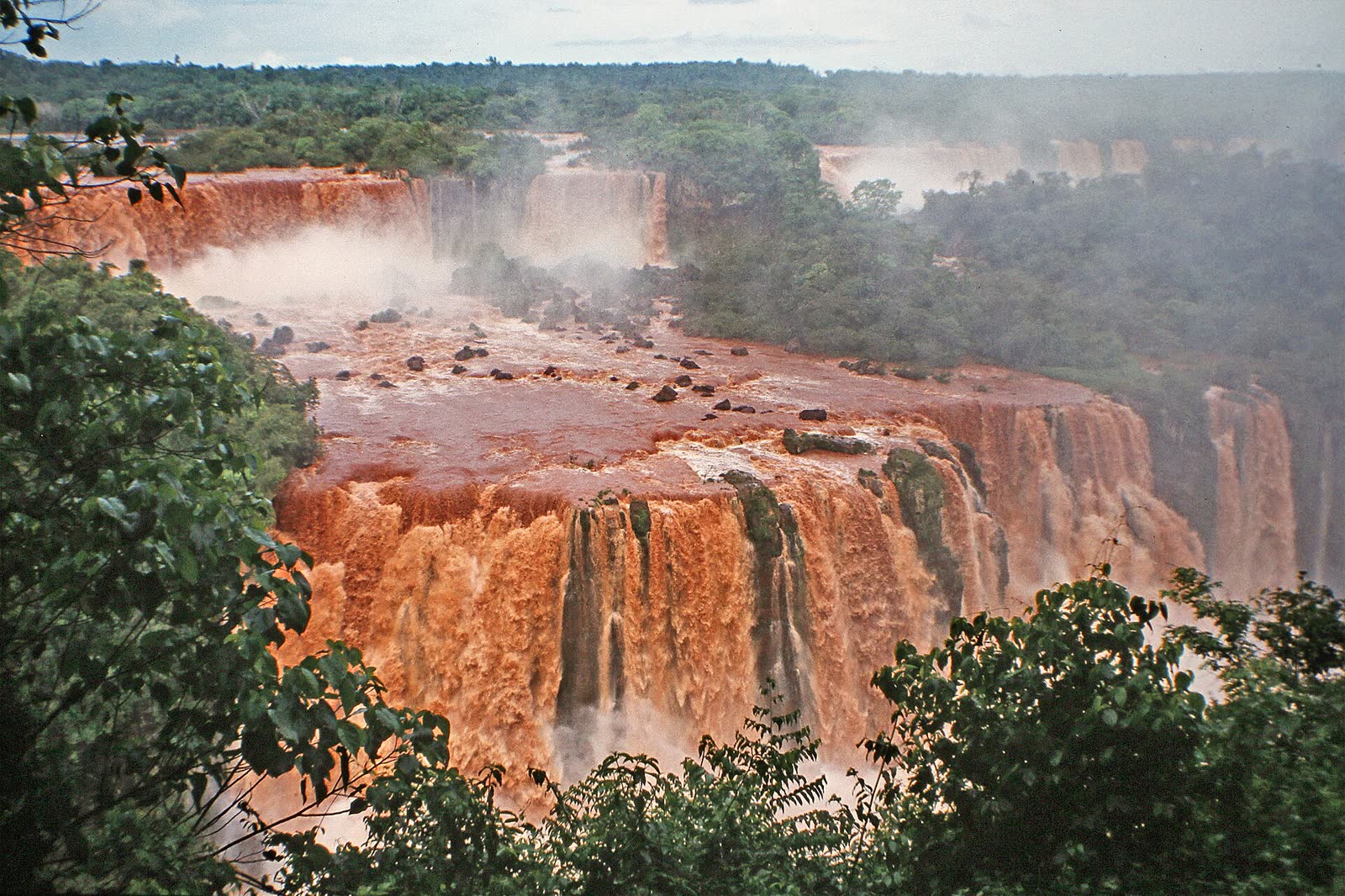
The falls are protected by two national parks, both UNESCO World Heritage Sites.
**The Brazilian side**, the Parque Nacional do Iguaçu, has a single walking trail along the canyon with views across to the Argentine falls. It ends on a walkway that leads into the spray at the foot of the Devil's Throat, followed by a lift up to a viewing platform. Allow half a day.
**The Argentine side**, the Parque Nacional Iguazú, is larger, with several circuits of walkways over the river and along the tops and bottoms of the falls. The highlight is the walkway to the lip of the Devil's Throat. Allow a full day.
Boat rides and other sights
The Macuco Safari on the Brazilian side combines a jungle trail with a speedboat ride straight under the falls. Next to the park entrance, the Parque das Aves lets you walk through aviaries full of toucans and macaws. The Itaipu Dam, one of the world's largest, offers guided tours, and the Marco das Três Fronteiras shows where Brazil, Argentina and Paraguay meet.
Crossing the border
Many visitors stay in Foz do Iguaçu and make a day trip to the Argentine side. You must go through Brazilian and Argentine immigration at the bridge, so carry your passport and check whether your nationality needs a visa for Argentina. Taxis, ride apps and buses make the crossing.
Wildlife
Watch for coatis, which roam the trails and will steal food, plus toucans, butterflies and capuchin monkeys. Do not feed the animals, as they can bite.
Getting there and around
Flights connect Foz do Iguaçu with São Paulo, Rio and other cities. Buses run from the town to the park entrance, and park buses take you to the trails.
When to go
The falls are worth seeing all year. Water levels vary, so flow is often strongest in the wetter months and lower in dry spells. Avoid Brazilian and Argentine holidays if you dislike crowds, and expect to get wet in any season.
A two day plan
**Day one.** Visit the Brazilian park in the morning, walk the trail to the Devil's Throat walkway and take the Macuco Safari boat ride. Spend the afternoon at the Parque das Aves next to the entrance.
**Day two.** Cross to Argentina early, take the park train to the Devil's Throat walkway first, then walk the upper and lower circuits. Return to Brazil for dinner.
What to bring
A light rain jacket or poncho, a waterproof pouch for your phone, sun protection, repellent, water and your passport for the border.
Accessibility
The main Brazilian trail has steps, but the lower walkway and lift give access to wheelchair users in parts. On the Argentine side, many walkways are flat. Check accessibility on the park sites.
Where to stay
Foz do Iguaçu has hotels for every budget. The Hotel das Cataratas, inside the Brazilian park, lets you walk the falls before the gates open. Use our places to visit for picks, and the free trip planner to fit the falls into your route.
Questions about Iguaçu Falls
Which side of Iguaçu Falls is better?
Both. Brazil gives the classic panorama in half a day, while Argentina gets you closer with longer walkways. Most visitors do both.
How many days do I need at Iguaçu?
Two full days, one for each side, is ideal. A third day lets you add Itaipu, the bird park or a slower morning.
Do I need a visa to visit the Argentine side?
It depends on your passport. Check Argentina's official immigration rules before you travel and carry your passport.
Will I get wet?
Yes, on the lower walkways and especially on the boat rides. Bring a waterproof bag for your phone and a light rain jacket.
Are the coatis dangerous?
They are wild animals that can scratch and bite when looking for food. Keep snacks hidden and never feed them.
Facts checked . Fees, schedules and entry rules change, so always confirm the latest with the official source.