At a glance
- Best for
- History, architecture, food, nightlife and day trips
- Airport
- Heydar Aliyev International Airport (GYD), about half an hour away
- Time needed
- Three to four days
- Best season
- April to June and September to October
- Getting around
- Metro, buses, ride apps and walking
- Language
- Azerbaijani, Russian and some English
Why go
Baku is where most visitors land and where they understand Azerbaijan fastest. In one walk you pass a fifteenth century palace, a mysterious stone tower, the stained glass and stone carving of the oil boom years and the three Flame Towers, which glow with moving fire at night. The seafront boulevard fills every warm evening with families, and the food scene runs from tiny qutab stalls to smart restaurants.
The Old City
**Icheri Sheher**, the walled Old City, is a UNESCO World Heritage Site and the place to start. Inside its walls are the **Palace of the Shirvanshahs**, the royal complex of the medieval Shirvan rulers, the **Maiden Tower**, whose origins are still debated, old caravanserais, hammams, mosques and quiet lanes of carpet sellers and guesthouses. Go early or in the late afternoon, and simply get lost: the Old City is small and safe.
The modern centre
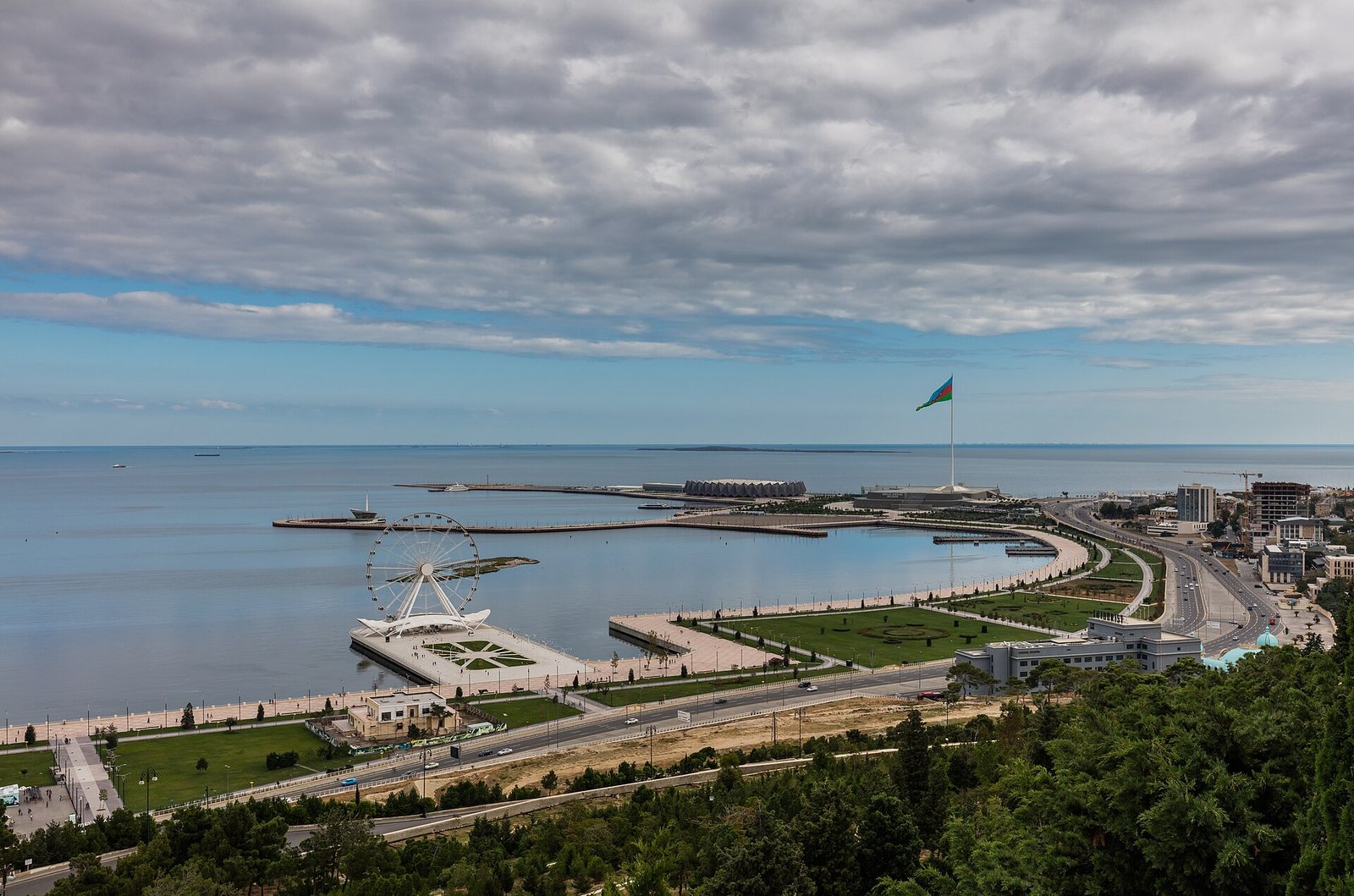
Just outside the walls, **Fountains Square** and pedestrian **Nizami Street** form the busy heart of the city, lined with shops and cafés. The **Baku Boulevard** runs for kilometres along the bay, with the **Carpet Museum**, shaped like a rolled rug, and the Little Venice canals. A funicular climbs to **Highland Park**, where Martyrs' Lane honours those killed in January 1990 and in the Karabakh wars, and the view over the bay is the best in the city.
Further out, the **Heydar Aliyev Center**, designed by Zaha Hadid, is one of the world's most photographed buildings. The **National Museum of History**, inside an oil baron's palace, and the **Yarat** contemporary art space are both worth a visit.
Day trips
The Absheron peninsula and the coast south of the city hold some of the most unusual sights in the country. **Gobustan National Park**, about an hour south, protects thousands of prehistoric rock carvings, and nearby the **mud volcanoes** bubble out of a grey, lunar landscape. To the east, the **Ateshgah** fire temple in Surakhani and the burning hillside of **Yanar Dag** show why Azerbaijan is called the Land of Fire. Many visitors combine all four in one day with a licensed tour.
Food and drink
Try **plov**, saffron rice with meat and dried fruit, **dolma**, **qutab** flatbreads, **kebabs** and **dushbara**, tiny dumplings in broth. Tea is everywhere, served in pear shaped glasses with jam. **Taza Bazaar** is the best place to see local produce, cheese and spices. Bars cluster around Nizami Street and the Old City, and hotel rooftop bars give views over the bay.
Where to stay
The Old City has small guesthouses and boutique hotels within the walls, ideal for first timers. The streets between Fountains Square and the boulevard suit those who want restaurants on the doorstep, while big international hotels line the seafront and sit inside the Flame Towers. Budget travellers will find hostels near the Old City and 28 May station.
Getting around
The **Baku Metro** is cheap and efficient, though stations can be far apart. You need a rechargeable BakuCard for metro and city buses. For taxis, use a ride app such as Bolt or Uber, or the official purple London style cabs, and agree how you will pay before you set off. The centre is very walkable.
Practical tips
Baku is windy, especially in spring and autumn, so bring a layer. Dress is relaxed in the city, but cover shoulders and knees in mosques. Card payment is common in the centre, but carry some manat for markets and small shops. The city hosts big events, including the Formula 1 Grand Prix, which raises hotel demand, so check dates before you book.
Questions about Baku
How many days do I need in Baku?
Three days is enough for the Old City, the modern centre and a full day trip to Gobustan and the fire sites. Four days lets you slow down and see more museums.
Is Baku safe for tourists?
Yes, the centre is generally very safe, with a strong police presence. Watch for pickpockets in crowds and overcharging by unofficial taxis.
Can I drink tap water in Baku?
Most people drink bottled or filtered water. Bottled water is cheap and sold everywhere.
Do I need a tour for Gobustan?
Not strictly, but the mud volcanoes are reached on rough tracks, so most visitors use a licensed tour or a local driver arranged through their hotel.
Facts checked . Fees, schedules and entry rules change, so always confirm the latest with the official source.