At a glance
- Best for
- Glaciers, hiking and wild landscapes
- Gateway
- El Calafate airport (FTE)
- Time needed
- Four to six days
- Best season
- November to March
- Bases
- El Calafate for glaciers, El Chaltén for hiking
- Weather
- Strong wind and fast changes in any season
El Calafate and the Perito Moreno Glacier
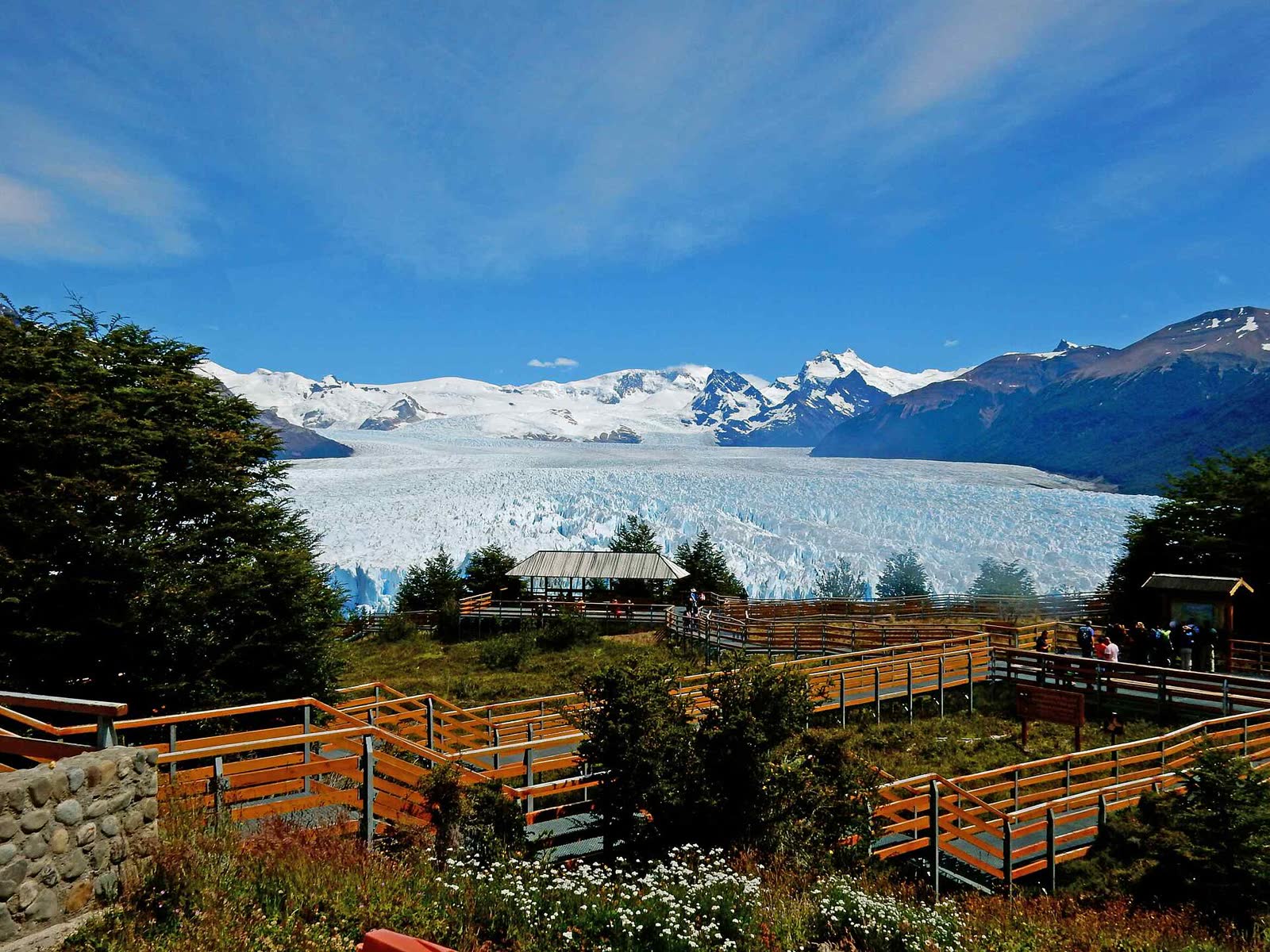
El Calafate is a small, well organised town on the shore of Lago Argentino, with an airport, plenty of hotels and restaurants, and buses to the park. The main reason to come is the Perito Moreno Glacier, about an hour and a half away by road. A network of balconies and walkways faces the ice front, which rises high above the lake. Spend several hours here: the glacier cracks and groans constantly, and watching a tower of ice collapse is unforgettable.
Ways to see it closer:
- **Boat trips** run along the face of the glacier from the nearby port.
- **Minitrekking** puts you on the ice with crampons and licensed guides for a short walk across the surface. Longer, tougher ice treks are also offered, with age and fitness limits.
- **Full day lake cruises** visit the Upsala and Spegazzini glaciers and the icebergs of the northern arms of the lake.
In town, the Glaciarium museum explains the ice, and the Laguna Nimez reserve has flamingos and other birds. Estancias outside town offer horse riding, sheep shearing demonstrations and lamb roasted over an open fire.
El Chaltén and Fitz Roy
El Chaltén, Argentina's self styled trekking capital, is a small village built for hikers. Trails start at the edge of town and are free to walk, well marked and do not need a guide for day hikes in good weather. The two classics are:
- **Laguna de los Tres**, a long day hike to a glacial lake at the foot of Fitz Roy, with a steep final climb.
- **Laguna Torre**, a gentler walk to a lake facing Cerro Torre, often with icebergs.
Shorter walks to viewpoints like Mirador de los Cóndores suit rest days or bad weather. Many hikers stay four or five nights to give themselves a chance of clear skies. Bring cash as a backup: the village has limited banking and connections can be patchy.
Weather and packing
Patagonian weather is famous for wind, sudden rain and sunshine within the same hour. Even in summer, pack layers, a waterproof jacket, a warm hat and gloves, sunglasses and strong sun protection. Long daylight hours in December and January give plenty of time for hiking.
When to go
The main season runs from about November to March. December to February is the warmest and busiest, so book flights and rooms early. October and April are quieter, with fewer services and cooler days. In winter many businesses in El Chaltén close, though the Perito Moreno Glacier stays open.
Getting there
Fly to El Calafate from Buenos Aires or from Ushuaia and Bariloche. Buses connect El Calafate with El Chaltén in about three hours and with Puerto Natales in Chile for Torres del Paine. Plan your wider route on our destinations page, pair it with the lakes of Bariloche, and use the free trip planner to judge travel times.
Questions about Patagonia: El Calafate and El Chaltén
How many days do I need in Patagonia?
Allow two days in El Calafate for the glacier and a lake trip, and three to four in El Chaltén for hiking, with spare time for weather.
Do I need a guide to hike in El Chaltén?
Not for the main day hikes, which are well marked. You do need a licensed guide for walking on glaciers.
Can I visit the Perito Moreno Glacier on my own?
Yes. Regular buses run from El Calafate to the park walkways, and you can book boat trips or minitrekking separately. Check the park entry rules on the official national parks site.
Is the Perito Moreno Glacier worth it if I am not a hiker?
Absolutely. The walkways facing the ice are easy, with gentle paths and stairs, and the boat trips need no fitness at all. It is one of the most accessible great natural sights in South America.
Can I combine Argentine and Chilean Patagonia?
Yes. Buses link El Calafate with Puerto Natales, the base for Torres del Paine. Check Chile's entry rules for your passport.
Facts checked . Fees, schedules and entry rules change, so always confirm the latest with the official source.