At a glance
- Best for
- Waterfalls, jungle walks and wildlife
- Gateway
- Cataratas del Iguazú International Airport (IGR)
- Base
- Puerto Iguazú
- Time needed
- Two full days
- Best season
- March to May and August to November
- Getting there
- Short flight from Buenos Aires
The Argentine side
The falls sit inside Iguazú National Park, a UNESCO World Heritage Site. The park is run with good walkways, a small eco train and clear signs, and it is easy to visit independently. There are three main circuits:
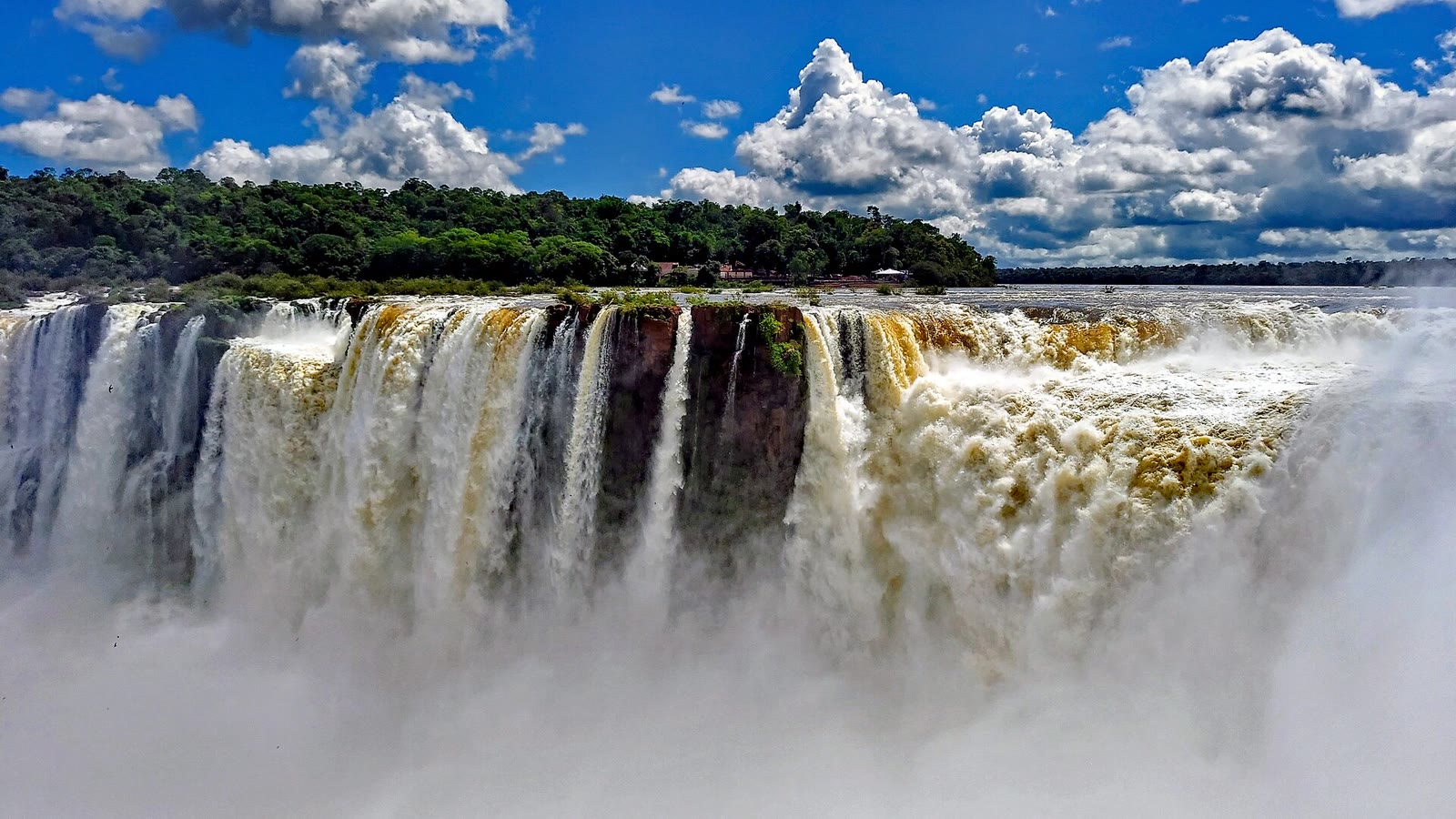
- **The Garganta del Diablo (Devil's Throat).** A train takes you to the start of a walkway that crosses the wide upper river and ends at the lip of the largest, horseshoe shaped drop. The roar and spray are overwhelming.
- **The Upper Circuit.** A walkway along the top of the falls, with views straight down over the edge of many cascades.
- **The Lower Circuit.** Paths and stairs through the forest to viewpoints at the bottom of the falls. On some days a short boat crosses to San Martín Island, depending on water levels.
Arrive at opening time, head first to the Devil's Throat before the crowds, and allow a whole day. The Sendero Macuco, a quieter jungle trail to a small waterfall, is a good escape if you want birds and calm.
The boat ride
Several operators run boat trips from the lower part of the park that drive right into the spray beneath the falls. You will be completely soaked, so bring a dry bag for your phone and wear quick drying clothes. Combined jungle truck and boat trips are the most popular.
The Brazilian side
Across the river in Brazil, the Foz do Iguaçu side has a single walkway with the big panoramic view of the falls you see in photographs. It takes half a day. You cross a border, so check whether you need a visa for Brazil based on your passport, carry your passport, and make sure your exit and entry are recorded properly.
Wildlife and heat
Look out for coatis, which are cute but bold and will bite if fed, plus toucans, butterflies, capuchin monkeys and huge swifts that nest behind the water. The climate is subtropical: hot and humid much of the year, with heavy rain possible in any month. Bring insect repellent, sun protection, a hat and plenty of water.
Puerto Iguazú
The small town of Puerto Iguazú is the base for the Argentine side. It is relaxed and walkable, with hotels for every budget, a small evening market called La Feirinha and the Three Borders viewpoint where Argentina, Brazil and Paraguay meet. A few lodges sit in the jungle outside town, and one hotel lies inside the park itself.
When to go
The falls are impressive all year, but water volume varies with rainfall upriver. Spring and autumn are the most comfortable for walking. Summer is very hot and busy, and the winter school holidays in July bring crowds. Very occasionally floods or drought close walkways, so check the park's official notices before you go.
Fitting it into your trip
Fly from Buenos Aires, which takes under two hours. Two nights is the minimum: a full day on the Argentine side and half a day in Brazil or on the boat. See the other regions on our destinations page, start in Buenos Aires, and use the free trip planner to connect it all.
Questions about Iguazú Falls
Which side of Iguazú is better?
Both. The Argentine side gets you close to the falls on long walkways and takes a full day. The Brazilian side gives the classic panorama in half a day.
Do I need a visa to visit the Brazilian side?
It depends on your passport. Check Brazil's official consular information before you travel and carry your passport across the border.
Will I get wet?
On the boat ride you will be soaked. At the Devil's Throat you will get misted with spray. Bring a dry bag and quick drying clothes.
Are the coatis dangerous?
They are wild animals that snatch food and can bite or scratch. Do not feed them, and keep snacks out of sight.
Facts checked . Fees, schedules and entry rules change, so always confirm the latest with the official source.