At a glance
- Best for
- Markets, history, local food and shopping
- Nearest airport
- V. C. Bird International, about fifteen minutes by taxi
- Time needed
- Half a day to one full day
- Best day
- Saturday morning for the market, or a day with few cruise ships
- Getting around
- Walking in town, taxis and minibuses out
- Good base for
- Fort James, Deep Bay, Dickenson Bay and island bus routes
Why go
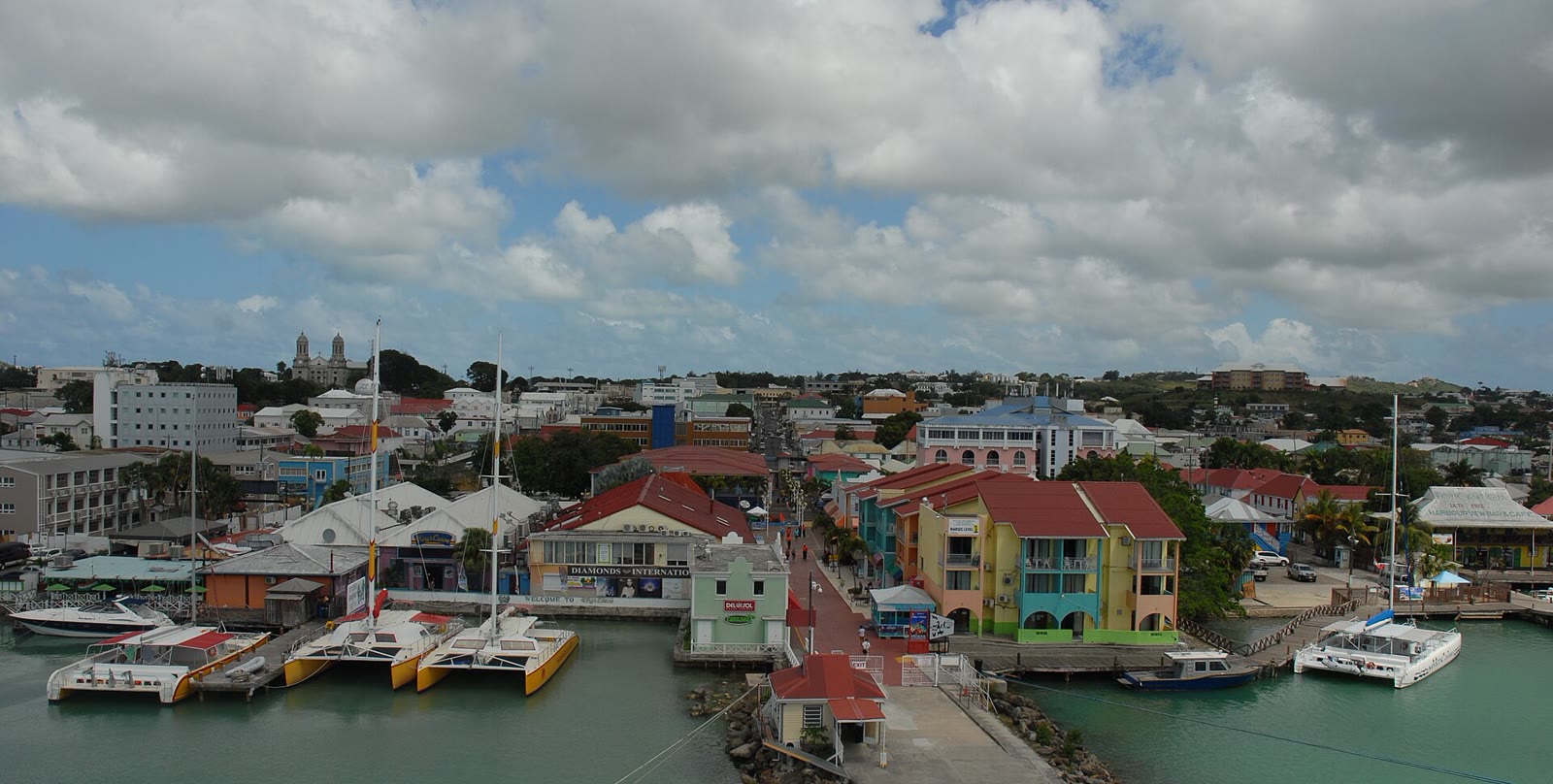
The beaches get the headlines, but St. John's is where you feel everyday Antigua. Office workers queue for roti at lunch, minibuses blare soca as they leave the bus stations, and on Saturday morning the market fills with farmers from every village. Within a few streets you can see the islands' cathedral, their national museum and the quays where ships once loaded sugar and unloaded enslaved Africans.
The main sights
**St. John's Cathedral** on Newgate Street, with its two white towers, has been rebuilt several times after earthquakes, and its interior is encased in pitch pine to help it survive the next one. Nearby, the **Museum of Antigua and Barbuda** occupies the old courthouse on Long Street. It is small but well told, covering Amerindian settlement, sugar and slavery, emancipation, the labour movement and independence, and it holds a cricket bat used by Sir Vivian Richards.
Down by the water, **Redcliffe Quay** is a cluster of restored warehouses and courtyards with shops, galleries and cafés. Its history is painful, since enslaved people were held in buildings here, and plaques help you understand it. Next door, **Heritage Quay** is the duty free pier where cruise passengers step ashore, with jewellery, watches, rum and souvenir shops. The **Vendors' Mall** on Thames Street sells crafts, batik and island clothing.
Market day
The **public market** at the south end of Market Street is busiest on Friday and Saturday mornings. Look for the famous Antigua black pineapple, small, very sweet and only grown here, plus christophene, dasheen, sweet potato, mangoes in season and bottles of local hot pepper sauce. Close by is the **West Bus Station**, where minibuses leave for the west and south of the island.
Forts and beaches near town
A short taxi ride north takes you to **Fort James**, an eighteenth century fort with cannons still pointing out to sea, and the beach beside it where local families gather on weekends. To the southwest, **Deep Bay** has calm water and the wreck of the Andes, a sailing ship that caught fire and sank in 1905, which snorkellers can see just below the surface. A steep path climbs from the beach to **Fort Barrington**, with one of the best views of the harbour.
Food and drink
St. John's is the best place on the island to eat local food at local prices. Try saltfish with fungee and pepperpot, the national dish, at a simple Antiguan restaurant, or roti filled with curried chicken or goat. **Hemingway's Caribbean Cafe** has a balcony above St. Mary's Street for people watching, and **Papa Zouk** in Gambles is a small fish and rum bar with a huge rum shelf. For drinks, look for Wadadli beer and English Harbour or Cavalier rum.
Cruise ship days
On days when several large ships are in port, the area around Heritage Quay becomes very crowded, taxis are in demand and some attractions get busy. If you are staying on the island, check the cruise schedule and visit on a quieter day, or come early before passengers come ashore.
Practical tips
The town centre is easy to walk, but pavements can be narrow and uneven, and it gets hot, so carry water and a hat. Shops close early on Saturday afternoons and many are shut on Sundays. Use registered taxis, which have number plates starting with TX, and agree the fare and currency before you set off. Keep valuables out of sight and avoid quiet streets after dark, as you would in any port town.
Where to stay
Few visitors stay in the town itself, which is quiet at night. Most choose a beach base nearby: Dickenson Bay and Runaway Bay to the north, or the Five Islands peninsula to the southwest, where resorts such as Galley Bay and Hawksbill sit on their own beaches. From any of these, a taxi into St. John's is short.
Use our places to visit list for restaurants, bars and sights in and around the capital, and the free trip planner to fit St. John's into your week.
Questions about St. John's
Is St. John's worth visiting?
Yes. Half a day gives you the cathedral, the museum, the quays and the market, and it is the best place to taste everyday Antiguan food and life.
When is the market in St. John's?
The public market runs most days, but Friday and especially Saturday mornings are the busiest, with the best produce and atmosphere.
Is St. John's safe for tourists?
In the day, the centre is generally fine with normal care. Watch for pickpockets in crowds, keep valuables hidden and take a taxi at night rather than walking quiet streets.
Should I stay in St. John's?
Most visitors stay at a nearby beach such as Dickenson Bay or Five Islands and visit town by taxi, since the centre is quiet in the evening.
Facts checked . Fees, schedules and entry rules change, so always confirm the latest with the official source.