At a glance
- Provinces
- Mpumalanga and Limpopo
- Nearest airports
- Kruger Mpumalanga (MQP), Skukuza (SZK), Hoedspruit (HDS)
- Best time
- May to September, dry season
- Days needed
- Three to four
- Wildlife
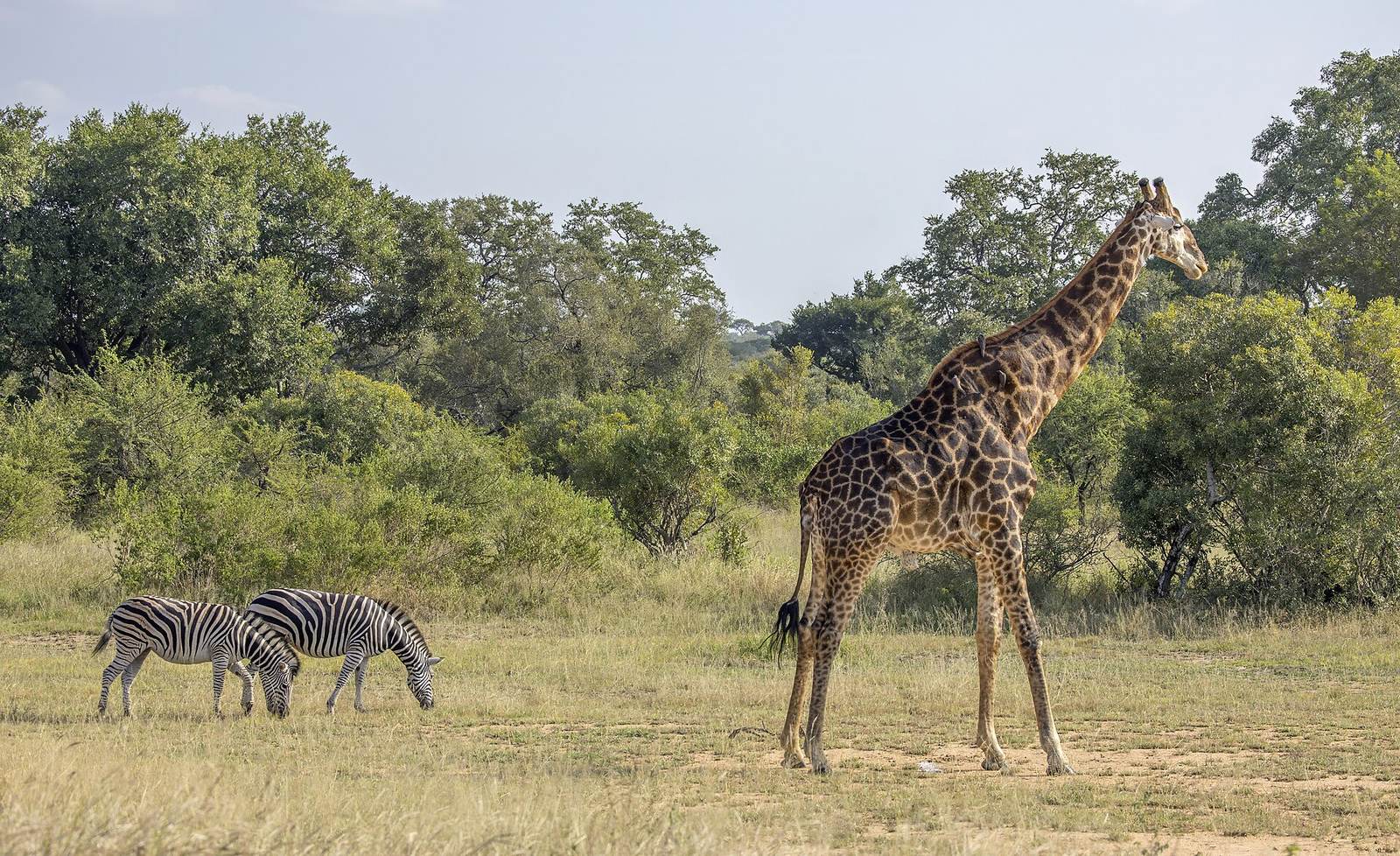
- The Big Five, wild dogs, cheetah, hundreds of bird species
- Malaria
- Yes, take medical advice
Two ways to do Kruger
**Self-drive in the national park.** South African National Parks, SANParks, runs Kruger's rest camps, roads and gates. You drive yourself on a network of tar and gravel roads, stop at waterholes and sleep in camps with huts, cottages and campsites, shops, fuel and restaurants. It is excellent value, flexible and thrilling when you find a leopard yourself. Gate and camp times are strict, and you must be inside a camp by closing time.
**Private reserves.** Along Kruger's western edge sit private reserves such as **Sabi Sand**, **Timbavati**, **Klaserie** and **Manyeleti**, which share unfenced borders with the park. Lodges here include all meals and two guided game drives a day in open vehicles, often with off-road tracking, so leopard and lion sightings can be very close. It is more expensive but completely hands-off.
Many travellers combine the two: a few nights self-driving in the south of the park, then two or three nights at a private lodge.
Where to go in the park
The **south**, around **Skukuza**, **Lower Sabie** and **Crocodile Bridge**, has the highest density of animals and the most visitors. The **Sabie River** road between Skukuza and Lower Sabie is famous for leopards. The **central** region around **Satara** has open grasslands, big herds and plenty of lion and cheetah. The **north**, around **Letaba**, **Shingwedzi** and **Punda Maria**, is quieter, wilder and excellent for elephants and birds.
When to go
The dry winter months, **May to September**, are the best for game viewing: grass is short, animals gather at water and mornings are cool. Summer, **October to April**, is hot and green, with newborn animals, migratory birds, dramatic storms and higher malaria risk. School holidays fill camps quickly, so book well ahead through the SANParks site.
Getting there
Fly from Johannesburg or Cape Town to **Kruger Mpumalanga International** near Nelspruit, **Skukuza** inside the park or **Hoedspruit** for the private reserves. Driving from Johannesburg takes five to six hours via the N4 to the southern gates. The Panorama Route, with **Blyde River Canyon**, **God's Window** and **Bourke's Luck Potholes**, is a beautiful detour on the way.
Health and safety
Kruger is in a malaria area. Speak to a travel clinic about antimalarial tablets, use repellent and cover up at dusk. Stay in your vehicle except at marked spots, never feed animals, and respect the speed limits: animals are hit on the roads every year.
Tips for better sightings
Leave camp as the gates open, when predators are most active. Drive slowly, stop often and ask other drivers what they have seen. Many camps run sunrise and night drives with SANParks guides, which are a great way to see animals you would miss alone. Buy a park map at the gate showing roads and waterholes.
Booking
Book rest camps and guided activities on the official SANParks site, as early as possible for school holidays and long weekends. Daily conservation fees apply and differ for South African, regional and international visitors, so check the current rates on the SANParks site.
Questions about Kruger National Park
Can you self-drive in Kruger National Park?
Yes. Kruger has good tar and gravel roads, clear signs and rest camps with fuel and shops, so self-driving is easy and popular. Keep to the speed limits, stay in your vehicle and be back in camp before the gates close.
How many days do you need in Kruger?
Three to four days gives you an excellent chance of seeing the Big Five. With a week, you can travel from the busy south to the quieter north of the park.
Is there malaria in Kruger?
Yes, Kruger is a malaria risk area, highest in the wet summer months. Speak to a travel clinic before you go about antimalarials. Families wanting a malaria free option often choose Pilanesberg or the Madikwe reserve instead.
Should I stay inside Kruger or at a private reserve?
Inside the park is better value and gives you freedom to explore. Private reserves offer guided drives, off-road tracking and all inclusive comfort. Combining both is a popular choice.
Facts checked . Fees, schedules and entry rules change, so always confirm the latest with the official source.