At a glance
- Best for
- Palaces, art, architecture and canal walks
- Airport
- Pulkovo (LED)
- Time needed
- Three to five days
- Best season
- Late May to August, with white nights in June
- Language
- Russian
- Getting around
- Metro, walking, buses and canal boats
Why visit St Petersburg
For many visitors, St Petersburg is the most beautiful city in Russia. It is compact enough to explore on foot, with long straight avenues, pastel palaces and dozens of canals crossed by iron bridges. Summer brings the **white nights**, when from late May to mid July the sky never fully darkens and the city stays out late to watch the bridges over the Neva lift for shipping.
As with all of Russia, read your government's travel advice before planning. The UK, US and many others advise against all travel. St Petersburg has fewer direct risks from the war than border regions, but drone alerts have closed Pulkovo airport at times, and the same rules about detention and keeping a low profile apply.
The main sights
**The State Hermitage Museum** fills the Winter Palace and several linked buildings on Palace Square. Its collection runs from ancient Egypt to Rembrandt, Matisse and Picasso, and the state rooms alone are worth the visit. Buy tickets online through the official site to skip the ticket hall, and go early or on the late opening evening.
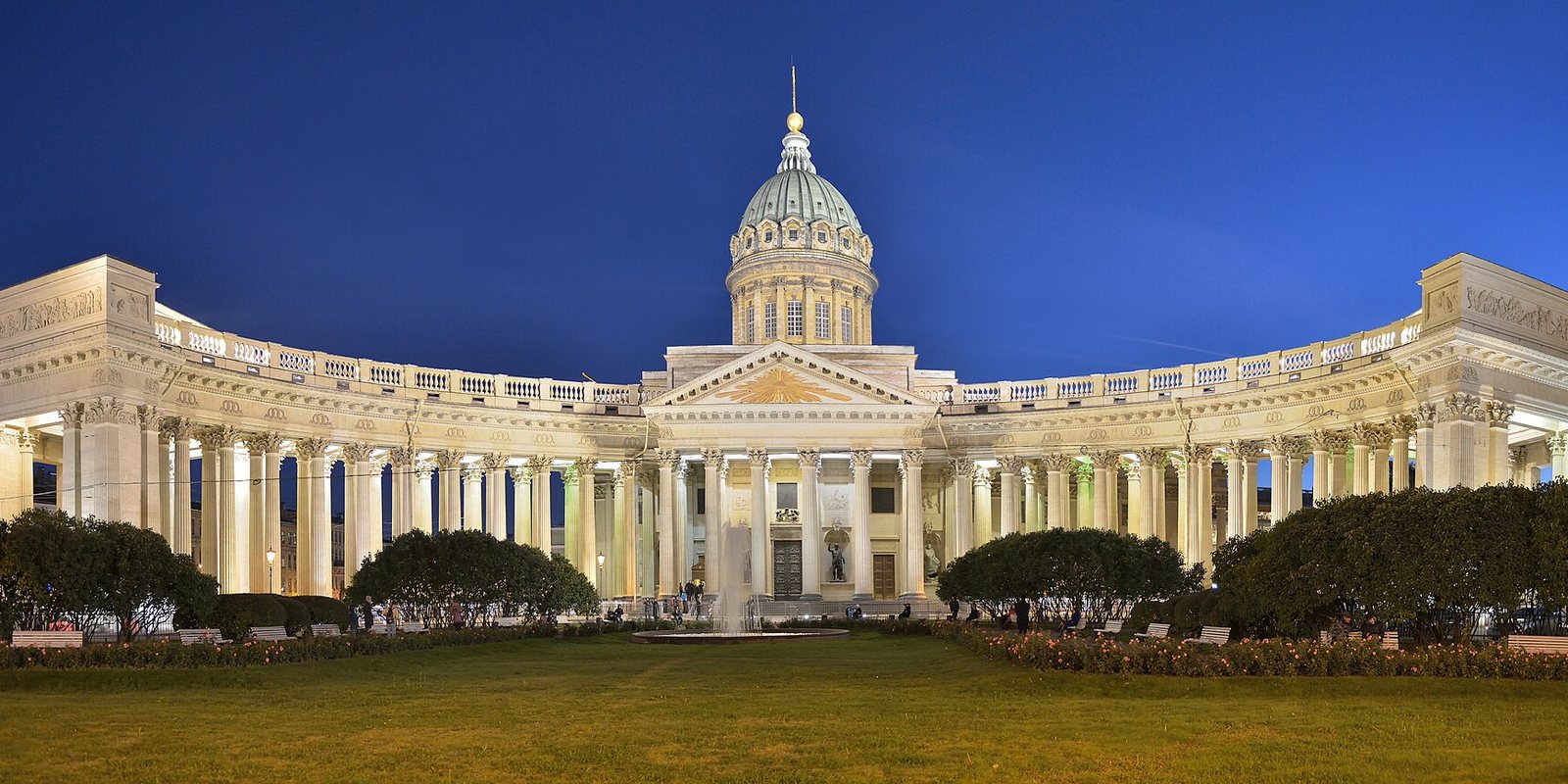
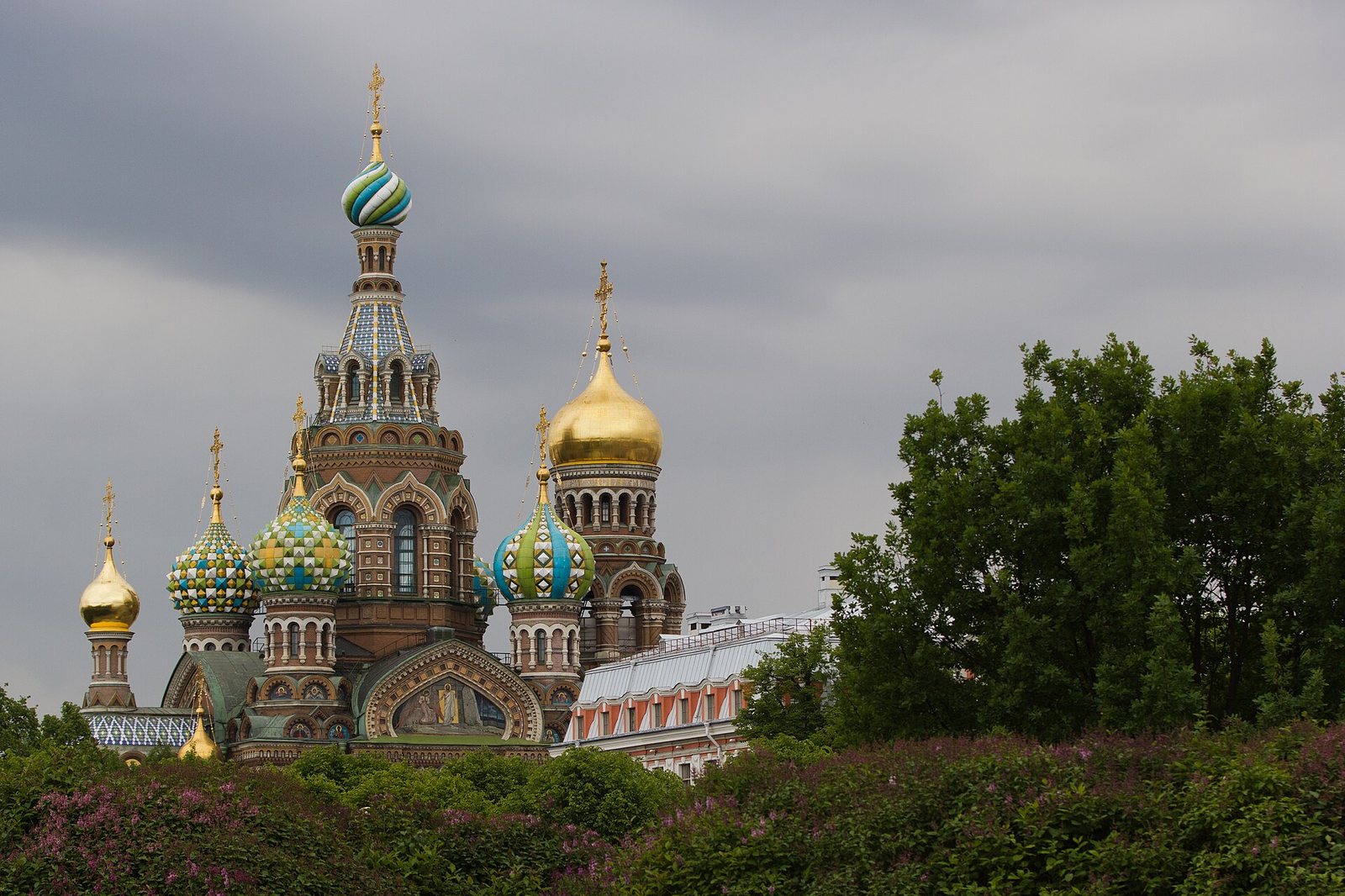
**The Russian Museum** in the Mikhailovsky Palace is the best place to see Russian art, from icons to the avant garde. **St Isaac's Cathedral** has a colonnade you can climb for a view across the rooftops, and the **Church of the Saviour on Spilled Blood**, built where Tsar Alexander II was assassinated, is covered inside with mosaics.
**The Peter and Paul Fortress**, on its own island, is where the city began. Inside are the cathedral with the tombs of the Romanovs and an old prison, and on sunny days locals sunbathe along the walls. **Nevsky Prospekt**, the main avenue, runs from the Admiralty past the Kazan Cathedral, the Singer House bookshop and the Eliseev food hall.
Palaces outside the city
**Peterhof**, on the Gulf of Finland, has a grand palace and a park of gilded fountains that run from late spring to early autumn. In summer you can arrive by hydrofoil from the centre. **Tsarskoye Selo** in the town of Pushkin is home to the Catherine Palace and its reconstructed **Amber Room**. **Pavlovsk** and **Gatchina** are quieter alternatives with large parks.
Neighbourhoods to explore
**The historic centre** between the Neva and the Fontanka is where you will spend most time. **Vasilyevsky Island** has the Strelka viewpoint, the Kunstkamera and student cafés. **Petrogradskaya** is full of art nouveau buildings and good restaurants. **New Holland Island**, a restored naval warehouse complex, is a calm green space with food stalls, and creative hubs on and around **Rubinstein Street** and Loft Project Etazhi are where the city's bars and young crowd gather.
Food and drink
The city has a strong café and restaurant scene. Rubinstein Street is the best known eating street. Try **pyshki**, sugared doughnuts served at old style counters such as Pyshechnaya on Bolshaya Konyushennaya, plus smoked fish from the Baltic, Georgian food and the city's many craft beer bars.
Getting around
The centre is walkable, and the deep metro covers longer distances. Canal and river boat tours are one of the best ways to see the city in summer. The **Sapsan** high speed train runs from Moskovsky station to Moscow in around four hours, and night trains connect to Moscow, Murmansk and beyond.
Practical tips
The weather changes fast, so pack layers and rain gear even in summer. During white nights, note the bridge lifting times if your hotel is on an island, or you may be stranded until early morning. Bring cash, since foreign cards do not work, and keep your passport and registration with you.
Questions about St Petersburg
When are the white nights in St Petersburg?
Roughly late May to mid July, at their brightest around the summer solstice in late June. The Scarlet Sails festival for school leavers usually falls in this period.
How long do I need for the Hermitage?
Half a day covers the highlights and the state rooms. Art lovers could spend a full day or two, including the General Staff Building with its impressionist collection.
Is Peterhof worth it?
Yes, especially from late spring to early autumn when the fountains run. Allow most of a day, and consider arriving by hydrofoil and returning by bus or train.
How do I travel from Moscow to St Petersburg?
The Sapsan high speed train takes around four hours between city centres. Night trains are a classic alternative, and flights take about an hour and a half.
Facts checked . Fees, schedules and entry rules change, so always confirm the latest with the official source.